Bodyweight Workout Plan: Progress Without Equipment
Use simple bodyweight progressions for legs, push, pull, core, and conditioning. A good workout plan balances stimulus and recovery. The goal is not to destroy yourself in one session; it is to repeat useful work often enough that your body adapts. Most beginners progress best with clear exercises, moderate effort, and a simple weekly rhythm.
Quick Answer
- Start with a plan you can repeat for 4 weeks.
- Train the same movement patterns regularly instead of changing everything daily.
- Keep nutrition aligned with your goal using Calorie Calculator and Macro Calculator.
- Progress with small changes in reps, load, sets, or control.
Who This Guide Is For
- Beginners who want structure instead of random workouts.
- People training at home or in the gym with limited time.
- Users who want workouts to connect with nutrition and progress in Up2You.
How It Works
A good workout plan balances stimulus and recovery. The goal is not to destroy yourself in one session; it is to repeat useful work often enough that your body adapts. Most beginners progress best with clear exercises, moderate effort, and a simple weekly rhythm.
Step-by-Step Plan
- Choose the weekly schedule you can actually keep.
- Pick exercises for legs, push, pull, core, and conditioning.
- Start with conservative volume.
- Track reps, load, effort, and soreness.
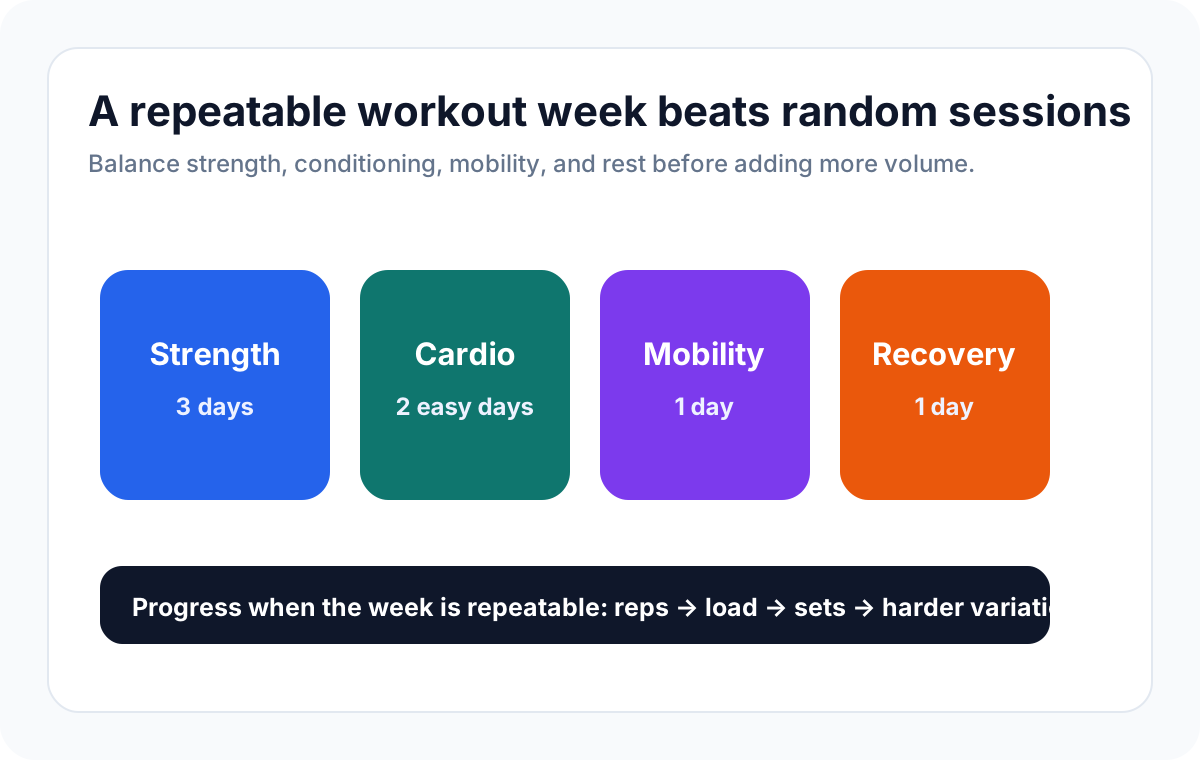
- Add one small progression when the work feels controlled.
- Review the week before changing the whole plan.
Example
A simple week can include three strength sessions, two easy cardio or walking days, one mobility session, and one full rest day. If recovery is poor, reduce volume before adding more exercises.
Common Mistakes
- Changing exercises before you can measure progress.
- Training every set to failure too early.
- Skipping warm-ups and mobility work.
- Adding volume when sleep and nutrition are not stable.
- Ignoring pain that changes your movement.
When To Be Careful
This guide is educational and should not replace medical advice. If you are injured, pregnant, returning after illness, managing a chronic condition, or unsure whether exercise is safe for you, speak with a qualified professional before changing training volume or intensity.
How Up2You Helps
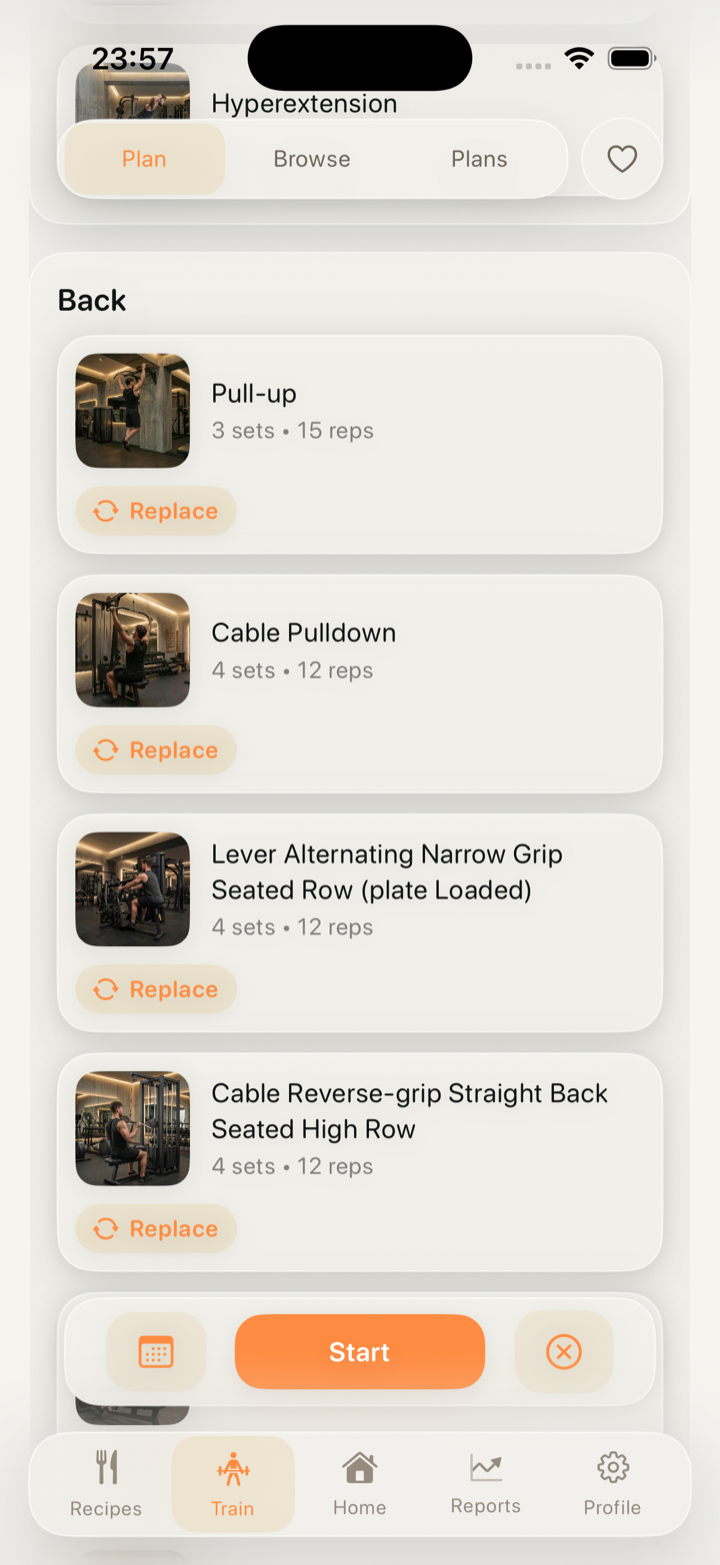
Up2You helps turn the plan into a repeatable routine: workouts, nutrition targets, progress checks, and weekly adjustments stay connected in one flow.
Inside Up2You
FAQ
How long should I follow one workout plan?
Use one plan for at least 4 weeks unless pain, schedule, or equipment makes it unrealistic.
Do I need a gym?
No. A gym gives more loading options, but bodyweight, bands, dumbbells, and walking can build a strong beginner routine.
How do I know the plan is working?
You should see better reps, better control, improved consistency, or a manageable increase in load over time.