Calories vs Macros: What Matters First?
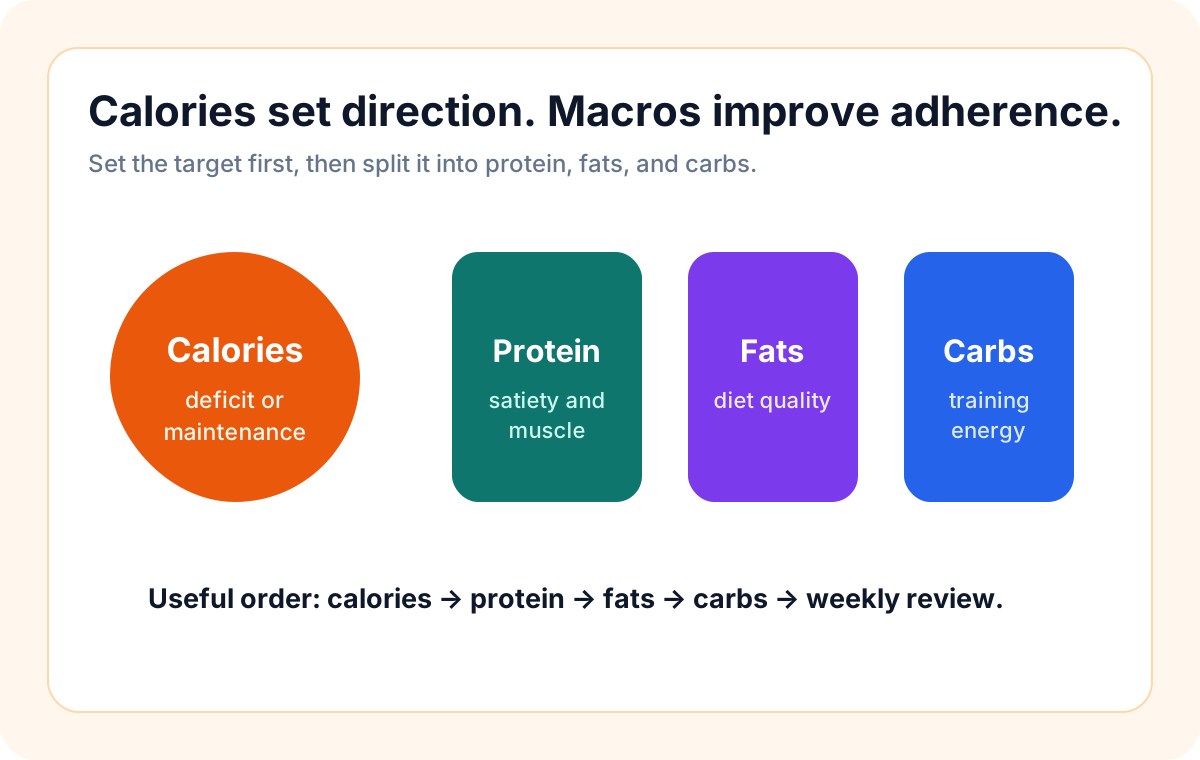
Calories and macros are connected, but they answer different questions. Calories determine the overall energy direction: deficit, maintenance, or surplus. Macros describe where those calories come from: protein, fat, and carbs. Start with calories for the goal, then use macros to make the plan easier to follow.
Quick Answer
- Calories drive weight change over time.
- Macros influence hunger, training, recovery, food quality, and consistency.
- Protein is usually the first macro to set.
- Fats should not be pushed unnecessarily low.
- Carbs can support training and are flexible based on preference.
- Use Calorie Calculator first, then Macro Calculator.
Who This Guide Is For
- Beginners confused by calories, protein, carbs, and fat targets.
- People trying to lose weight without extreme food rules.
- Users who track calories but want meals to feel better.
- People who want nutrition targets to connect with workouts in Up2You.
How It Works
Every macro contains calories: protein and carbs provide about 4 kcal per gram, and fat provides about 9 kcal per gram. That means macros always add up to calories. For body-weight change, the calorie target sets the direction. Macro choices help decide how satisfying, practical, and performance-friendly the diet feels.
Step-by-Step Plan
- Estimate calories with the Calorie Calculator.
- Choose the goal: deficit, maintenance, or surplus.
- Set protein with the Macro Calculator.
- Choose a sustainable fat range.
- Put remaining calories into carbs.
- Build meals from protein anchors, produce, planned carbs, and measured fats.
- Review hunger, adherence, workouts, and weekly trend before changing targets.
Example
If your target is 2,000 kcal, the same calories can be split many ways. A higher-protein plan may feel more filling. A higher-carb plan may support training better. A higher-fat plan may fit food preferences. The best split is the one that supports the calorie target and is repeatable.
Common Mistakes
- Thinking macros replace the need for a calorie target.
- Cutting carbs because they are blamed for all fat gain.
- Setting protein too low during fat loss.
- Dropping fats so low that meals become unsatisfying.
- Chasing perfect macro numbers instead of consistent weekly averages.
When To Be Careful
This guide is educational and not medical advice. If you have diabetes, kidney disease, pregnancy, digestive conditions, a history of disordered eating, or a medically prescribed diet, work with a qualified clinician or registered dietitian before changing calories or macros substantially.
How Up2You Helps
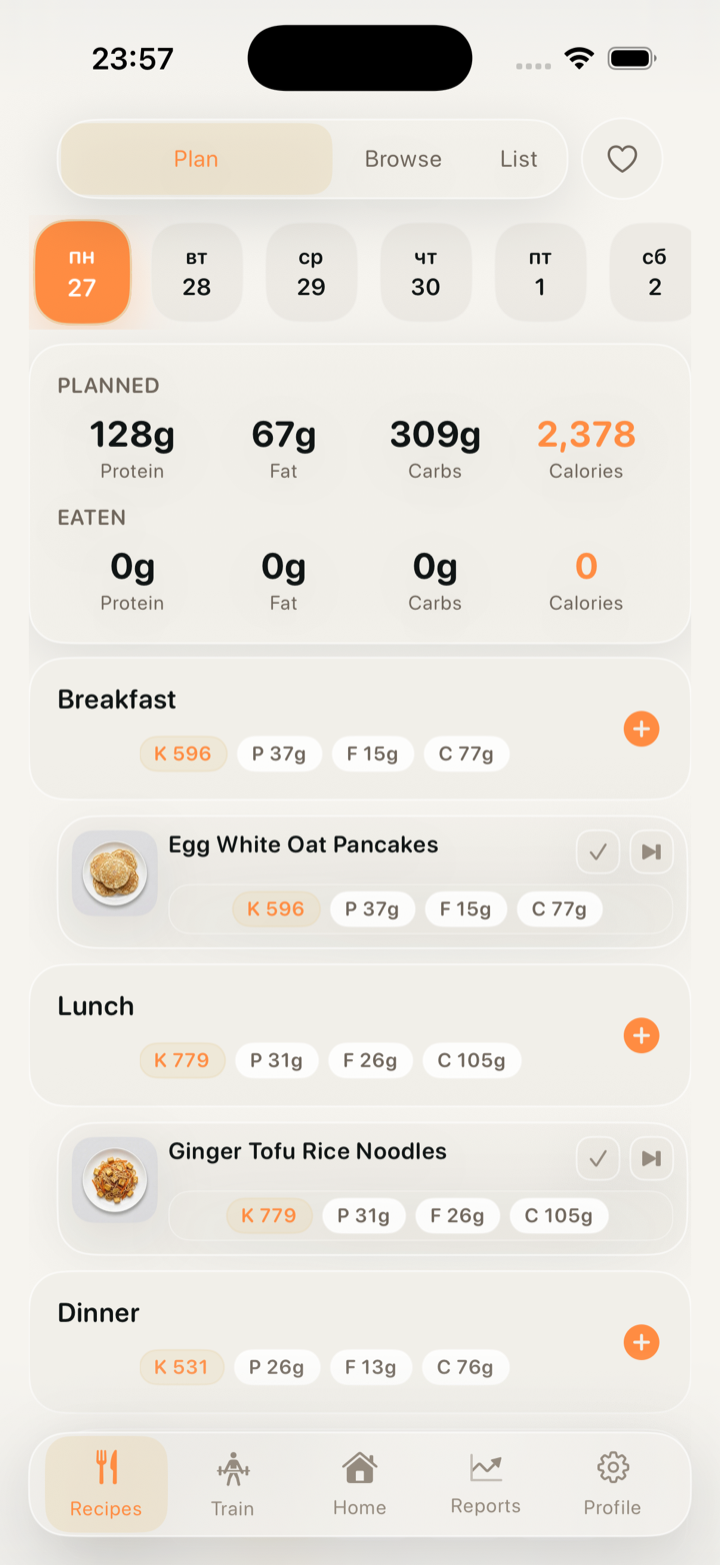
Up2You helps you move from abstract numbers to daily meals: set calories, convert them into macros, plan meals, track food, and compare progress before making adjustments.
Inside Up2You
FAQ
Are calories or macros more important for weight loss?
Calories are primary for weight change. Macros help with hunger, muscle retention, training quality, and consistency.
Can I lose weight without tracking macros?
Yes. Many people do well by tracking calories, eating protein at each meal, and using consistent portions. Macro tracking is useful when you want more precision.
Should I count net carbs or total carbs?
For most beginners, total calories and protein matter more than choosing a complicated carb rule. Use the method you can track consistently.
What macro should I adjust first?
Adjust calories first if the weight trend is not matching the goal. Adjust macros when hunger, training, or adherence is the limiting issue.