Carbs Before or After Workout: What Actually Matters
Carbs can help before a workout when you need energy, and they can help after a workout when you need to refuel. For most beginners, the priority is not a perfect timing window. Eat enough total calories and carbs for your goal, avoid digestive discomfort before training, and use post-workout meals to get back to normal eating.
Quick Answer
- Eat carbs before training if the workout is hard, long, or you feel low on energy.
- Eat carbs after training to help replace glycogen and make the next session easier.
- For workouts under about an hour, you usually do not need carbs during the session.
- For longer or intense sessions, carbs during training can matter more.
- Pair carbs with protein across the day, especially if your goal includes muscle gain or recovery.
- Use the Macro Calculator or Calorie Calculator if you need a measurable daily target.
Who This Guide Is For
- Beginners who are unsure whether to eat before or after training.
- People who lift, run, cycle, do classes, or combine strength and cardio.
- Users trying to lose fat without feeling weak in workouts.
- Users trying to build muscle while keeping meals practical.
How It Works
Carbs are stored as glycogen in muscle and liver and used heavily during moderate-to-high intensity exercise. Timing matters most when training is long, intense, repeated soon, or performance-focused. If you train casually for 30-60 minutes, your total daily intake and meal comfort often matter more than exact minutes on the clock.
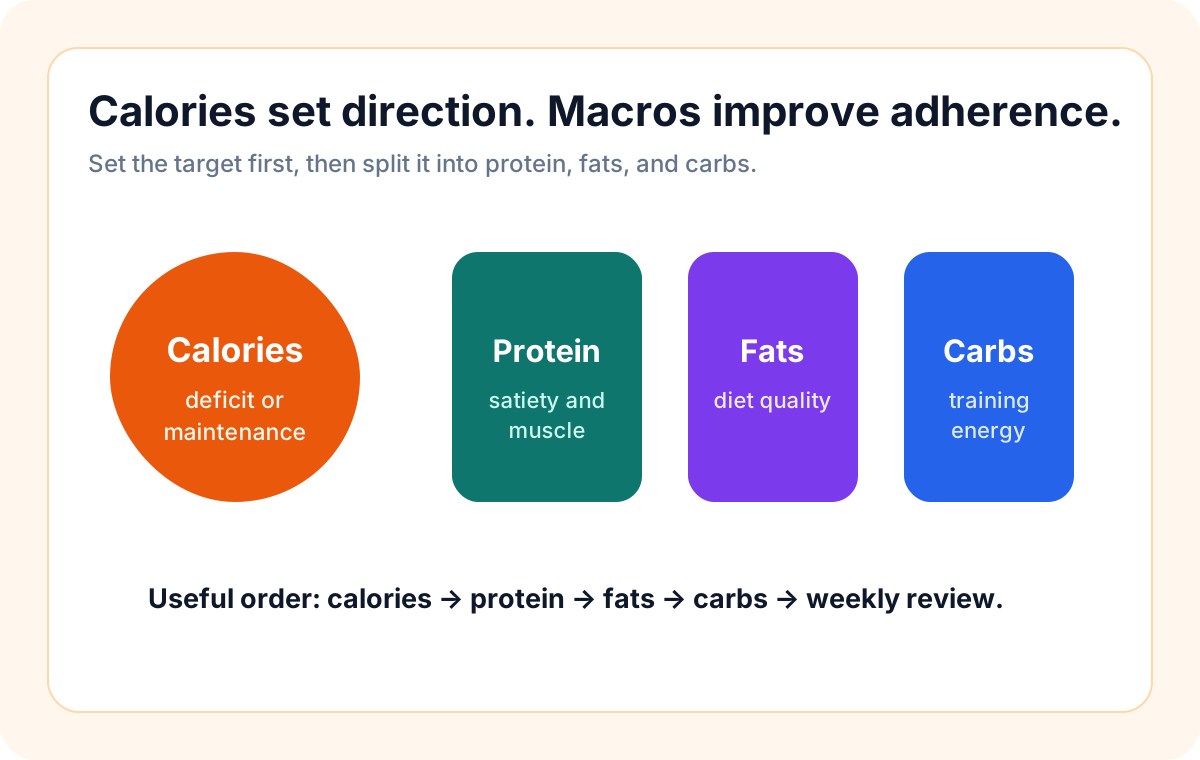
The International Society of Sports Nutrition notes that extended high-intensity exercise can benefit from carbohydrate intake during the session, while recovery needs rise when glycogen must be restored quickly. EatRight and the American Heart Association both emphasize practical pre- and post-workout meals with carbohydrates, protein, fluids, and individual tolerance.
Step-by-Step Plan
- If training is 2-4 hours away, eat a normal meal with carbs, protein, and moderate fat.
- If training is within 30-60 minutes, choose easy carbs such as fruit, toast, yogurt, cereal, rice cakes, or a small smoothie.
- Avoid very high-fat or very high-fiber meals right before training if they upset your stomach.
- If the session is under an hour, water is usually enough during the workout.
- If the session is long, intense, hot, or repeated later the same day, plan carbs and fluids during or soon after.
- After training, eat a meal or snack with carbs and protein when it fits your schedule.
- Track energy, digestion, performance, and hunger for 1-2 weeks before changing the plan.
Example
A person lifting at 6 p.m. could eat lunch normally, have a banana and yogurt around 5 p.m., train, then eat dinner with rice, chicken or tofu, vegetables, and sauce. A person doing an easy 30-minute walk may not need special workout carbs at all. A person doing a 90-minute hard ride may need carbs before and during the session.
Common Mistakes
- Treating carbs as mandatory for every short workout.
- Avoiding carbs completely, then wondering why training feels flat.
- Eating a heavy, high-fat meal too close to training.
- Using post-workout snacks as extra calories when the goal is fat loss.
- Copying endurance athlete carb strategies for short gym sessions.
- Ignoring hydration and electrolytes when sessions are long or hot.
When To Be Careful
This guide is educational and not medical advice. If you have diabetes, reactive hypoglycemia, gastrointestinal conditions, pregnancy, a medically prescribed diet, or a history of disordered eating, ask a qualified clinician or registered dietitian before changing workout nutrition substantially.
How Up2You Helps
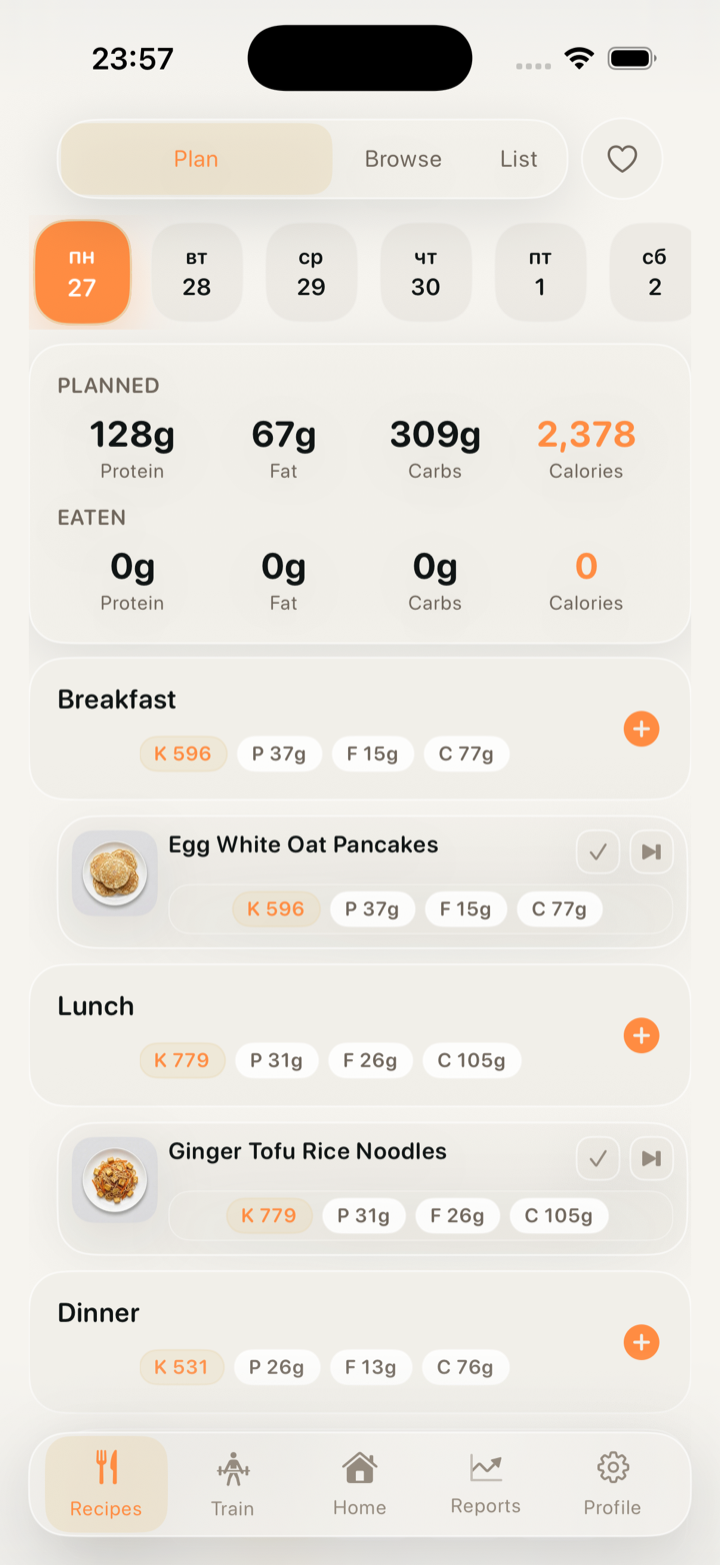
Up2You helps make workout nutrition practical: set calories and macros with the Macro Calculator, plan meals around training time, log what you actually ate, and compare energy and progress instead of guessing from one workout.
Inside Up2You
FAQ
Should I eat carbs before every workout?
No. Short, easy workouts may not need special carbs. Hard, long, or late-day sessions often feel better with planned carbs beforehand.
Are carbs after a workout required?
They are useful, especially if you train hard or again soon. If your next workout is tomorrow or later, a normal balanced meal is usually enough.
What carbs are best before a workout?
Use foods you digest well. Close to training, many people prefer lower-fiber options such as banana, toast, yogurt, cereal, rice cakes, or a small smoothie.
Can I eat carbs and still lose fat?
Yes. Fat loss depends on the calorie trend. Carbs can fit a deficit and may improve workout quality when planned well.
Should I combine carbs with protein?
Often yes. Protein supports repair and muscle-building goals, while carbs help fuel and refuel training. The exact split depends on your goal and appetite.