Carbs for Workout Energy
Use carbs for workout energy by matching portions, timing, and food choices to your training and calorie target.
Quick Answer
- Fix workouts feeling flat because carbohydrate timing and portions are inconsistent by planning carbs around the full day instead of treating them as automatically good or bad.
- Carbs can support training energy, meal satisfaction, fiber, and adherence when portions fit the calorie target.
- The useful question is not whether carbs are allowed. The useful question is where they help the plan most.
- Use Calorie Calculator and Macro Calculator when targets need a practical reset.
Who This Guide Is For
- Users who train, track meals, or diet while feeling unsure about carbs.
- People who want better workout energy without losing fat-loss structure.
- Beginners who need practical carb portions instead of strict food rules.
How It Works
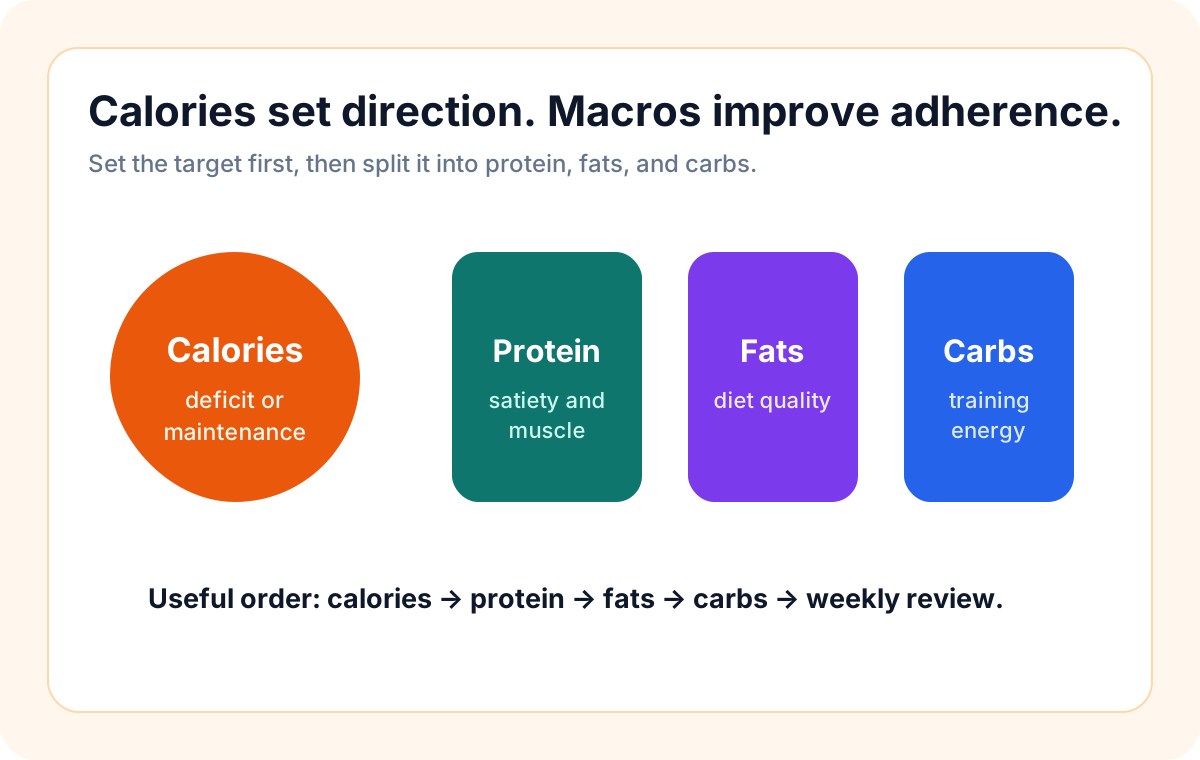
Carb planning works by placing carbohydrate foods where they support energy, fullness, and consistency. Calories still set the weight-loss direction, protein protects meal structure, and carbs can make training and meals easier to repeat. The goal is not maximum carbs or minimum carbs. The goal is a repeatable pattern that fits your target and your life.
Carb Planning Checklist
- Keep the daily calorie target first.
- Place easier-to-digest carbs near harder workouts.
- Pair carbs with protein across the day.
- Review energy, hunger, and performance weekly.
Step-by-Step Plan
- Choose the meal, workout, or craving window where carbs feel hardest to manage.
- Keep the calorie and protein targets visible.
- Pick one carb portion that fits the meal.
- Pair carbs with protein, fiber, or vegetables when possible.
- Review energy, hunger, and progress trends before changing the plan.
Example
A banana, oats, rice, potatoes, toast, or fruit can support a training session when the portion fits the day.
Common Mistakes
- Assuming low energy means you need a huge carb load instead of checking sleep, total calories, and meal timing.
- Treating carb timing as more important than the full day of calories and protein.
- Removing carbs from every meal, then losing training energy or snack control.
- Changing the plan after one day instead of reviewing a week of energy, hunger, and progress.
When To Be Careful
This guide is educational and does not replace medical or nutrition care. Diabetes, pregnancy, digestive disease, medications, eating-disorder history, competitive sport demands, or medically prescribed diets need qualified guidance. Simplify tracking if carb rules increase anxiety, guilt, or binge-restrict cycles.
How Up2You Helps
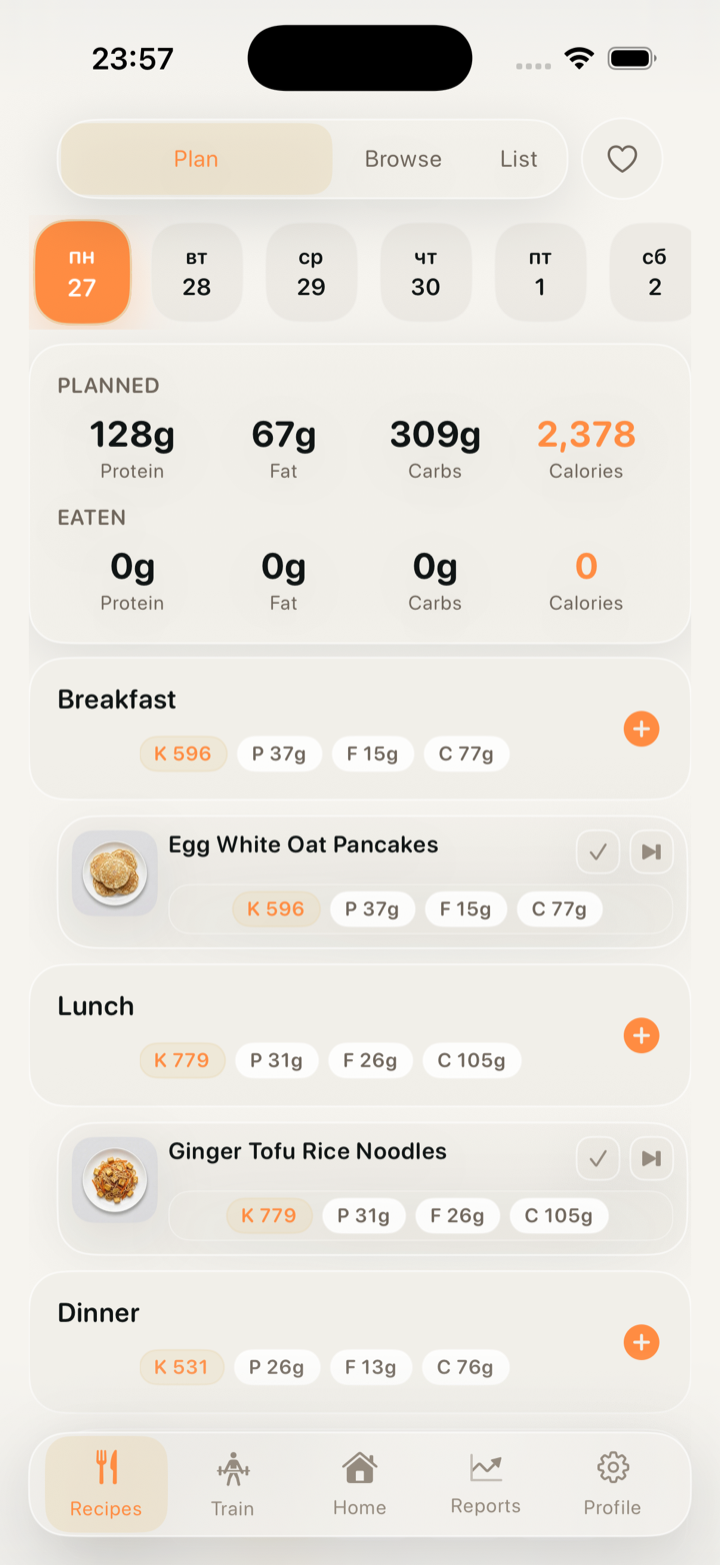
Up2You keeps meal plans, calorie targets, macros, workouts, logs, notes, and progress trends together, so carb choices can be reviewed with energy, hunger, and training performance.
Inside Up2You
FAQ
Do carbs stop weight loss?
No. Weight loss depends mainly on the calorie pattern over time, while carb portions can affect energy, hunger, and adherence.
Should I eat carbs before workouts?
Many people feel better with some easy-to-digest carbs before harder sessions, but the best timing depends on your meal schedule.
Are low-carb diets better?
They can work for some people, but balanced diets can also work when calories, protein, and consistency are in place.