Emergency Dinners for Weight Loss
Plan emergency dinners for weight loss with shelf-stable, frozen, and no-cook options that fit calories and protein.
Quick Answer
- Fix unplanned evenings turning into random snacks or high-calorie takeout by using default meals and backups instead of relying on daily decisions.
- Time-saving meal planning works when protein, produce, carbs, and flavor can be assembled quickly from foods you already keep ready.
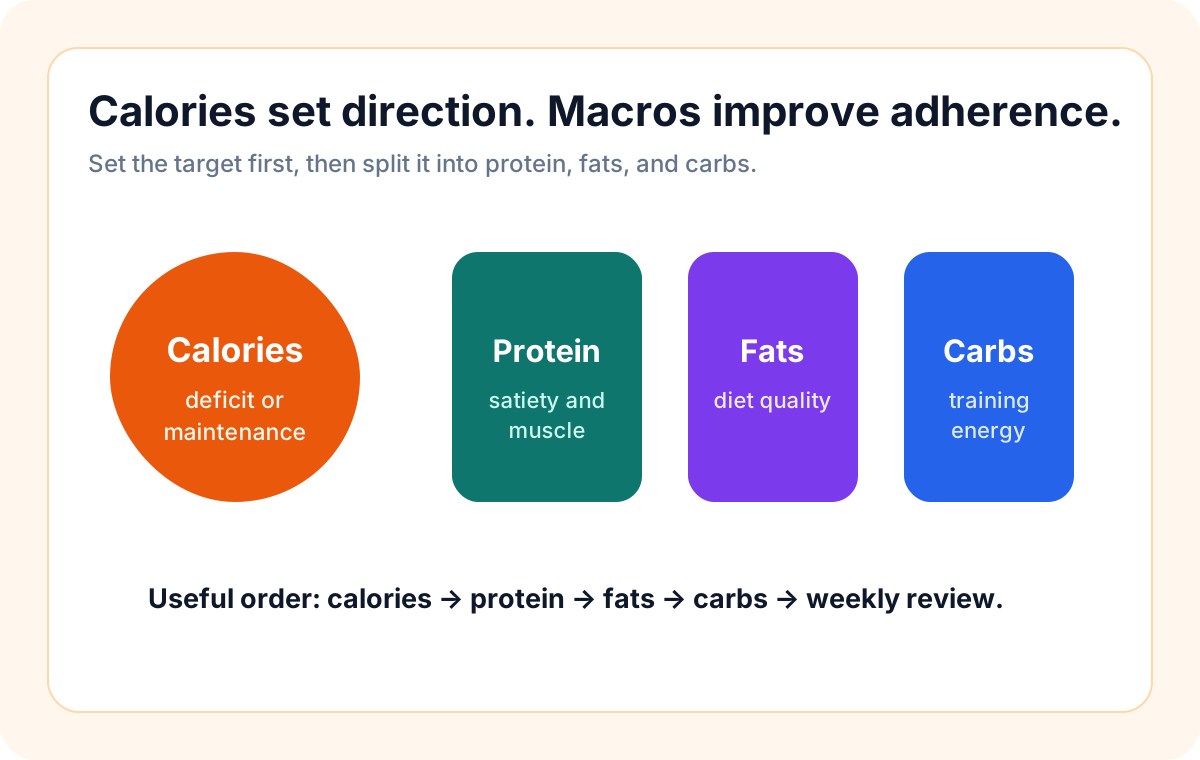
- The goal is not a perfect plan. The goal is fewer decisions, fewer skipped meals, and enough structure to stay close to targets on busy days.
- Use Calorie Calculator and Macro Calculator when targets need a practical reset.
Who This Guide Is For
- Users whose meals break down when schedules get busy.
- People who need fast breakfasts, lunches, dinners, and backup meals that still fit calorie targets.
- Beginners who want simple repeatable meal planning before detailed recipes.
How It Works
Time-saving meal planning reduces friction before hunger is high. Defaults, shortcuts, leftovers, frozen foods, canned foods, and no-cook meals make the plan easier to execute. Food safety still matters when storing leftovers, reheating meals, or relying on ready-to-eat foods.
Time-Saving Checklist
- Keep one freezer dinner option.
- Keep one pantry dinner option.
- Keep one no-cook protein option.
- Decide your emergency meal before the week starts.
Step-by-Step Plan
- Choose the meal that most often fails on busy days.
- Create one default version using protein, produce, carbs, and flavor.
- Add a no-cook or freezer backup.
- Log or estimate the default once so it is easy to repeat.
- Review time, hunger, cost, and consistency after one week.
Example
Frozen vegetables with eggs, canned tuna wraps, beans and rice, soup boosted with protein, or yogurt with fruit can keep the plan moving.
Common Mistakes
- Treating emergency meals as failure instead of a normal part of a busy plan.
- Waiting for a perfect grocery window instead of using defaults and backups.
- Making fast meals too low in protein or too low in calories to satisfy hunger.
- Ignoring food safety, allergies, eating disorder history, or prescribed nutrition limits.
When To Be Careful
This guide is educational and does not replace medical, nutrition, or food safety advice. Get individualized guidance for pregnancy, breastfeeding, diabetes, kidney disease, hypertension, immune suppression, food allergies, eating disorder history, digestive conditions, or prescribed sodium, carbohydrate, protein, fluid, or fiber limits.
How Up2You Helps
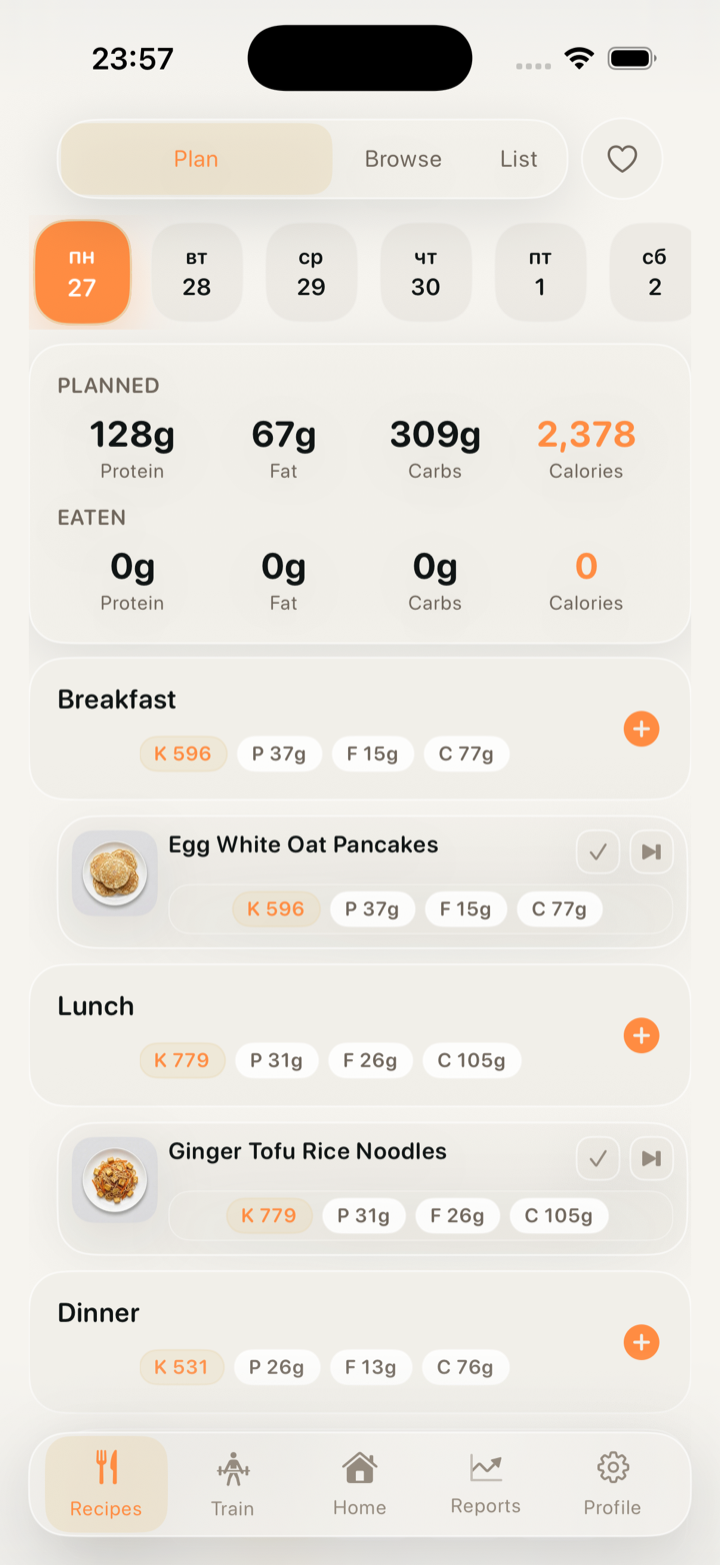
Up2You keeps meal plans, calorie targets, macros, food logs, screenshots, notes, and progress trends together, so fast meals can stay structured without becoming another complicated system.
Inside Up2You
FAQ
Can fast meals still support weight loss?
Yes. Fast meals work when portions, protein, and calorie-dense add-ons are clear.
Do I need to meal prep for hours?
No. A few components, leftovers, and backups are often enough.
What should I do on a chaotic day?
Use the backup meal, log what you can, and return to the default plan at the next meal.