Fast Food in a Calorie Deficit
Fit fast food in a calorie deficit by choosing the main first, controlling drinks and sides, and logging the meal.
Quick Answer
- Fix fast food feeling incompatible with a calorie deficit by planning social meals as part of the week instead of treating them as failure.
- Restaurant, travel, alcohol, buffet, and event meals can fit when portions, drinks, and the next meal stay realistic.
- The goal is not perfect tracking. The goal is staying engaged with the plan when life is less controlled.
- Use Calorie Calculator and Macro Calculator when targets need a practical reset.
Who This Guide Is For
- Users who lose consistency around restaurants, fast food, travel, parties, alcohol, or buffets.
- People who can follow a plan at home but switch to all-or-nothing thinking in social meals.
- Beginners who need practical choices without turning food into punishment or perfection.
How It Works
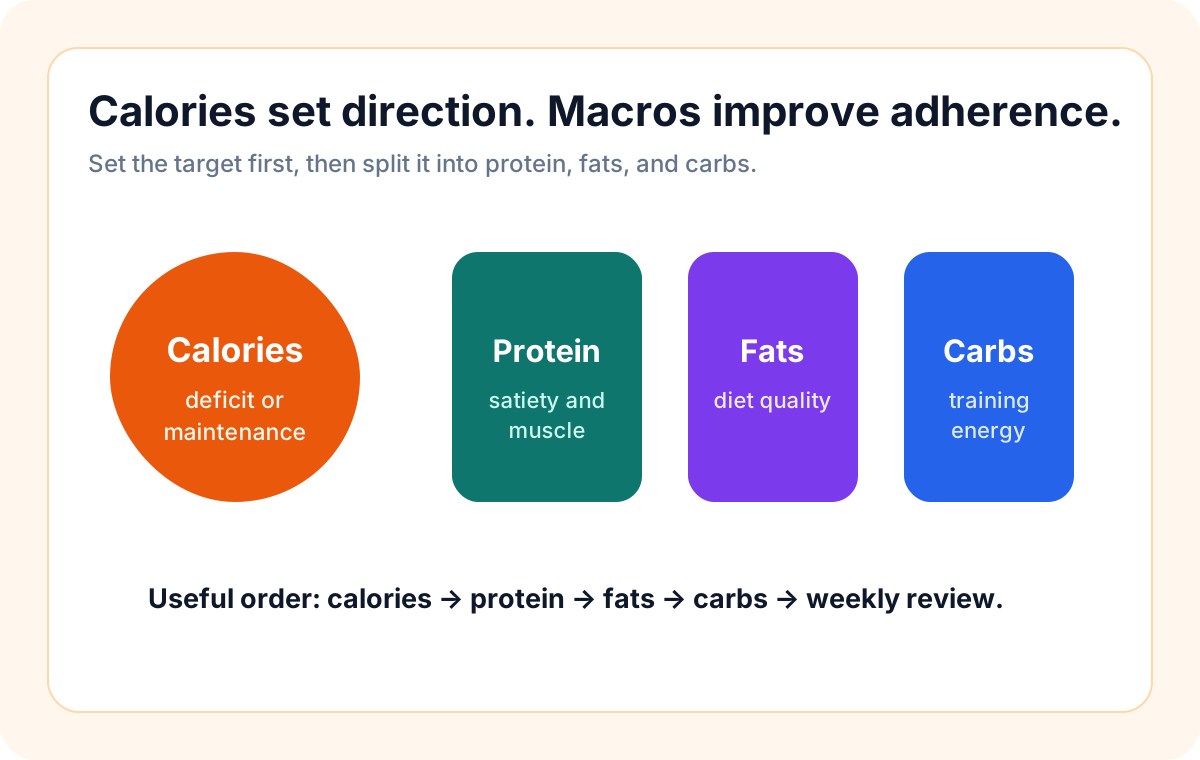
Social eating works better when the meal is part of the plan instead of a break from the plan. Decide what matters most, keep protein and portions visible, include drinks in the estimate, and make the next meal normal. Calories and macros still matter, but consistency comes from returning to the routine without drama.
Social Eating Checklist
- Pick the main before adding sides.
- Use protein-forward options when possible.
- Choose drinks deliberately.
- Log the meal and move on.
Step-by-Step Plan
- Check the event, restaurant, travel day, or buffet before hunger is high.
- Choose the main meal anchor first.
- Decide where flexibility is worth it: drinks, dessert, fries, bread, or portions.
- Log a reasonable estimate if tracking helps.
- Return to the next planned meal instead of compensating aggressively.
Example
A grilled sandwich, burger, salad with protein, smaller fries, or zero-calorie drink can fit better than an unplanned combo.
Common Mistakes
- Treating fast food as a cheat meal and ignoring portions entirely.
- Treating one social meal as proof that the whole week failed.
- Forgetting drinks, sauces, sides, grazing, and leftovers in the estimate.
- Using restriction or punishment after a flexible meal.
When To Be Careful
This guide is educational and does not replace medical, nutrition, or mental-health care. Be careful with alcohol, medication interactions, pregnancy, medical diets, digestive conditions, diabetes, and any eating disorder history. Do not use restriction, fasting, exercise, or punishment to compensate for social meals or overeating.
How Up2You Helps
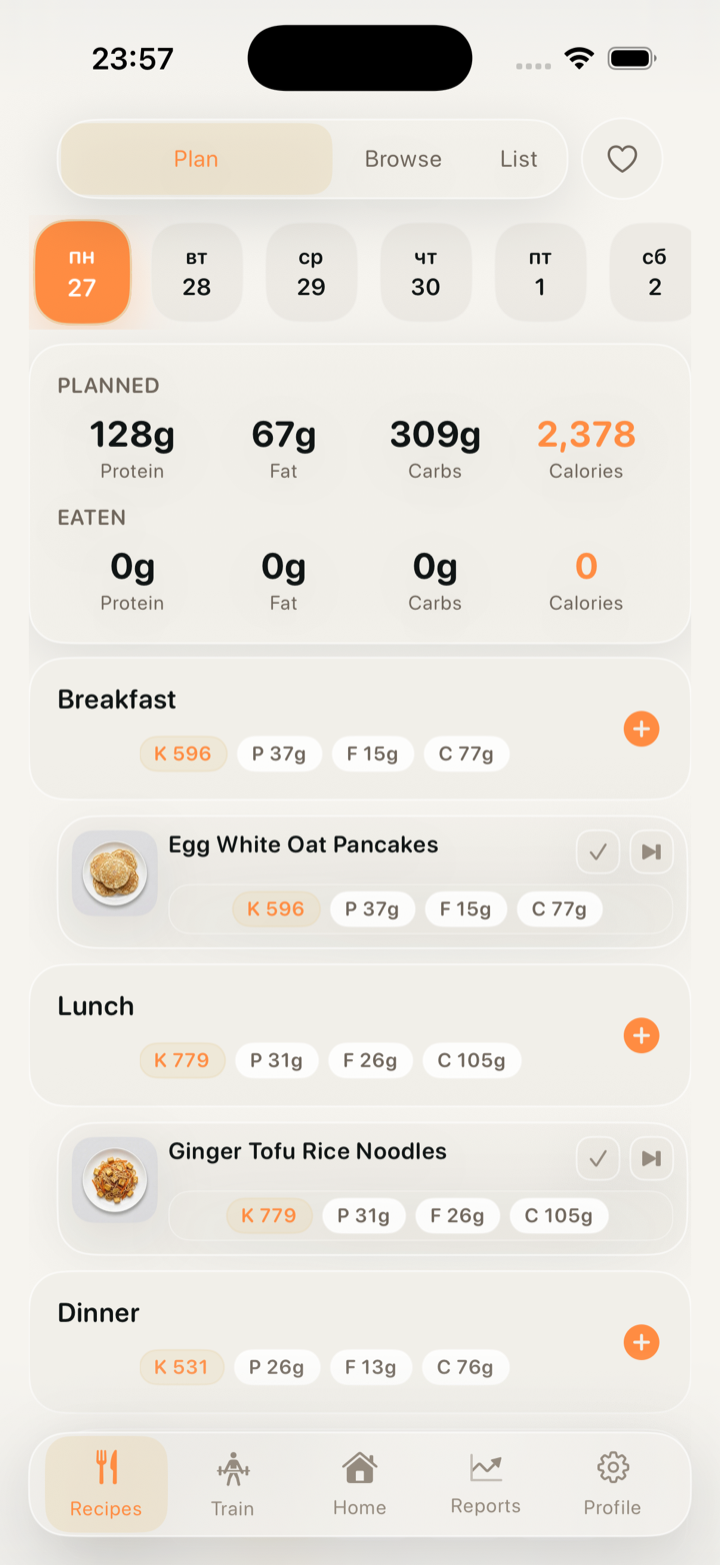
Up2You keeps meal plans, calorie targets, macros, logs, notes, and progress trends together, so social meals can be reviewed without losing the rest of the week.
Inside Up2You
FAQ
Can I eat out and still lose weight?
Yes. Eating out can fit when weekly calories, protein, portions, and consistency remain workable.
Should I skip meals before a restaurant?
Usually no. Arriving overly hungry often makes ordering and portion decisions harder.
What if I overeat?
Return to your normal routine, hydrate, log a simple estimate if useful, and avoid punishment or extreme restriction.