Healthy Snacks for a Calorie Deficit: Simple Ideas That Fit
Healthy snacks can fit a calorie deficit when they solve a real problem: hunger, low protein, low fiber, or a long gap between meals. The best snack is not just low calorie. It is planned, portioned, satisfying, and easy to repeat without turning into random grazing.
Quick Answer
- Start with your daily calorie target using the Calorie Calculator.
- Choose snacks that add protein, fiber, or food volume.
- Keep calorie-dense foods like nuts, nut butter, cheese, oils, and dried fruit portioned.
- Use snacks to prevent overeating at meals, not to eat out of boredom.
- Track the weekly trend before deciding whether a snack works.
Who This Guide Is For
- Beginners trying to stay in a calorie deficit without feeling constantly hungry.
- People who snack at work, school, late at night, or between workouts.
- Users who want practical snack templates instead of a strict meal plan.
- Anyone who eats healthy foods but still overshoots calories.
How It Works
A calorie deficit is about the full day and week, not whether one food is labeled healthy. Snacks help when they make the day easier to follow. They hurt progress when they add unplanned calories, especially from foods that are easy to overeat in small portions.
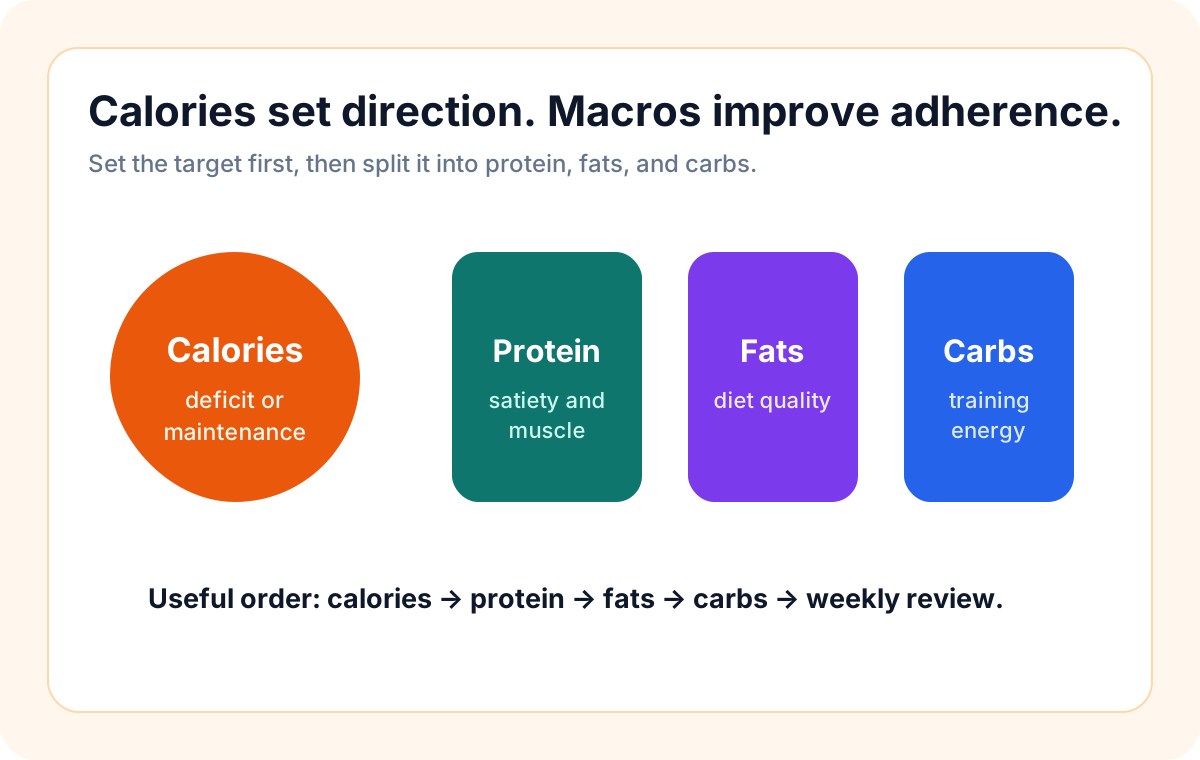
CDC guidance emphasizes lower-calorie, fiber-rich foods such as fruits and vegetables to help with fullness. USDA MyPlate recommends combining food groups for satisfying snacks, such as yogurt with berries or whole-grain crackers with protein. For fat loss, the useful pattern is simple: protein or fiber first, portion calorie-dense add-ons, and keep the snack inside your day target.
Step-by-Step Plan
- Decide why you need the snack: hunger, protein, pre-workout energy, or meal gap.
- Pick a calorie range that fits your day, often 100-250 calories for a small snack or 250-400 for a mini-meal.
- Add a protein anchor when the snack needs to keep you full.
- Add fruit, vegetables, popcorn, potatoes, oats, beans, or whole grains for volume and fiber.
- Measure calorie-dense extras until you know your usual portion.
- Keep 2-3 default snacks ready so decisions are easier.
- Review hunger and adherence after 7-14 days.
Snack Ideas That Fit a Deficit
| Snack | Why it works | Watch out for |
| --- | --- | --- |
| Greek yogurt with berries | Protein plus volume from fruit | Sweetened yogurt can add calories quickly |
| Cottage cheese with pineapple | Protein, sweet flavor, easy portion | Choose a portion that fits your target |
| Apple with measured peanut butter | Fiber plus fat for satisfaction | Nut butter portions grow fast |
| Carrots or cucumber with hummus | Crunch, fiber, and savory flavor | Hummus still has calories |
| Air-popped popcorn | High volume for fewer calories | Oil, butter, and sugar toppings change the math |
| Boiled eggs and fruit | Protein plus carbs | Add vegetables if you need more volume |
| Turkey or tofu wrap | Mini-meal for long gaps | Sauces and cheese can double calories |
| Edamame | Plant protein and fiber | Salt and portion size matter |
| Protein smoothie | Convenient after training | Liquids can be less filling for some people |
| Tuna or chickpea crackers | Protein plus crunch | Choose a portion, not the whole box |
Example
A person targeting 1,800 calories could plan three meals and one 180-calorie snack. If afternoons are the hardest, they might use Greek yogurt with berries or carrots with hummus at 3 p.m. If late-night snacking is the issue, they might move calories from an earlier meal into a planned evening snack instead of relying on willpower.
Common Mistakes
- Choosing snacks only because they are marketed as healthy.
- Eating nuts, trail mix, granola, or dried fruit straight from the bag.
- Drinking calories from smoothies, juices, or coffee drinks without tracking them.
- Keeping snacks too low in protein and fiber, then feeling hungry again quickly.
- Treating snacks as free calories after a workout.
- Changing the plan after one hungry day instead of checking the weekly pattern.
When To Be Careful
This guide is educational and not medical advice. If you have diabetes, food allergies, digestive conditions, pregnancy, a medically prescribed diet, or a history of disordered eating, work with a qualified clinician or registered dietitian before changing your eating pattern substantially.
How Up2You Helps
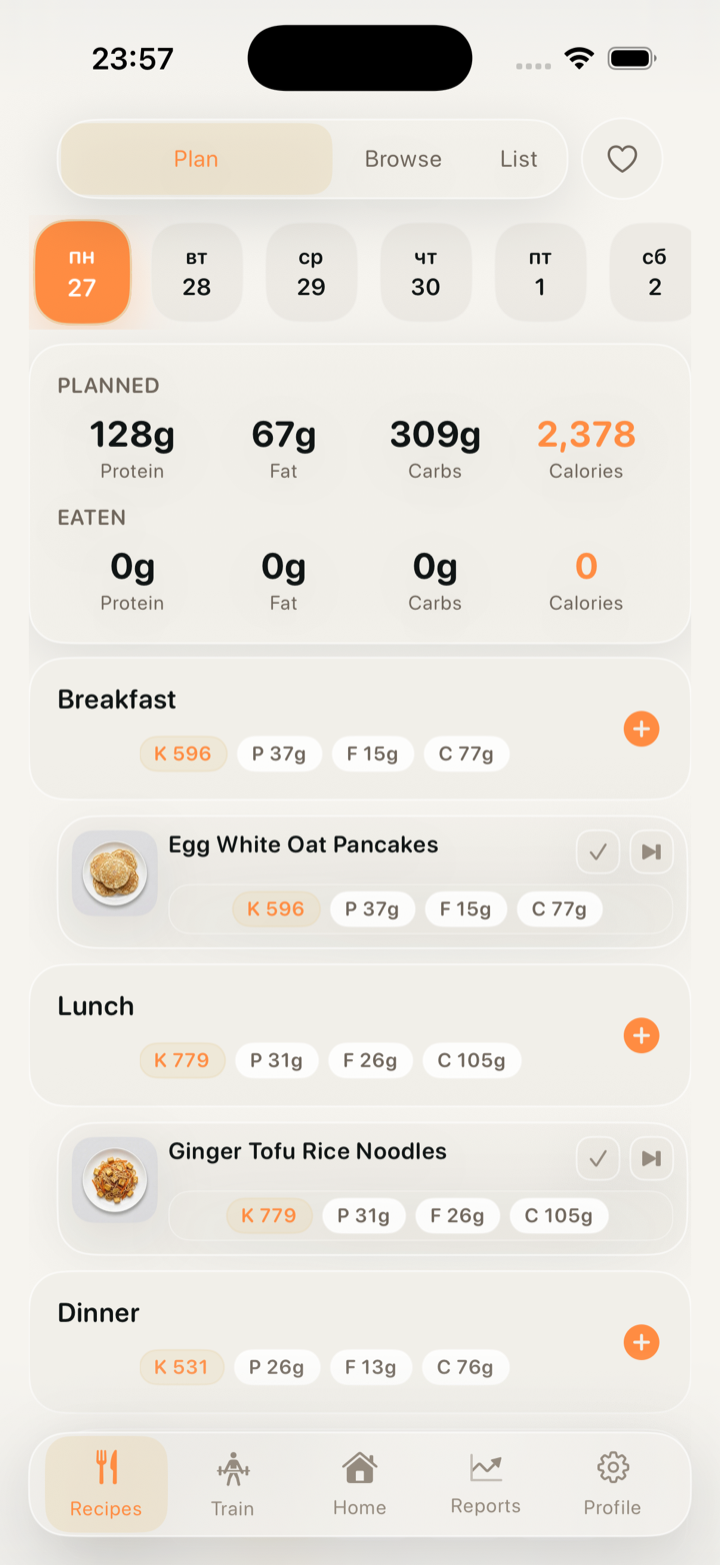
Up2You helps turn snacks into part of the plan: calculate calories with the Calorie Calculator, set macros with the Macro Calculator, plan repeatable meals and snacks, log what you actually ate, and compare progress over time.
Inside Up2You
FAQ
Can I snack and still lose weight?
Yes. Snacks can fit fat loss when the full day stays in a calorie deficit and the snack helps you avoid overeating later.
What is the best snack for a calorie deficit?
There is no single best snack. A useful snack usually includes protein, fiber, or high-volume foods and fits your calorie target.
Are nuts bad for weight loss?
No. Nuts are nutritious, but they are calorie dense. Portion them instead of eating from the bag.
Should I avoid carbs in snacks?
No. Fruit, oats, potatoes, popcorn, beans, and whole grains can fit a deficit. The portion and full-day calories matter most.
What if snacks make me hungrier?
Try a more complete snack with protein and fiber, or test fewer snacks and larger meals. Your best structure is the one you can repeat.