High-Protein Meal Plan: Build Meals That Keep You Full
A high-protein meal plan helps you hit protein consistently by putting a clear protein source at each meal, then adding carbs, fats, fruit, vegetables, and snacks around your calorie target. Start with a realistic daily protein goal, spread it across meals, and adjust based on hunger, training, and adherence.
Quick Answer
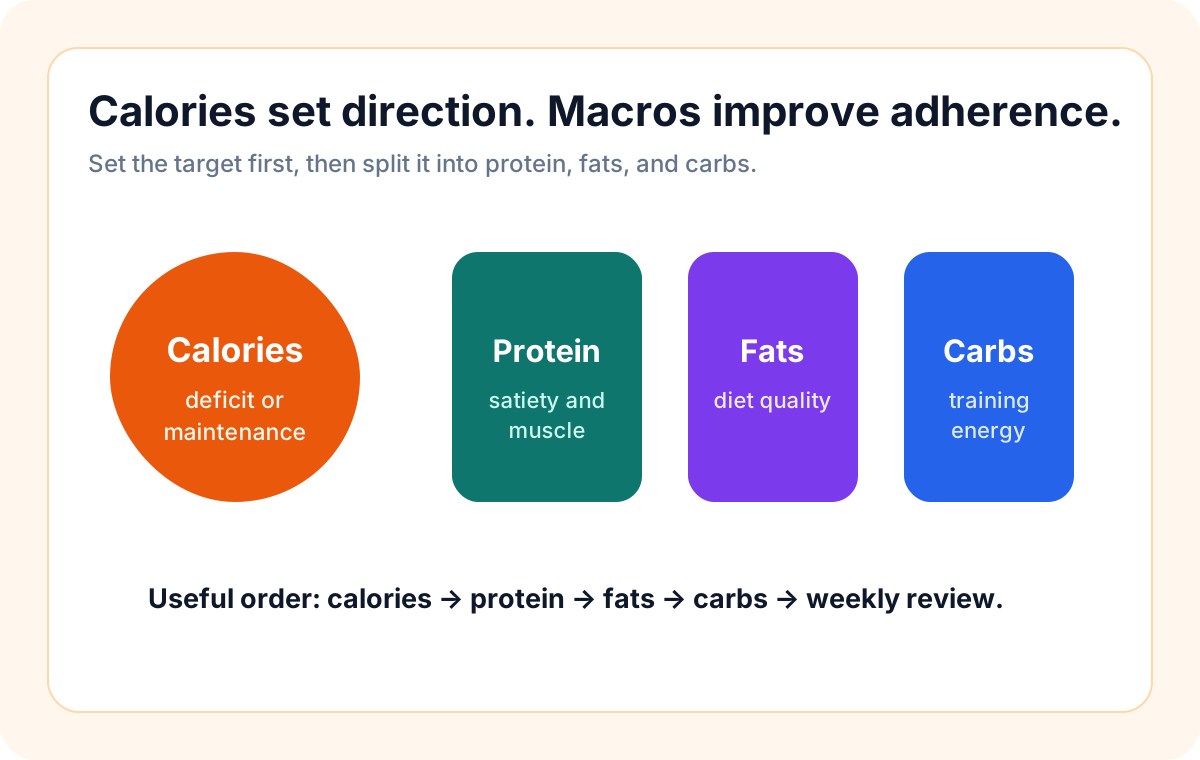
- Set calories first if your goal is weight loss, maintenance, or muscle gain.
- Choose a daily protein target you can repeat without forcing every meal.
- Build each meal around one protein anchor.
- Add carbs and fats based on training, hunger, and preference.
- Use Macro Calculator and Calorie Calculator to make the plan measurable.
Who This Guide Is For
- Beginners who want more protein without complicated meal prep.
- People losing fat who want meals that feel more filling.
- Users who train and want nutrition to support recovery.
- Anyone who tracks calories or macros but struggles to plan actual meals.
How It Works
Protein is easier to hit when it is planned before the rest of the meal. Instead of hoping the day adds up, choose a protein anchor for breakfast, lunch, dinner, and one optional snack. Then use your calorie target to decide how much room remains for carbs, fats, sauces, and extras.
Step-by-Step Plan
- Estimate your daily calories with the Calorie Calculator.
- Set protein with the Macro Calculator.
- Split protein across 3-4 eating moments.
- Pick repeatable protein anchors: eggs, Greek yogurt, chicken, fish, tofu, beans, lean meat, cottage cheese, protein powder, or tempeh.
- Add high-fiber carbs or produce to support fullness.
- Add fats deliberately instead of letting oils, nuts, cheese, and sauces drift upward.
- Review the plan after 7-14 days using hunger, training quality, and weekly trend.
Example
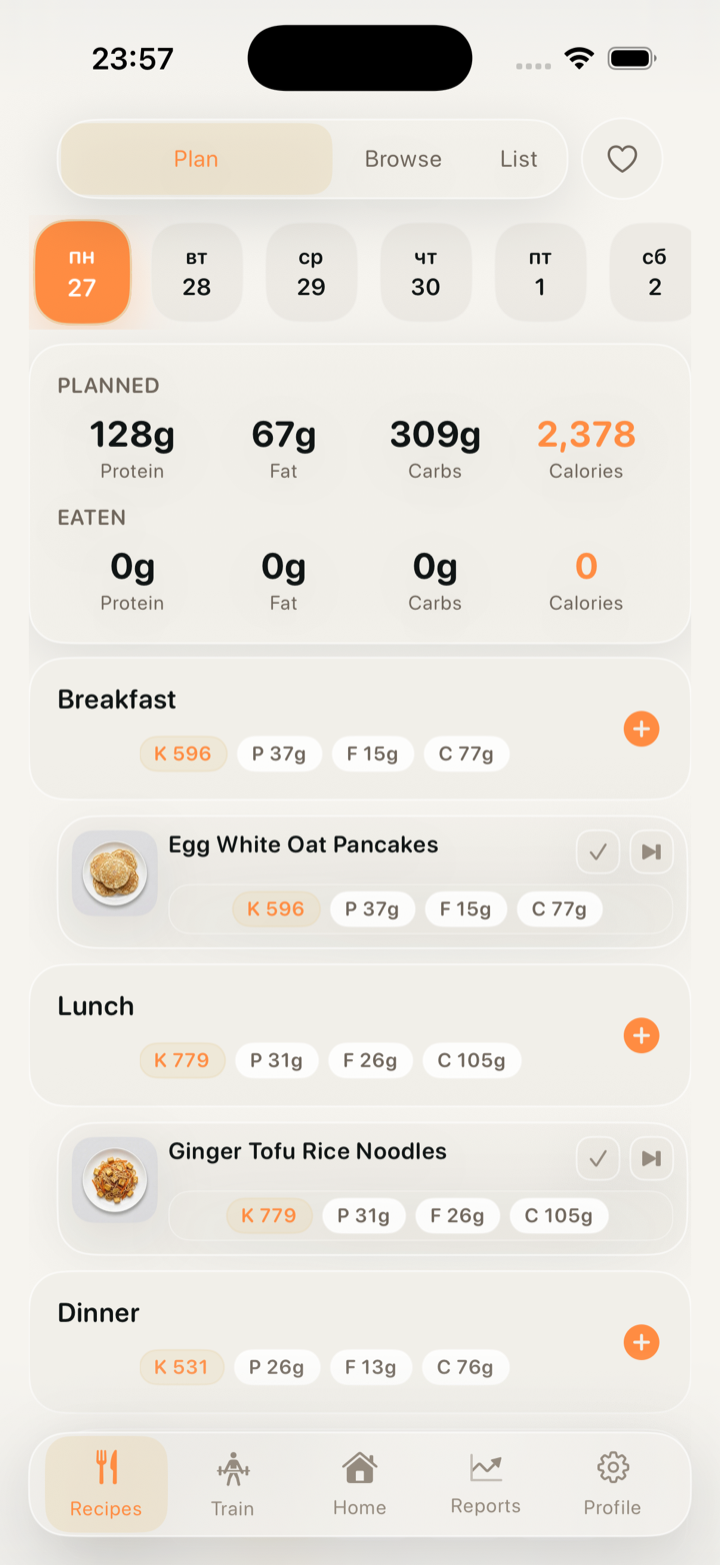
A person targeting about 130 g protein could plan roughly 30-40 g at breakfast, lunch, and dinner, plus a 15-25 g snack. One day might include Greek yogurt with oats, chicken rice bowl, tofu noodles, and cottage cheese with fruit. The exact foods can change; the repeatable pattern matters more than copying one menu perfectly.
Common Mistakes
- Adding protein only at dinner and trying to catch up late.
- Choosing very lean foods but forgetting calories from oils, sauces, nuts, and cheese.
- Making every meal high protein but too low in fiber or carbs for training.
- Setting a protein target so high that the plan becomes expensive or hard to enjoy.
- Treating protein snacks as free calories.
When To Be Careful
This guide is educational and not medical advice. If you have kidney disease, a medically prescribed diet, pregnancy, digestive conditions, a history of disordered eating, or other health concerns, ask a qualified clinician or registered dietitian before changing protein intake substantially.
How Up2You Helps
Up2You helps turn a protein target into meals you can follow: set calories and macros, plan meals around protein anchors, track what you actually eat, and review progress without rebuilding the plan every day.
Inside Up2You
FAQ
How much protein should be in each meal?
A practical starting point is 25-40 g protein per main meal, then adjust based on your daily target, appetite, and meal frequency.
Can a high-protein meal plan work for weight loss?
Yes. Protein can help with fullness and muscle retention, but weight loss still depends on a consistent calorie deficit.
Do I need protein powder?
No. Protein powder is optional. It can be convenient, but whole-food protein sources can work just as well when they fit your calories and schedule.
What if I am vegetarian?
Use tofu, tempeh, seitan, Greek yogurt, cottage cheese, eggs, lentils, beans, edamame, and protein-rich grains. You may need to plan portions more deliberately to hit the same protein target.