How To Season Healthy Food
Season healthy food with salt awareness, acid, herbs, spices, heat, aromatics, and texture so simple meals are repeatable.
Quick Answer
- Fix healthy meals tasting flat and not feeling worth repeating with one simple cooking system you can repeat.
- Kitchen basics support weight loss when they make protein, produce, carbs, and flavor easier to assemble before hunger is high.
- The goal is not chef-level cooking. The goal is a small set of meals that are safe, satisfying, and easy enough to repeat.
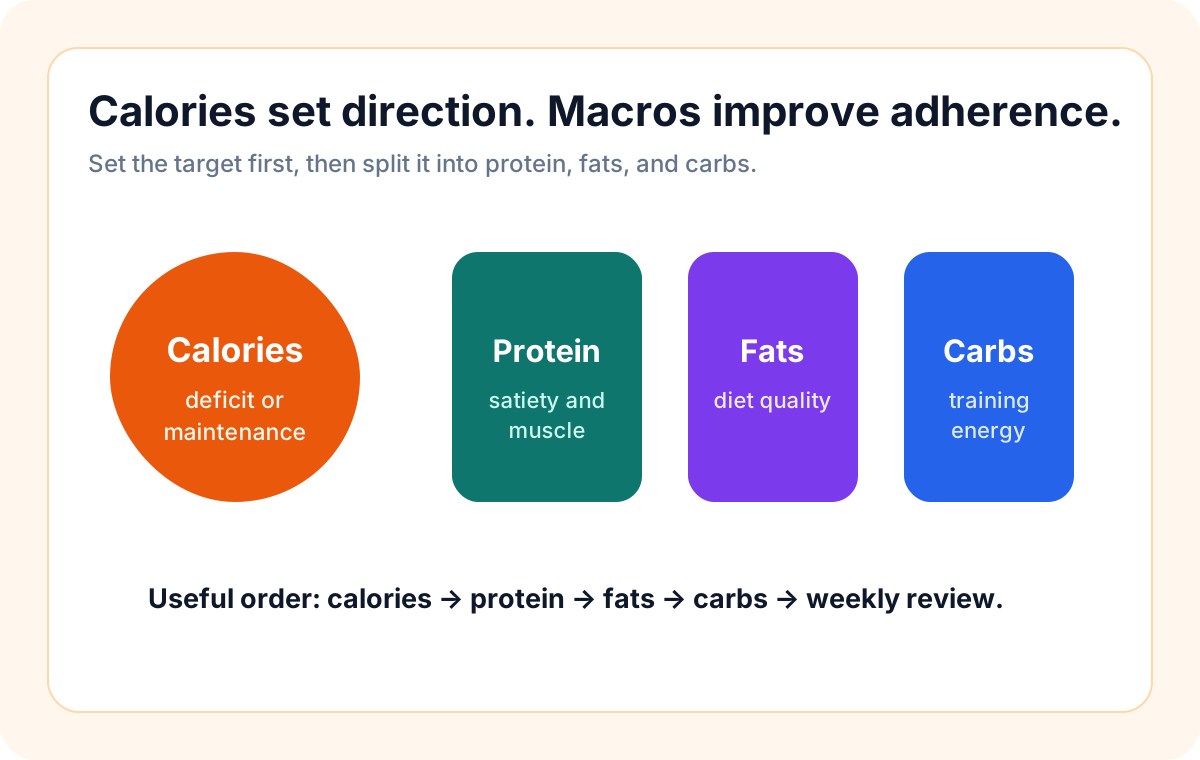
- Use Calorie Calculator and Macro Calculator when targets need a practical reset.
Who This Guide Is For
- Users who want to eat at home more often but do not want complicated recipes.
- People who lose consistency when protein prep, vegetables, sauces, or quick dinners feel too hard.
- Beginners who need simple meal formulas before advanced meal prep.
How It Works
Cooking basics work by reducing friction. When a few proteins, vegetables, carbs, sauces, and no-cook backups are ready, the plan depends less on motivation. Food safety still matters: store cooked foods properly, reheat leftovers carefully, and follow medical or allergy guidance when it applies.
Kitchen Basics Checklist
- Add salt or salty ingredients intentionally.
- Use acid such as lemon, vinegar, yogurt, or tomato.
- Add herbs, spices, garlic, onion, or chili.
- Finish with texture when calories allow.
Step-by-Step Plan
- Pick the meal that most often breaks the plan.
- Choose one default protein, one produce option, one carb, and one sauce.
- Make the meal small enough to repeat on a busy day.
- Log or estimate the meal once so future repeats are easier.
- Review hunger, energy, enjoyment, and food waste after a week.
Example
A bowl can change completely with lemon and herbs, salsa and chili, curry spices, garlic yogurt, or a small crunchy topping.
Common Mistakes
- Only reducing calories and forgetting that flavor is part of adherence.
- Making the meal so low-calorie that hunger returns quickly.
- Planning meals that require more time, tools, or cleanup than the week can support.
- Ignoring food safety, allergies, eating disorder history, or prescribed nutrition limits.
When To Be Careful
This guide is educational and does not replace medical, nutrition, or food safety advice. Get individualized guidance for pregnancy, breastfeeding, diabetes, kidney disease, hypertension, immune suppression, food allergies, eating disorder history, digestive conditions, or prescribed sodium, carbohydrate, protein, fluid, or fiber limits.
How Up2You Helps
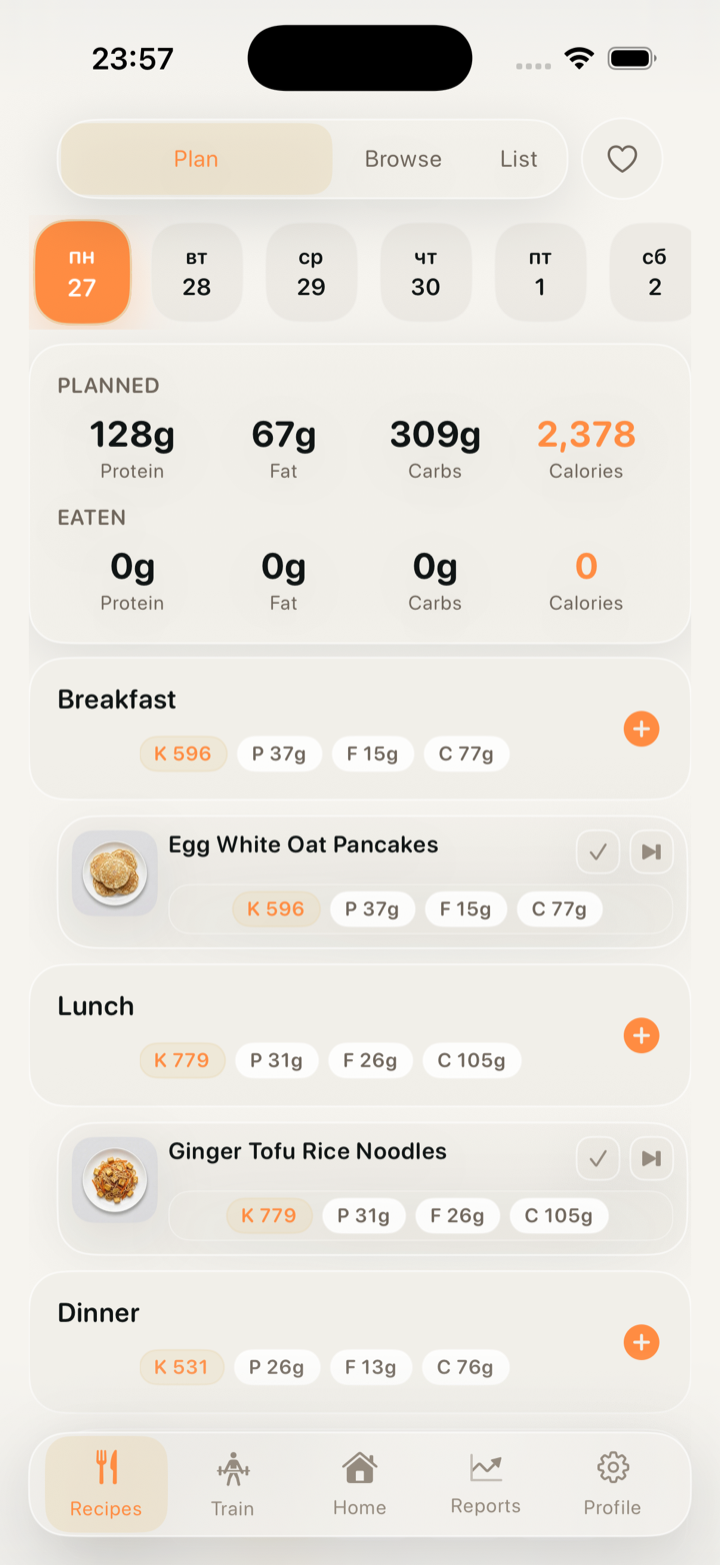
Up2You keeps meal plans, calorie targets, macros, food logs, screenshots, notes, and progress trends together, so simple cooking routines can stay flexible instead of becoming another rigid rule set.
Inside Up2You
FAQ
Do I need to cook every meal to lose weight?
No. Cooking can help, but no-cook meals, leftovers, packaged staples, and restaurant meals can still fit when portions and targets are clear.
What is the easiest meal formula?
Start with protein, add produce, choose a carb, then add measured flavor through sauce, seasoning, or fat.
How many recipes do I need?
Usually fewer than expected. Three to five repeatable meals plus backups are often more useful than a large recipe list.