How To Swap Meals in a Plan
Swap meals without losing structure by matching protein, calories, prep time, and the role of the meal.
Quick Answer
- Fix meal swaps changing the whole nutrition day by designing a plan with allowed swaps before the week gets difficult.
- A flexible meal plan keeps the main targets stable while letting specific meals change.
- The goal is not perfect control. The goal is fewer missed meals, fewer random choices, and better weekly consistency.
- Use Calorie Calculator and Macro Calculator when targets need a practical starting point.
Who This Guide Is For
- Users who like meal planning but need more room for real schedules.
- People who struggle with busy days, low appetite, treat meals, grocery routines, or repeated cooking decisions.
- Beginners who want structure without making food choices feel rigid.
How It Works
Meal planning flexibility works by separating the purpose of a meal from the exact food. A meal can still do its job if protein, calories, timing, and satisfaction stay close enough. Flexible plans use templates, backups, and planned swaps so one changed meal does not erase the whole week.
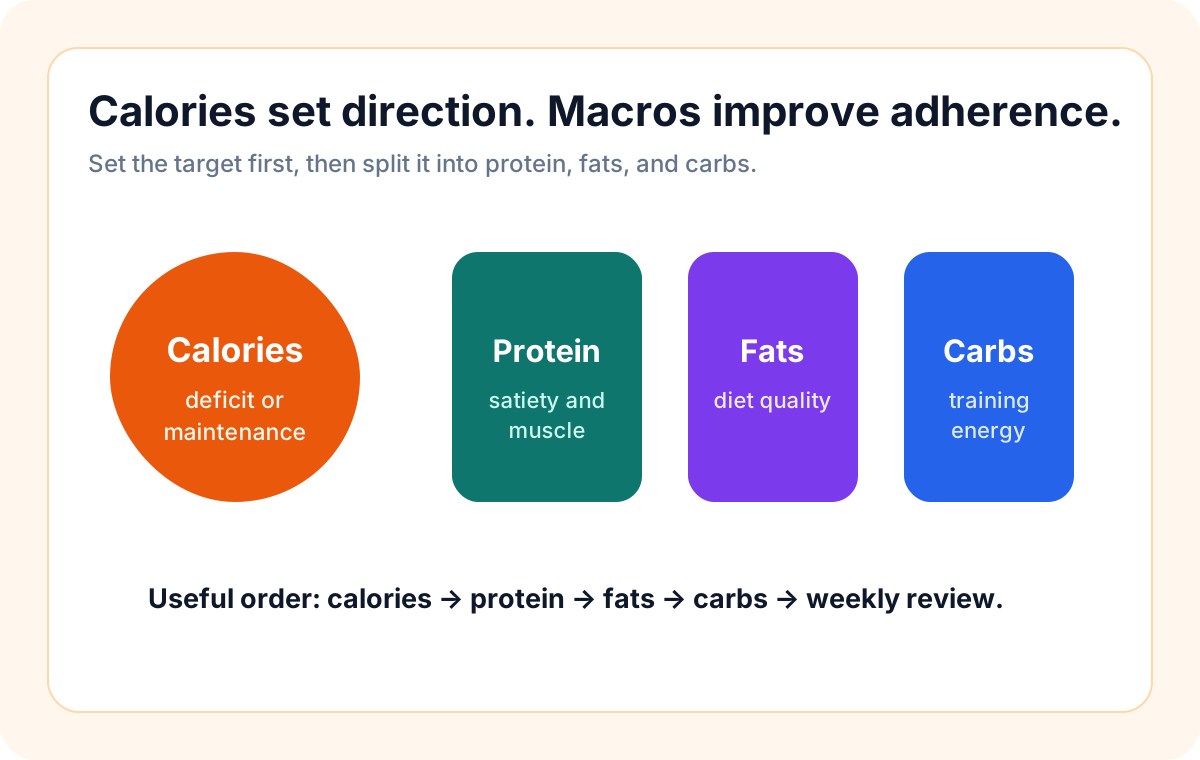
Flexibility Checklist
- Match the main protein first.
- Keep the calorie range close enough for the day.
- Swap like for like when possible.
- Log the swap instead of trying to remember later.
Step-by-Step Plan
- Pick the meal that most often breaks the plan.
- Create one simple swap with similar protein and calories.
- Add one backup option that is easy to buy, prepare, and log.
- Keep normal meals normal after a changed meal.
- Review what worked before changing the entire plan.
Example
A chicken rice bowl can become a tuna wrap if protein stays similar and sauces or sides are logged honestly.
Common Mistakes
- Swapping a planned meal for a snack-style meal and then wondering why hunger is higher later.
- Making the plan so exact that normal schedule changes feel like failure.
- Forgetting to log sauces, drinks, snacks, or sides when a meal changes.
- Changing the whole week after one flexible meal instead of reviewing the pattern.
When To Be Careful
This guide is educational and does not replace medical, nutrition, or mental-health care. Appetite loss, digestive symptoms, unexplained weight change, pregnancy, medications, medical conditions, and eating-disorder history need qualified guidance. Simplify tracking if meal planning increases anxiety, guilt, or rigid eating rules.
How Up2You Helps
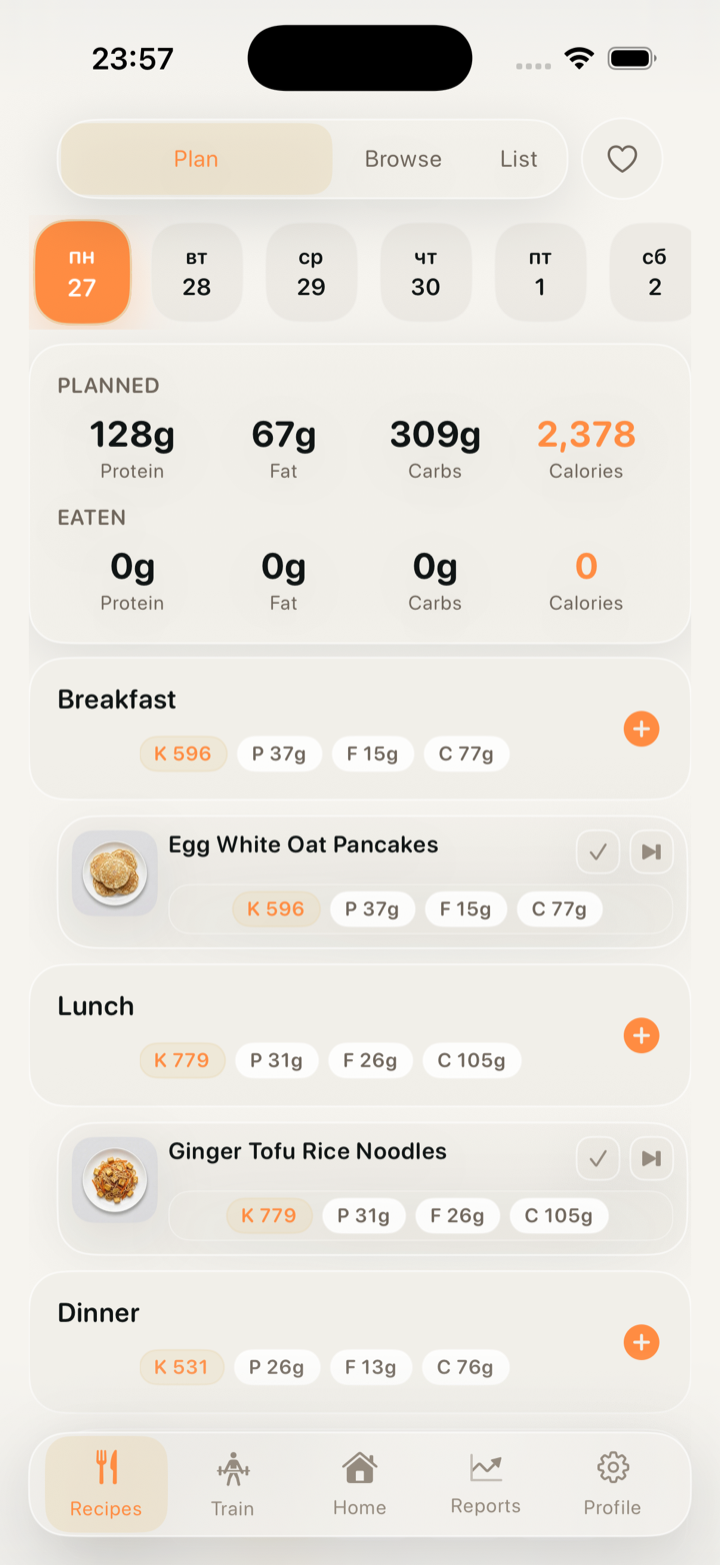
Up2You keeps meal plans, calorie targets, macros, logs, notes, and progress trends together, so flexible swaps still support the weekly goal.
Inside Up2You
FAQ
Can a meal plan be flexible and still work?
Yes. A plan can work when swaps keep the main targets close enough and the weekly routine stays consistent.
Should I log meal swaps?
Yes, especially while learning. Logging swaps helps you see whether flexibility is helping or quietly changing the calorie picture.
What if I keep changing the plan?
Look for the repeated bottleneck. You may need better backup meals, simpler groceries, or a less rigid target.