Macros for Weight Loss: Protein, Fat, and Carbs
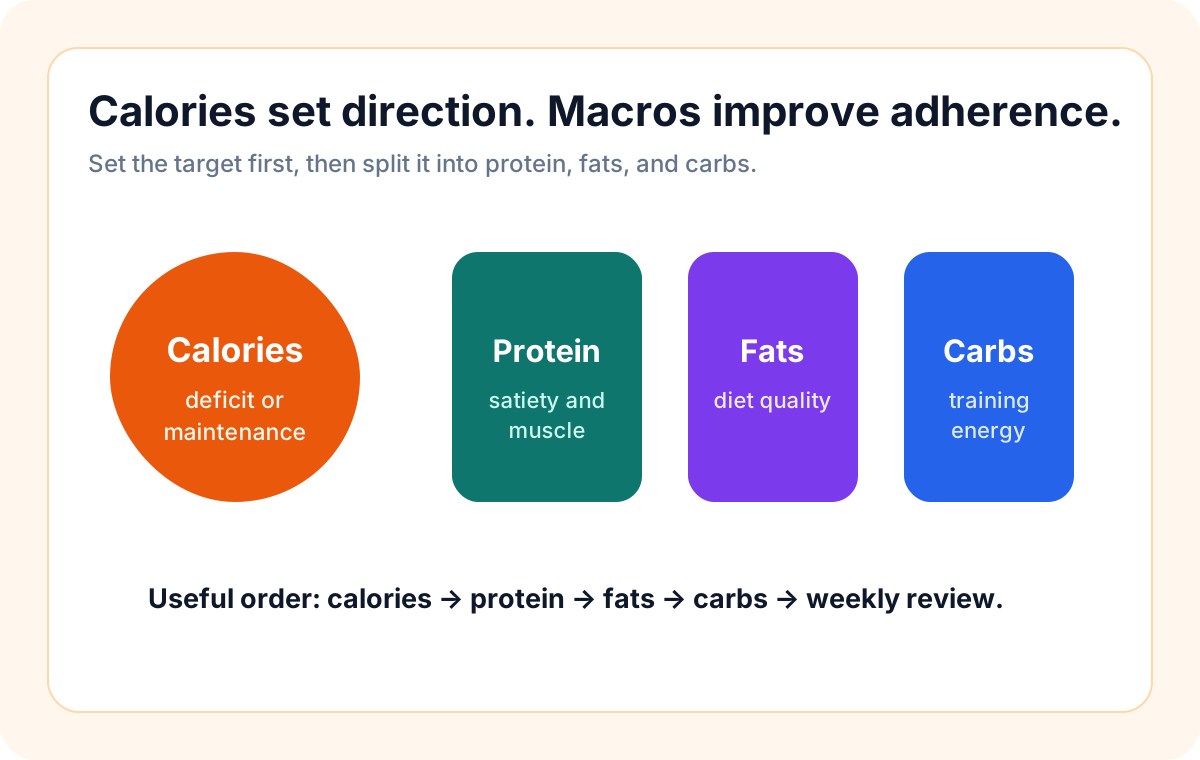
For weight loss, calories create the deficit, but macros make the diet easier to follow. Set protein first, keep dietary fat at a sustainable level, and use carbs to support training, energy, and food preference.
Quick Answer
- Calories determine whether weight loss is likely.
- Protein helps with satiety and muscle retention.
- Fat supports diet quality and consistency.
- Carbs can support training and are not automatically bad for fat loss.
Who This Guide Is For
- Beginners who already have a calorie target.
- People losing weight while training.
- Users who want a macro split that feels practical, not extreme.
How It Works
Macros are protein, fat, and carbs. Each macro contributes calories, but each also affects the diet differently. Protein is usually the first priority during fat loss because it supports fullness and lean mass. Fat should not be pushed unnecessarily low. Carbs can make training and meal planning easier.
Step-by-Step Plan
- Calculate calories with the Calorie Calculator.
- Set protein first.
- Choose a sustainable fat range.
- Put remaining calories into carbs.
- Track adherence, hunger, workouts, and weekly trend.
- Adjust calories before making the macro split complicated.
Example
If two people both eat 1,900 kcal, one may prefer higher carbs for training while another prefers more fats for satiety. Both can lose weight if calories, protein, and consistency are aligned.
Common Mistakes
- Treating carbs as the reason fat loss fails.
- Setting protein too low.
- Making macro targets too precise for daily life.
- Ignoring calories because the food is considered healthy.
- Changing macros before checking adherence.
When To Be Careful
Macro tracking is not required for everyone. If tracking creates stress, use simpler meal structure: protein at each meal, mostly minimally processed foods, planned snacks, and consistent portions.
How Up2You Helps
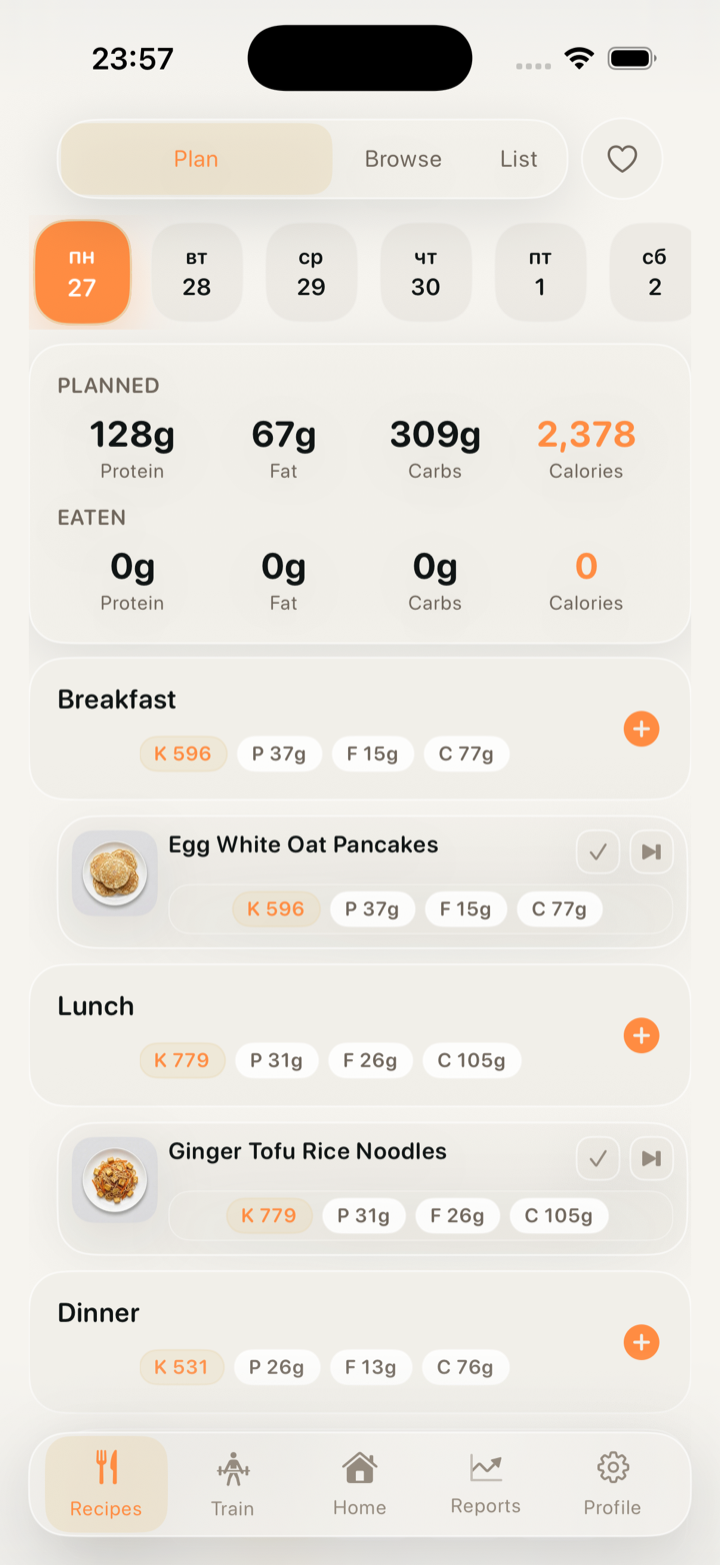
Use the Macro Calculator to convert calories into macro targets. Up2You helps you apply those targets through meal planning and food logging.
Inside Up2You
FAQ
Do macros matter more than calories?
For weight change, calories are primary. Macros help with hunger, performance, muscle retention, and consistency.
Should I go low carb for weight loss?
Only if it helps you adhere. Low carb is optional, not mandatory.
What macro should I set first?
Set protein first, then fats, then carbs with the remaining calories.