Measurements vs Scale Weight: Which Should You Trust?
Compare measurements and scale weight so short-term water changes do not hide real progress.
Quick Answer
- Use several progress signals instead of one scale number.
- Compare weekly averages and measurements under consistent conditions.
- Use Body Fat Calculator and Calorie Calculator as starting points, not final truth.
- Adjust calories, activity, or training only after enough trend data exists.
Who This Guide Is For
- People losing fat who want clearer feedback.
- Users confused by water weight, plateaus, or changing measurements.
- Beginners who want a practical review system inside Up2You.
How It Works
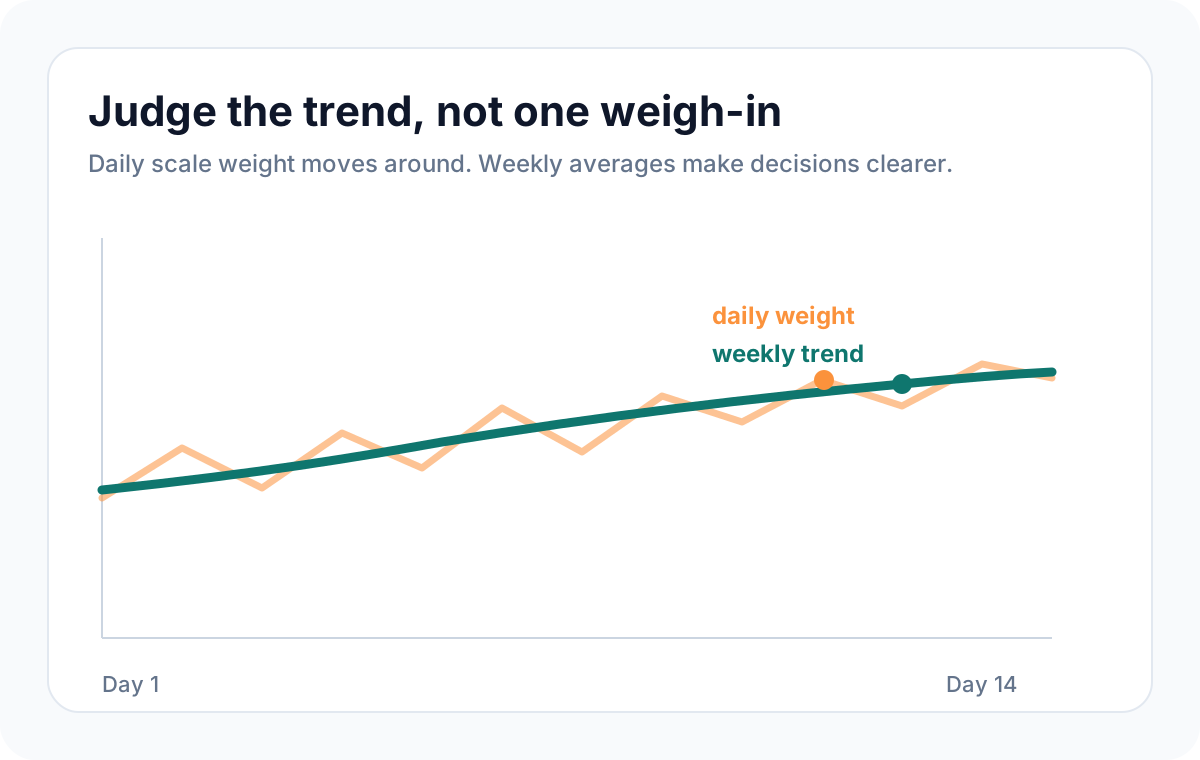
Body composition changes are noisy. Scale weight, waist, photos, strength, soreness, sodium, digestion, and cycle phase can all move at different speeds. A useful tracking system reduces that noise by using the same measurement conditions and reviewing trends weekly.
Step-by-Step Plan
- Choose two to four signals: weight average, waist, photos, workout performance, or body-fat estimate.
- Measure at the same time of day and with the same method.
- Review 10-14 days before changing the plan.
- Keep protein, steps, and training as stable as possible.
- Make one small adjustment when the trend supports it.
Example
If weight is flat for one week but waist is down and workouts are steady, the plan may still be working. If weight, waist, photos, and adherence are flat for two weeks, a small calorie or activity adjustment is more reasonable.
Common Mistakes
- Reacting to one weigh-in.
- Comparing photos taken with different lighting or posture.
- Changing calories before checking adherence.
- Treating body-fat estimates as exact measurements.
- Ignoring training performance and recovery.
When To Be Careful
This guide is educational and should not replace medical advice. If weight tracking causes anxiety, binge-restrict cycles, dizziness, missed periods, or obsessive checking, stop using aggressive targets and seek qualified support.
How Up2You Helps
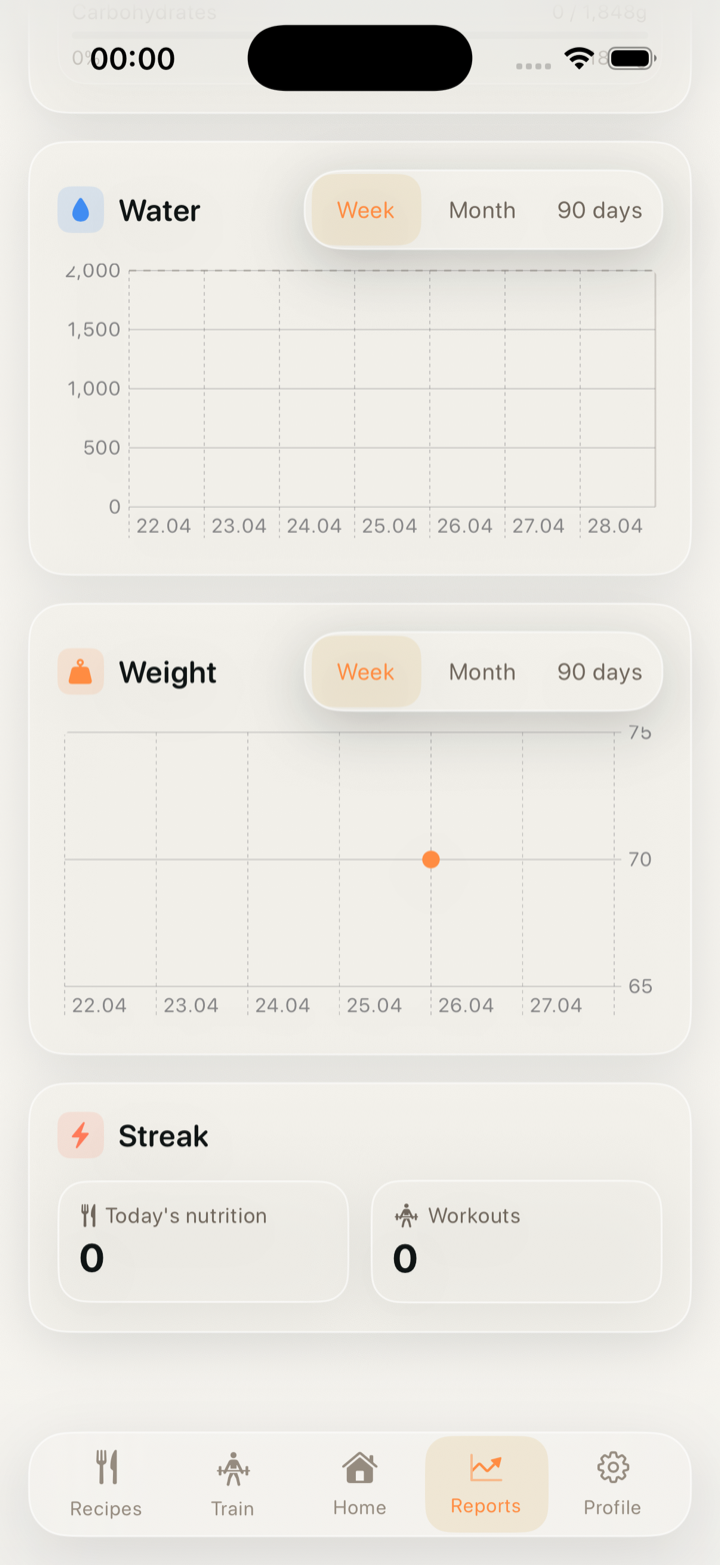
Up2You keeps calories, body measurements, weight trend, workouts, and weekly reviews in one workflow, so progress decisions are based on patterns instead of one noisy day.
Inside Up2You
FAQ
How often should I check progress?
Daily weight can be useful if you use weekly averages; measurements and photos are usually better every 2-4 weeks.
Is body fat percentage exact?
No. Treat it as an estimate and watch the direction over time.
What if the scale goes up overnight?
That is usually water, food volume, sodium, soreness, or digestion, not overnight fat gain.