Plant-Based Protein Planning
Plan plant-based protein with repeatable foods, enough total protein, fiber awareness, and realistic meals.
Quick Answer
- Fix plant-based meals falling short on protein without a clear structure by turning the protein target into meals you can repeat.
- Protein planning works best when the target is realistic, spread across the day, and matched to foods you actually eat.
- Start with one meal or snack, then review the weekly average before making the plan harder.
- Use Macro Calculator and Calorie Calculator when targets need a practical reset.
Who This Guide Is For
- Users who know protein matters but struggle to hit the target.
- People planning fat loss, muscle gain, vegetarian meals, budget meals, or busy-day meals.
- Beginners who need practical protein routines instead of a perfect macro spreadsheet.
How It Works
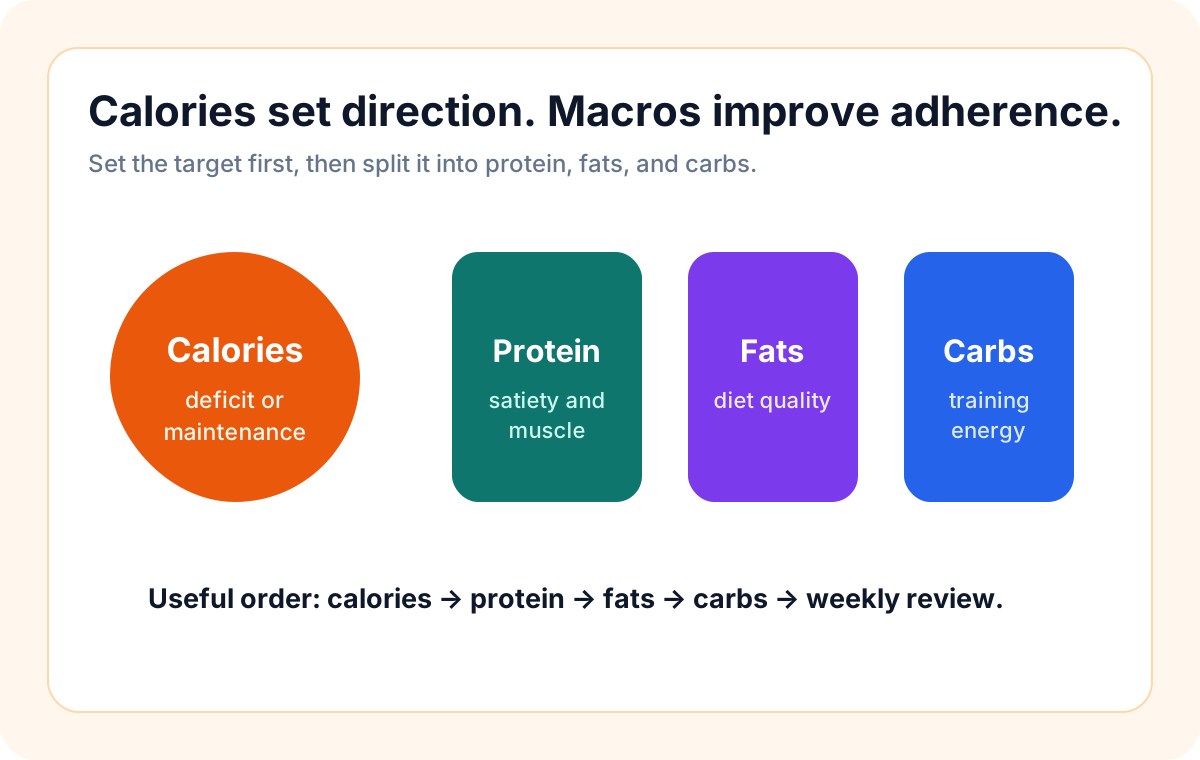
Protein supports fullness, muscle retention, training adaptation, and meal structure, but the plan still needs to fit calories, budget, appetite, digestion, and schedule. A good protein plan uses a few repeatable anchors, enough flexibility, and weekly review instead of forcing every meal to be perfect.
Protein Checklist
- Choose two or three staple plant proteins.
- Combine protein sources across the day.
- Watch fiber and fullness when portions get large.
- Use repeat meals so tracking is easier.
Step-by-Step Plan
- Choose one protein target range for the week.
- Find the meal that is usually lowest in protein.
- Add one repeatable protein anchor there.
- Prepare one backup protein option for busy days.
- Review protein, calories, hunger, and adherence together.
Example
Tofu, tempeh, lentils, beans, seitan, soy yogurt, edamame, and protein-fortified foods can form a repeatable plan.
Common Mistakes
- Assuming every plant-based meal is high protein just because it is healthy.
- Trying to fix protein by changing every meal at once.
- Ignoring calories, digestion, appetite, or budget while chasing a higher number.
- Judging one low-protein day instead of reviewing the weekly average.
When To Be Careful
This guide is educational and does not replace medical or nutrition care. Kidney disease, liver disease, pregnancy, digestive conditions, medications, eating-disorder history, or major dietary restrictions need qualified guidance. Reduce rigidity if protein tracking increases anxiety, guilt, or obsessive food rules.
How Up2You Helps
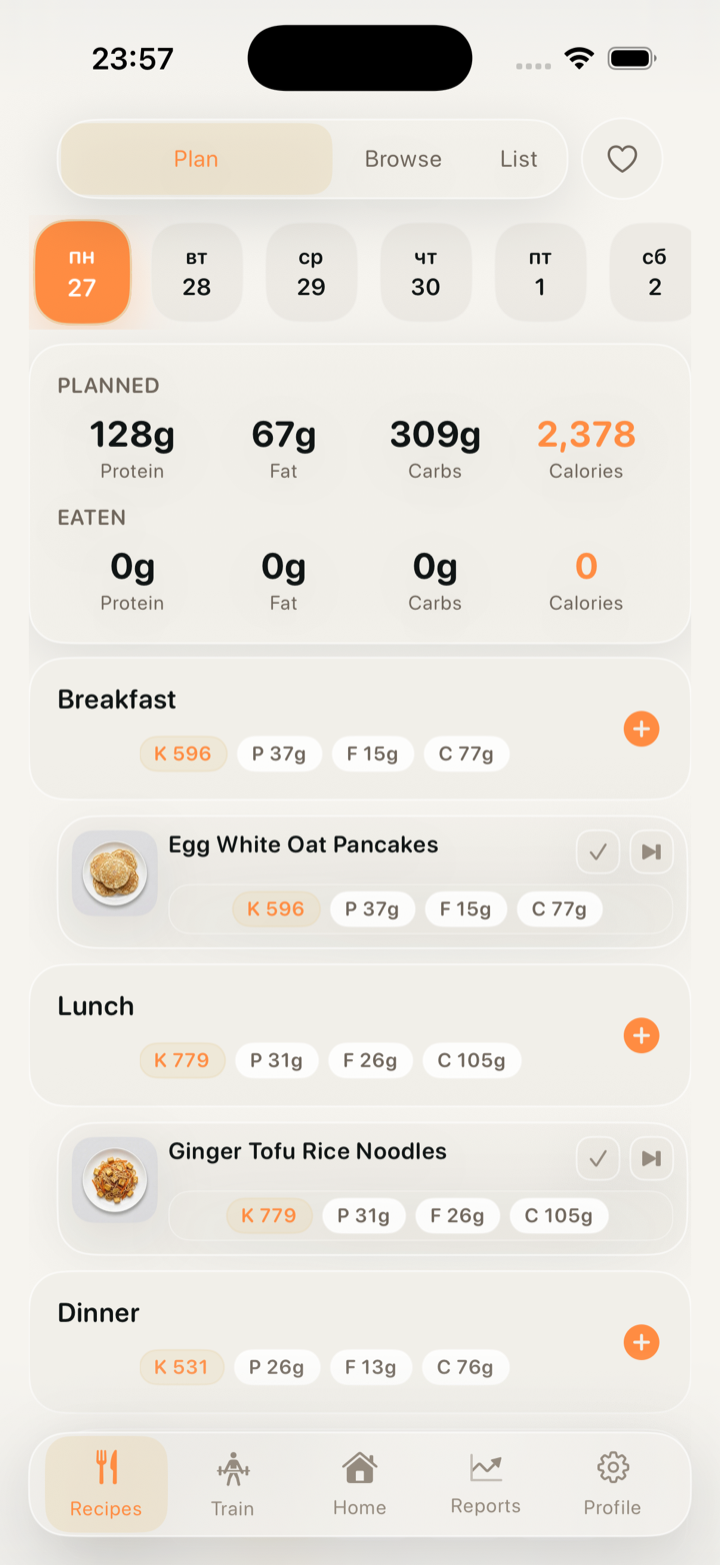
Up2You keeps meal plans, calorie targets, macros, logs, notes, and progress trends together, so protein changes can be checked against the whole week.
Inside Up2You
FAQ
Do I need protein at every meal?
Not always, but spreading protein across meals often makes the daily target easier to hit.
Can I use protein powder?
Yes, if it fits your budget and digestion, but it should support a food plan rather than replace every meal.
What if I miss protein one day?
Do not overcorrect. Return to normal structure and review the weekly average.