Progressive Overload: How to Make Workouts Work
Progressive overload means giving the body a slightly bigger or clearer training signal over time. It does not mean adding weight every session forever; it means making progress measurable while recovery stays intact.
Quick Answer
- Track at least one variable: reps, load, sets, tempo, range, or effort.
- Progress only when form and recovery are stable.
- Support adaptation with Calorie Calculator and Macro Calculator.
- Use small changes instead of rebuilding the whole program.
Who This Guide Is For
- Beginners who are no longer progressing by just showing up.
- Lifters who want a simple progression rule.
- Users trying to connect workouts with recovery and nutrition.
How It Works
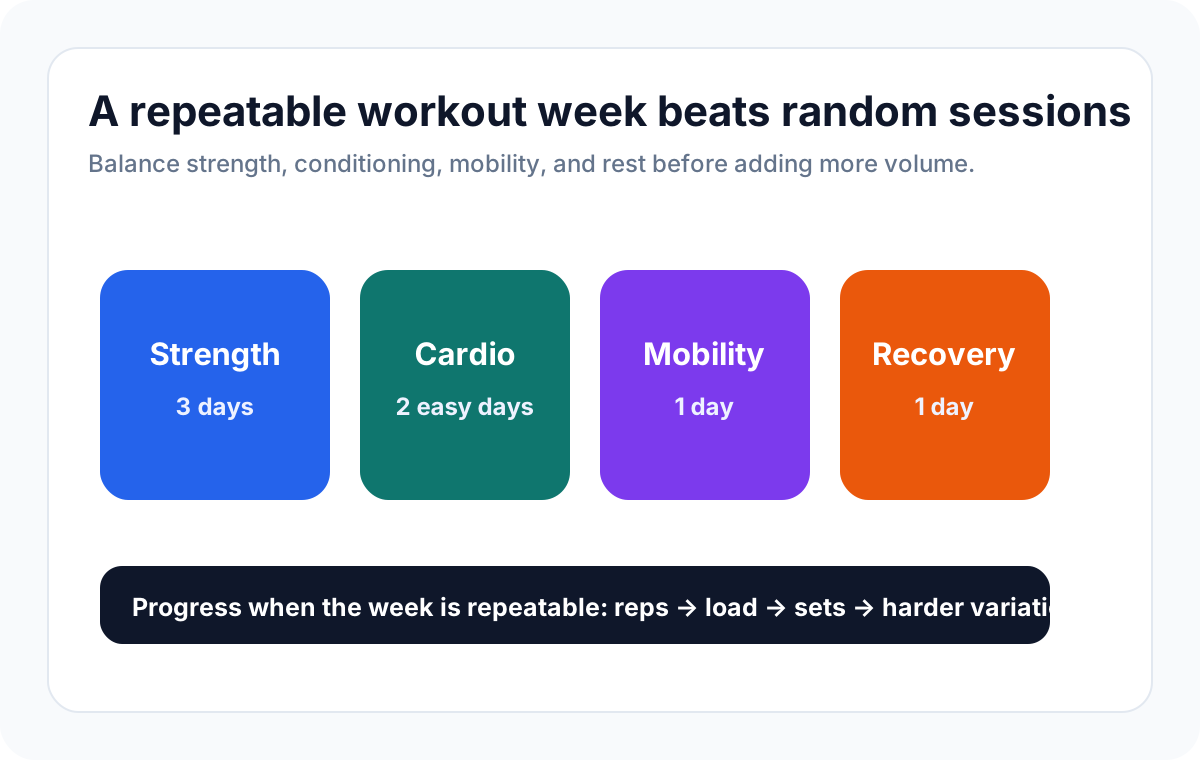
The body adapts to repeated stress. When the same work becomes easier, a small increase tells the body to adapt again. Too much overload too quickly usually creates fatigue rather than progress.
Step-by-Step Plan
- Choose the exercises you will keep for 4 weeks.
- Write down sets, reps, load, and effort.
- Add reps until the top of the range feels controlled.
- Then add a small amount of load and repeat.
- Deload or hold steady when sleep, soreness, or performance worsen.
Example
If a goblet squat is 3 sets of 10 at a given weight, aim for 11 or 12 reps with the same control before increasing load. If form breaks, stay at the same weight.
Common Mistakes
- Adding weight when range of motion shrinks.
- Changing exercises too often to measure progress.
- Treating soreness as the goal.
- Ignoring food, sleep, and rest days.
When To Be Careful
This guide is educational and should not replace medical advice. If you are injured, pregnant, returning after illness, managing a chronic condition, or unsure whether exercise is safe for you, speak with a qualified professional before changing training volume or intensity.
How Up2You Helps
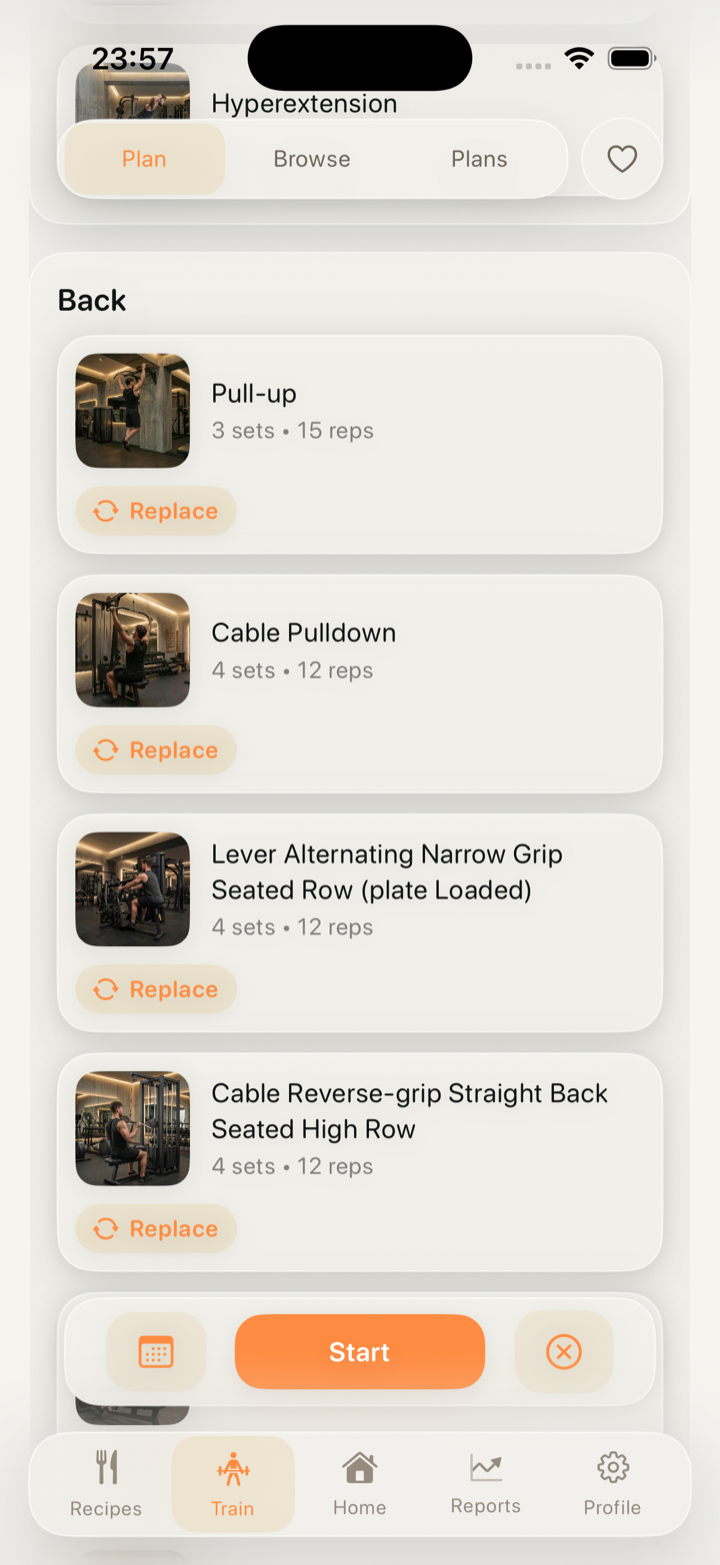
Up2You keeps workouts, nutrition targets, progress checks, and weekly adjustments in one flow, so the plan is easier to repeat instead of rebuilding it every week.
Inside Up2You
FAQ
Do I need to add weight every workout?
No. Reps, control, range of motion, and sets can also progress.
What if I stop progressing?
Hold volume steady, check recovery, and change only one variable at a time.
Can beginners use progressive overload?
Yes, but the changes should be small and technique should come first.