Protein for Fat Loss: How Much Do You Need?
Protein can help fat loss by making meals more filling and supporting muscle retention while calories are reduced. Start by setting calories first, then choose a protein target you can hit most days with normal meals. The best target is not the highest number; it is the one you can repeat consistently.
Quick Answer
- Fat loss still depends on a consistent calorie deficit.
- Protein helps the deficit feel easier by improving meal structure and fullness.
- A practical starting range for many active adults is about 1.6-2.2 g protein per kg body weight per day.
- Higher targets may be useful during harder dieting phases, but they are not automatically better.
- Use the Macro Calculator after setting calories with the Calorie Calculator.
Who This Guide Is For
- Beginners losing fat who want a clear protein target.
- People who feel hungry soon after meals.
- Users lifting weights while dieting and trying to preserve strength.
- Anyone who tracks calories but is unsure how protein fits into the plan.
How It Works
A calorie deficit drives fat loss, but protein changes how easy that deficit is to follow. Meals with a clear protein source often feel more satisfying than meals built mostly from refined carbs, oils, or snacks. Protein also gives your body the building blocks it needs while resistance training sends the signal to keep muscle.
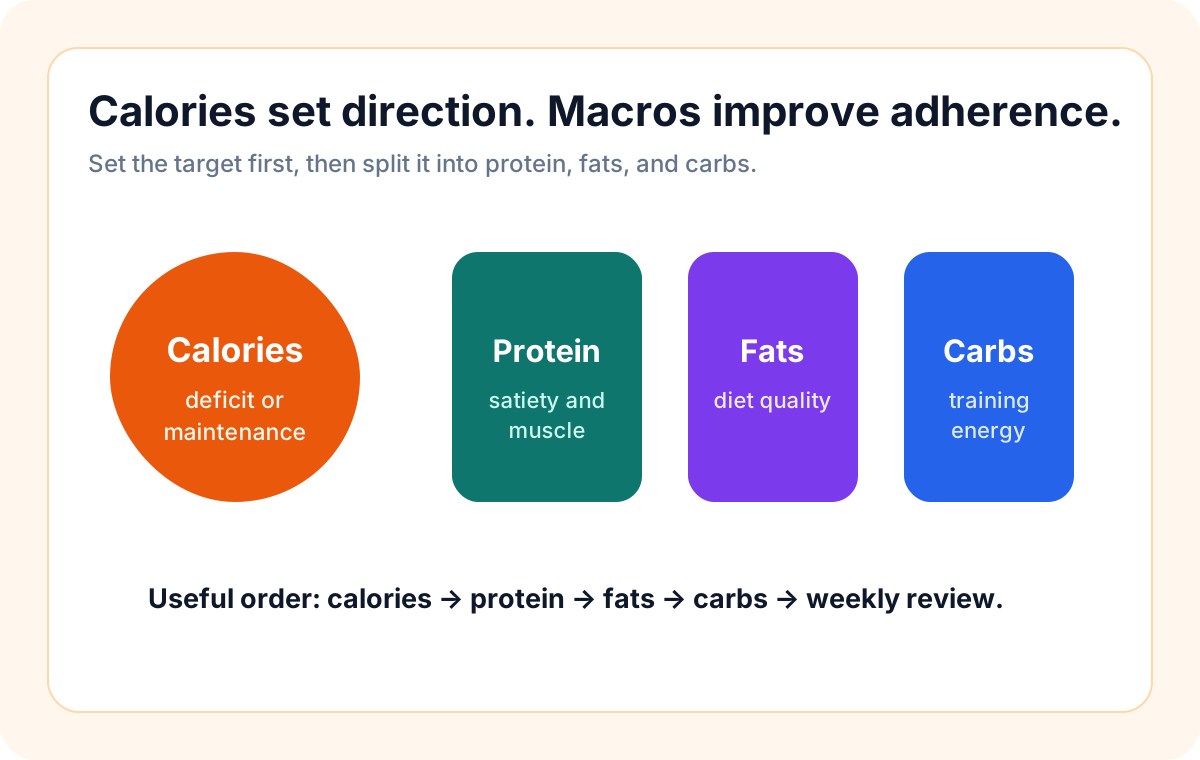
The International Society of Sports Nutrition notes that many exercising people can support muscle with daily protein around 1.4-2.0 g/kg, and higher intakes may help lean mass retention during hypocaloric periods. That does not mean every beginner needs the upper end. Food preference, body size, training, digestion, budget, and adherence all matter.
Step-by-Step Plan
- Estimate your calorie target first.
- Pick a starting protein range instead of one perfect number.
- Spread protein across 3-4 meals or snacks.
- Put one protein anchor in each meal: Greek yogurt, eggs, chicken, fish, tofu, tempeh, beans, lean meat, cottage cheese, lentils, or protein powder.
- Add vegetables, fruit, potatoes, rice, oats, beans, or whole grains for volume and fiber.
- Keep fats intentional, because oils, nuts, cheese, and sauces can raise calories quickly.
- Review hunger, training, digestion, and weekly progress after 10-14 days.
Example
A person weighing 75 kg could start around 120-150 g protein per day if they train and are dieting. That might look like 35 g at breakfast, 40 g at lunch, 40 g at dinner, and 15-30 g from a snack. If that feels too hard, starting lower and becoming consistent is better than missing an aggressive target every day.
Common Mistakes
- Raising protein before setting a realistic calorie target.
- Eating protein bars and shakes on top of normal meals instead of replacing lower-priority calories.
- Going so low on carbs that training quality drops.
- Forgetting fiber, fruit, vegetables, and hydration.
- Treating one high-protein day as success while the weekly average stays inconsistent.
- Choosing a target that is expensive, repetitive, or socially hard to maintain.
When To Be Careful
This guide is educational and not medical advice. If you have kidney disease, a medically prescribed diet, pregnancy, digestive conditions, a history of disordered eating, or other health concerns, ask a qualified clinician or registered dietitian before changing protein intake substantially.
How Up2You Helps
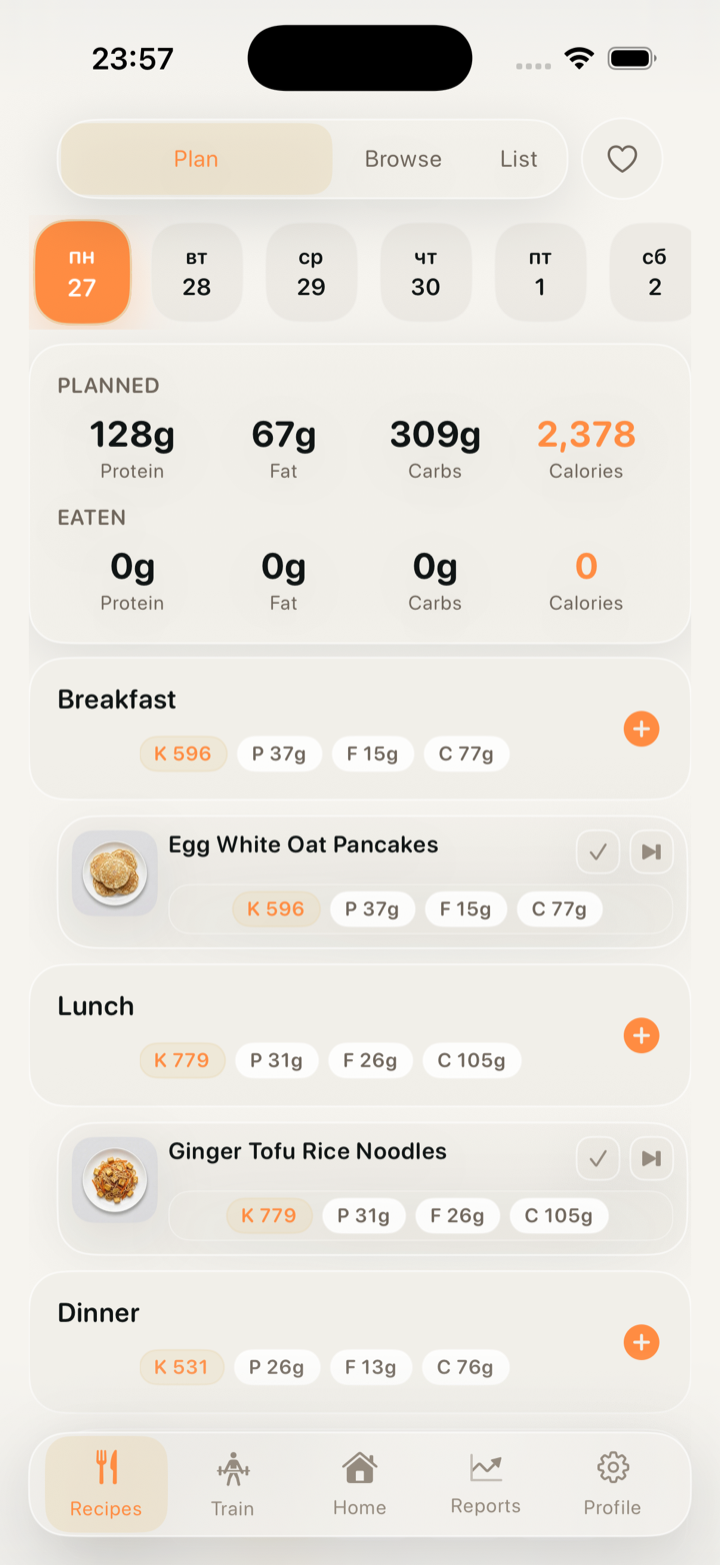
Up2You helps connect protein to the rest of the fat-loss plan: calculate calories, set macros, plan meals, track what you actually ate, and adjust based on weekly progress instead of guessing from one day.
Inside Up2You
FAQ
Is protein more important than calories for fat loss?
No. Calories determine whether fat loss is likely, while protein helps the plan feel more filling and supports muscle retention.
How much protein should I eat per meal?
A practical range is 25-45 g per main meal for many adults, adjusted for body size, total protein target, and meal frequency.
Do I need protein powder to lose fat?
No. Protein powder is optional. It can be convenient, but whole foods can work when they fit your calories, schedule, and appetite.
Should I eat protein before or after workouts?
Daily intake matters most for beginners. Around workouts, choose whichever timing helps you train well and hit the day target.
Can too much protein stop fat loss?
Protein itself does not stop fat loss, but extra protein calories can erase the calorie deficit if they are added on top of the plan.