Protein for Muscle Gain: How to Set Your Daily Target
Protein supports muscle gain by supplying amino acids for repair and growth, but it works best when paired with progressive resistance training, enough calories, and consistent sleep. Most beginners do not need a complicated timing plan. Set a daily target, spread it across meals, and train consistently.
Quick Answer
- Resistance training is the main growth signal; protein supports the adaptation.
- A practical daily target for many exercising adults is about 1.4-2.0 g protein per kg body weight.
- Spread protein across 3-5 meals or snacks instead of saving most of it for dinner.
- Eat enough total calories; building muscle is harder when calories are too low.
- Use the Macro Calculator and connect it with a repeatable workout plan.
Who This Guide Is For
- Beginners who want to build muscle without guessing their protein target.
- People lifting weights but not seeing much progress.
- Users who already track calories or macros and want a muscle-gain setup.
- Anyone trying to balance protein, carbs, fats, training, and recovery.
How It Works
Muscle gain requires a repeated training signal and the resources to recover from it. Resistance training challenges muscle tissue. Protein provides amino acids. Calories provide energy. Sleep and rest help the body adapt. If one part is missing, the plan becomes harder to repeat.
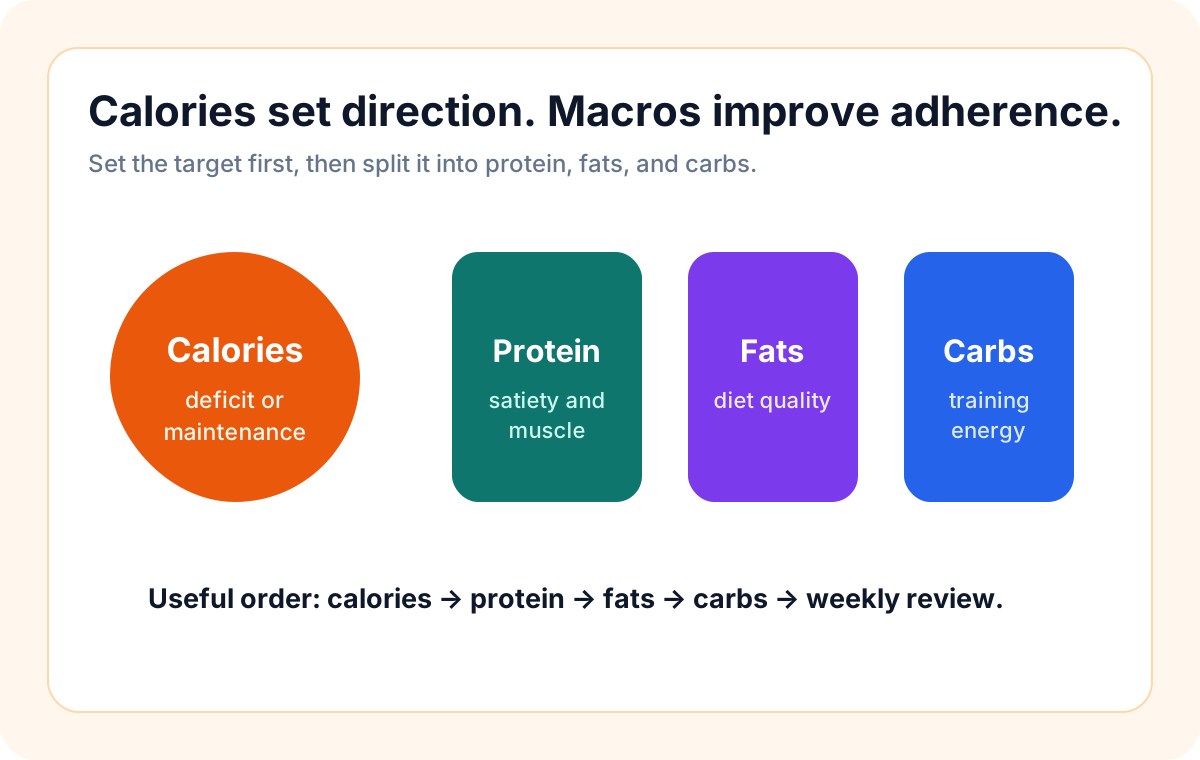
The International Society of Sports Nutrition position stand says daily protein around 1.4-2.0 g/kg/day is sufficient for most exercising individuals who want to build or maintain muscle. ACSM's 2026 resistance-training update also emphasizes that consistent training matters more than chasing a perfect program. For hypertrophy, training volume and regular participation still matter.
Step-by-Step Plan
- Choose a training plan with progressive resistance work at least 2-3 days per week.
- Estimate calories first. For muscle gain, many beginners do best near maintenance or in a small surplus.
- Set protein around 1.4-2.0 g/kg/day as a starting range.
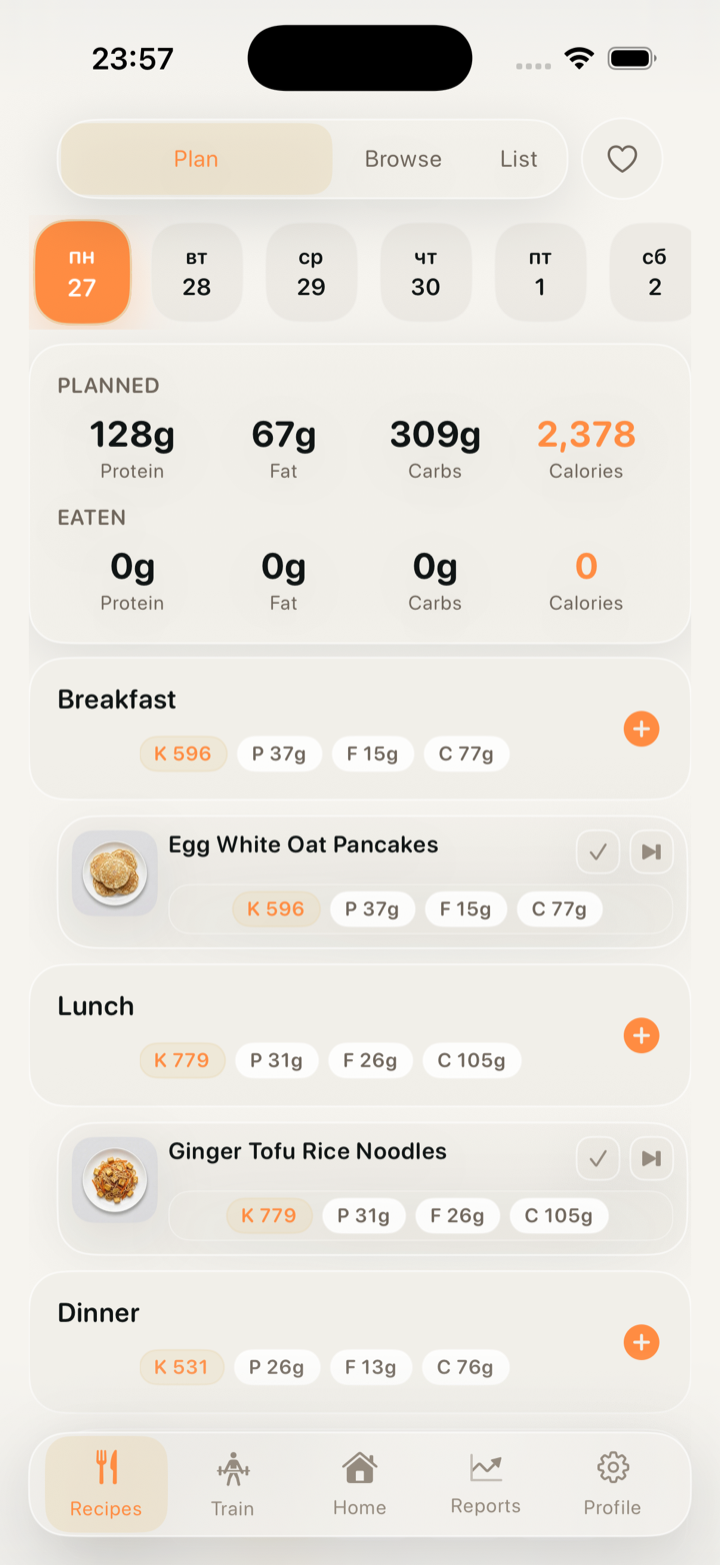
- Split protein across breakfast, lunch, dinner, and one optional snack.
- Keep carbs high enough to support training performance.
- Keep fats adequate but measured, especially if calories rise quickly.
- Track body weight, strength, reps, appetite, and adherence for 2-4 weeks before changing the target.
Example
A 70 kg beginner could start around 100-140 g protein per day. One simple structure is 30 g at breakfast, 35 g at lunch, 35 g at dinner, and 15-30 g from a snack. If body weight is not increasing and training performance is flat, the next change is usually calories first, not doubling protein.
Common Mistakes
- Eating more protein while training stays random or inconsistent.
- Trying to bulk with a large calorie surplus that adds weight faster than performance improves.
- Cutting carbs so low that workouts feel weak.
- Putting most protein into one late meal instead of spreading it out.
- Treating protein powder as required instead of optional convenience.
- Changing macros every few days before trends are visible.
When To Be Careful
This guide is educational and not medical advice. If you have kidney disease, a medically prescribed diet, pregnancy, digestive conditions, a history of disordered eating, or other health concerns, ask a qualified clinician or registered dietitian before changing protein intake substantially.
How Up2You Helps
Up2You helps connect the muscle-gain workflow: calculate calories and macros, follow a structured workout plan, plan protein across meals, and review progress from both nutrition and training instead of judging one isolated day.
Inside Up2You
FAQ
Do I need a calorie surplus to build muscle?
A small surplus can help, especially for leaner or more experienced lifters. Beginners may gain some muscle near maintenance, but very low calories make progress harder.
Is protein timing important?
Daily protein matters most. Timing becomes useful when it helps you spread protein across the day and recover around workouts.
Should I drink a shake after every workout?
No. A shake is convenient, not mandatory. A normal meal with enough protein can work just as well if it fits your schedule.
How much protein is too much for muscle gain?
More is not automatically better. Once protein is consistently in a useful range, training quality, calories, sleep, and adherence usually matter more.
What if I am not gaining strength?
Check training consistency, exercise progression, sleep, calories, and technique before raising protein. Muscle gain is a full system, not one macro.