Realistic Fitness Timeline: What To Expect First
Understand a realistic fitness timeline for habits, strength, body weight, photos, and visible progress.
Quick Answer
- Fix unrealistic fitness timelines by making the next action small, specific, and easy to review.
- Consistency improves when the plan has minimum targets, backup options, and weekly feedback.
- Use the first few weeks to make the routine repeatable before chasing a harder version.
- Use Calorie Calculator and Macro Calculator when nutrition targets affect the routine.
Who This Guide Is For
- Beginners who want fitness habits that survive busy weeks.
- Users returning after missed workouts, dieting breaks, or inconsistent tracking.
- People who need workouts, meals, and progress reviews connected inside Up2You.
How It Works
A fitness habit becomes easier when the plan tells you what to do on a normal day, a busy day, and a low-energy day. The goal is not perfect motivation. The goal is a repeatable system with clear next actions and a weekly review loop.
Consistency Checklist
- Expect habit consistency before obvious visual change.
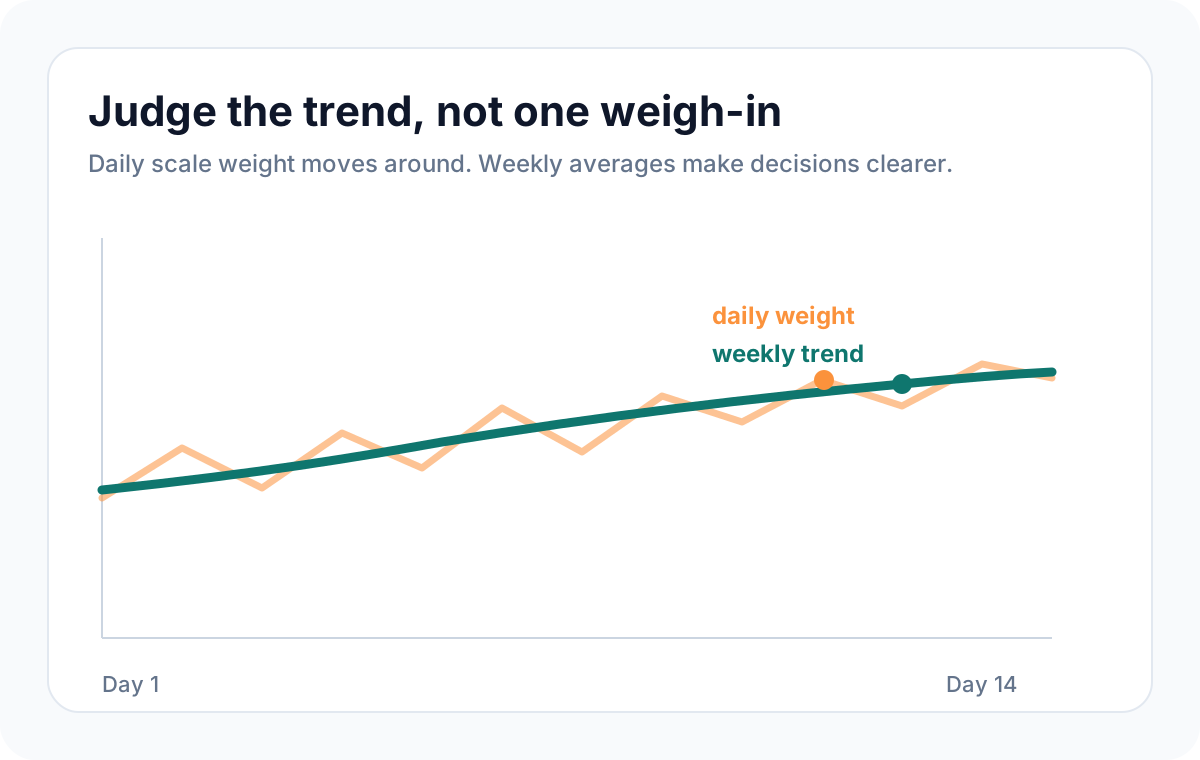
- Use weekly averages for body weight.
- Track performance and photos alongside the scale.
- Extend the timeline before making the plan extreme.
Step-by-Step Plan
- Choose the smallest weekly action that still supports the goal.
- Put the action on a real day, time, or trigger.
- Prepare a shorter backup version for busy days.
- Track completion for one week without overcorrecting.
- Review the pattern and change only one part of the routine.
Example
In the first month, better attendance and exercise technique may show up before major photo or scale changes.
Common Mistakes
- Assuming the plan failed because visible change is slower than routine change.
- Changing too many habits at once and losing the signal.
- Treating one missed day as proof the whole plan failed.
- Making the plan harder before the basic routine is repeatable.
When To Be Careful
This guide is educational and does not replace coaching, medical care, or mental-health support. Use easier targets if the plan creates pain, dizziness, binge-restrict cycles, worsening mood, or obsessive tracking. Medical conditions, pregnancy, medications, and eating-disorder history need qualified guidance.
How Up2You Helps
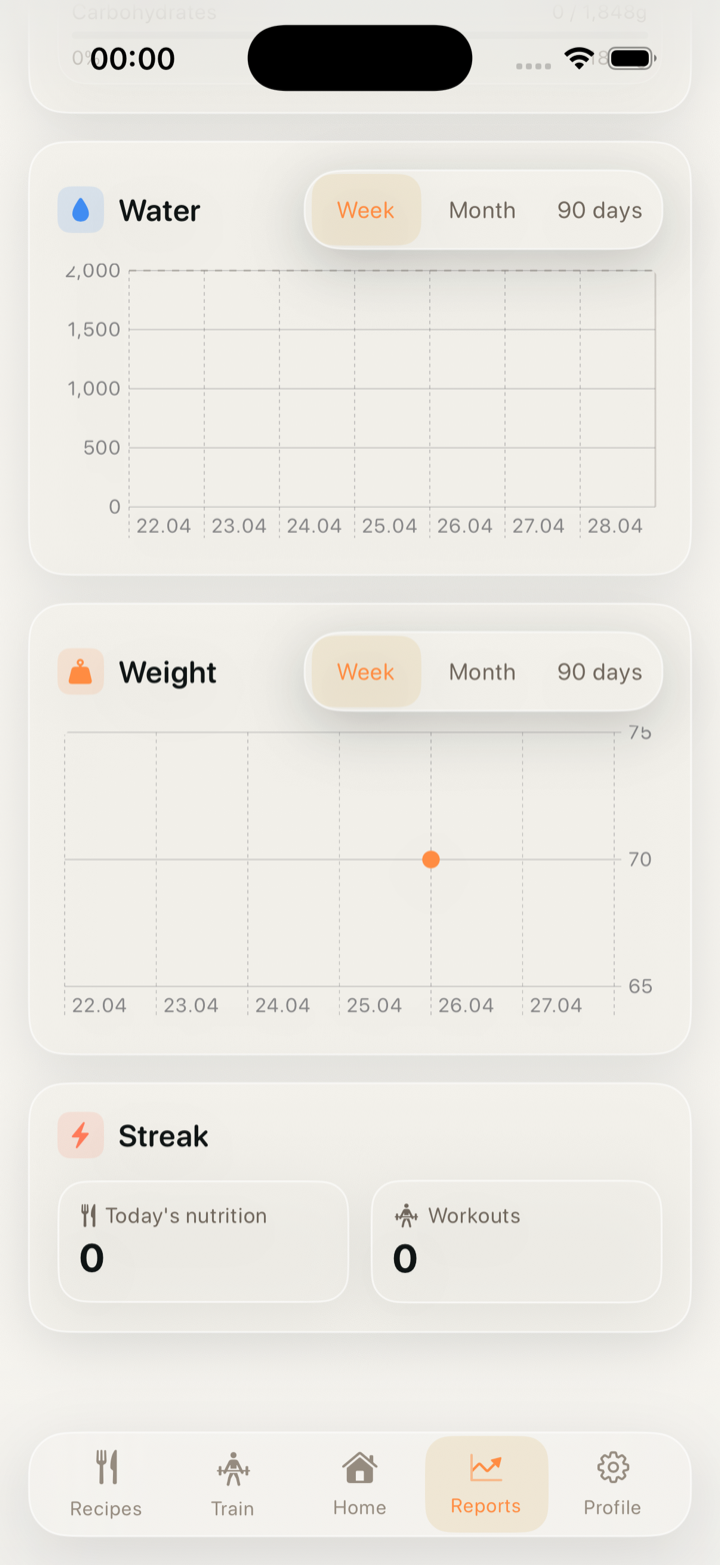
Up2You keeps workouts, meals, weight trends, notes, and weekly patterns in one place, so consistency decisions can come from data instead of memory.
Inside Up2You
FAQ
What if I miss a whole week?
Restart with the next small session or review habit. Do not try to repay every missed workout at once.
How many habits should I track first?
One to three habits are enough at the start. Add more only when the first habits feel repeatable.
Should I make the plan harder when motivation is high?
Not immediately. First prove the routine can survive a normal week, then add difficulty gradually.