Shared Grocery List for Healthy Eating
Use a shared grocery list for healthy eating by separating household staples, personal targets, backup meals, and flexible snacks.
Quick Answer
- Fix shared groceries not matching the meals or targets people actually need by adapting shared meals instead of trying to control every household choice.
- Family and household meal planning works best when the shared meal is flexible: protein, produce, carbs, sauces, and portions can change by person.
- The goal is not making everyone track. The goal is keeping your targets realistic inside the meals and routines that already exist.
- Use Calorie Calculator and Macro Calculator when targets need a practical reset.
Who This Guide Is For
- Users who share meals with a partner, children, family, or roommates.
- People whose nutrition plan breaks when household meals, snacks, or groceries do not match their target.
- Beginners who need practical meal structure without cooking separate food every day.
How It Works
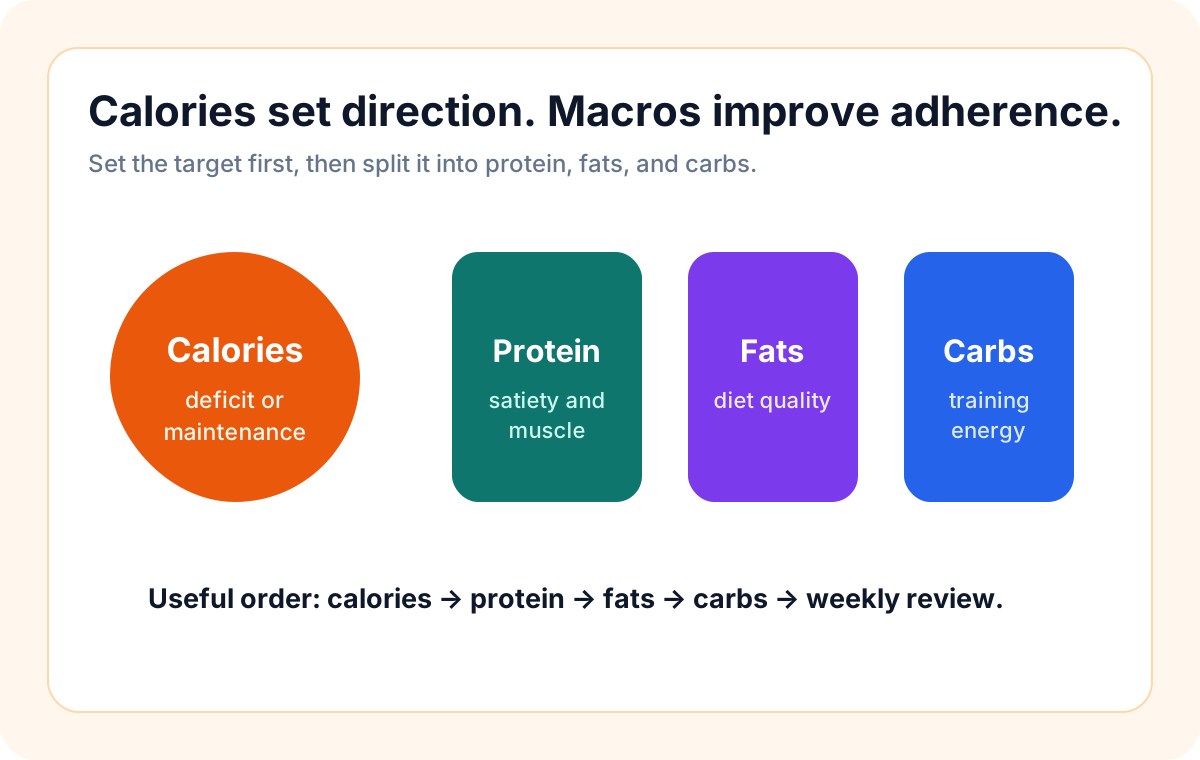
Household meal planning works by separating shared decisions from personal portions. A shared dinner can stay familiar while each person adjusts protein, carbs, fats, sauces, and serving size. This reduces friction, waste, and resentment. Food safety and medical needs still matter, especially when meals are batch-cooked, reheated, or shared with children, pregnant people, older adults, or immune-compromised people.
Household Checklist
- List household staples everyone uses.
- Add your protein and produce anchors.
- Include flexible snacks and backup meals.
- Review waste before adding new variety.
Step-by-Step Plan
- Pick the shared meal that causes the most friction.
- Identify what everyone can eat from the same base.
- Decide your personal anchor: protein, produce, portion, or planned treat.
- Add one backup meal for nights when the household plan changes.
- Review hunger, progress, stress, and food waste after one week.
Example
A shared list can include rice, potatoes, bread, eggs, yogurt, fruit, salad kits, frozen vegetables, beans, sauces, and personal protein options.
Common Mistakes
- Letting the shared list become only treats, snacks, and random ingredients.
- Making your progress depend on everyone else changing their food.
- Creating separate meals so often that cooking becomes unsustainable.
- Ignoring food safety, allergies, eating disorder history, child feeding concerns, or prescribed nutrition limits.
When To Be Careful
This guide is educational and does not replace medical, pediatric, nutrition, or food safety advice. Get individualized guidance for pregnancy, breastfeeding, diabetes, kidney disease, hypertension, immune suppression, food allergies, eating disorder history, child feeding concerns, digestive conditions, or prescribed sodium, carbohydrate, protein, fluid, or fiber limits.
How Up2You Helps
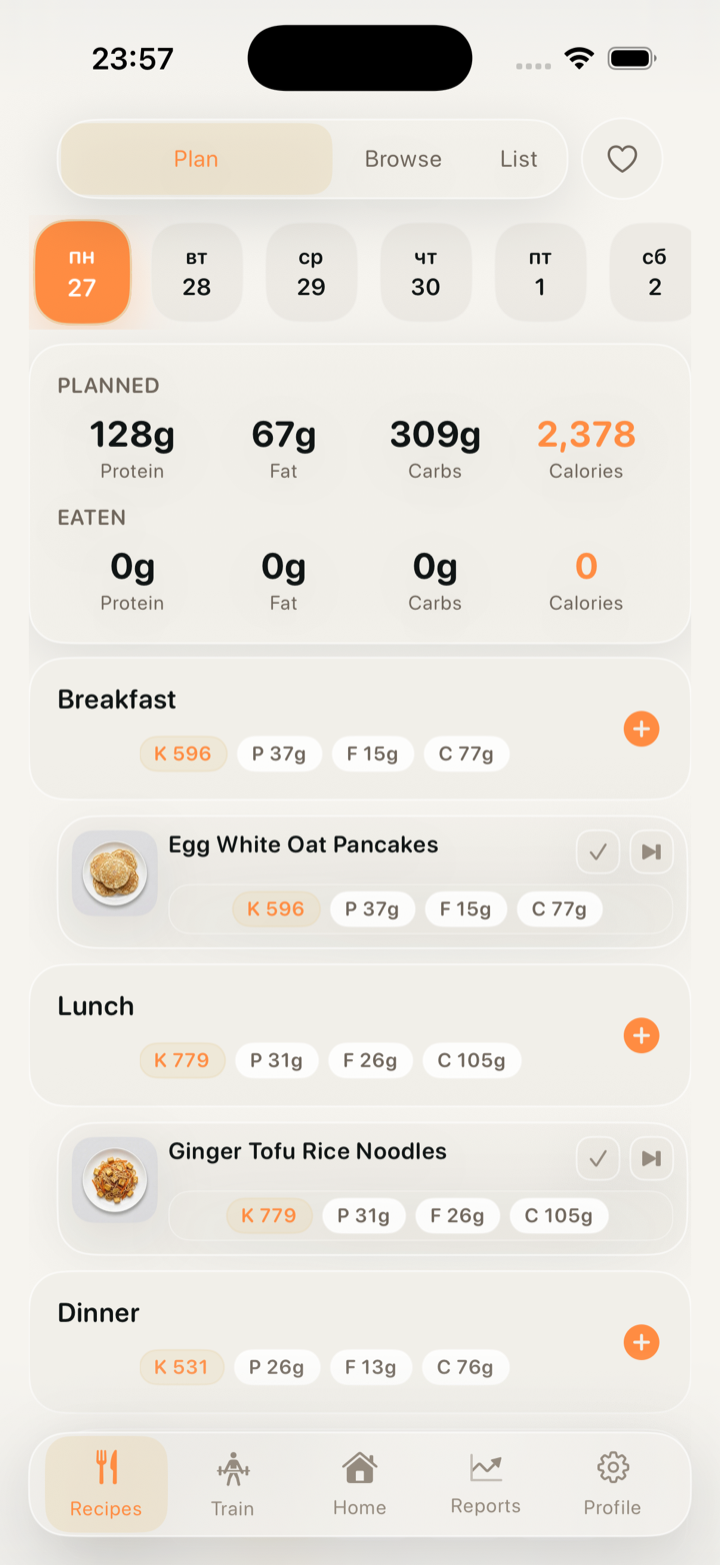
Up2You keeps meal plans, calorie targets, macros, food logs, screenshots, notes, and progress trends together, so household meals can stay flexible while your own plan stays visible.
Inside Up2You
FAQ
Do I need to cook separate meals to lose weight?
Usually no. Most households can use one shared meal with different portions, toppings, sides, or protein amounts.
What if my family does not track calories?
They do not need to. You can track your portion, use your anchors, and keep the shared meal familiar.
How do I handle treats at home?
Plan portions, decide when they fit, and keep regular meals filling enough so treats are a choice rather than a reaction.