Sleep and Fitness Progress: What To Watch
Understand how sleep affects training, hunger, recovery, weight trends, and the next weekly adjustment.
Quick Answer
- Fix fitness progress with poor sleep by reviewing recovery, movement, food, and schedule before making the plan harder.
- Lifestyle inputs do not replace workouts or nutrition, but they decide how repeatable those workouts and nutrition targets feel.
- Use weekly patterns before reacting to one bad session, weigh-in, or low-energy day.
- Use Calorie Calculator and Macro Calculator when food targets need a practical reset.
Who This Guide Is For
- Users whose plan looks good on paper but breaks during real weeks.
- People balancing fat loss, training quality, soreness, sleep, stress, hydration, steps, or busy schedules.
- Beginners who need a calmer way to adjust the plan without starting over.
How It Works
Recovery and lifestyle support works best as a feedback loop. Training, meals, sleep, stress, steps, hydration, and soreness all affect the next week. The goal is not to optimize every input. The goal is to spot the main limiter, make one practical adjustment, and keep the core plan repeatable.
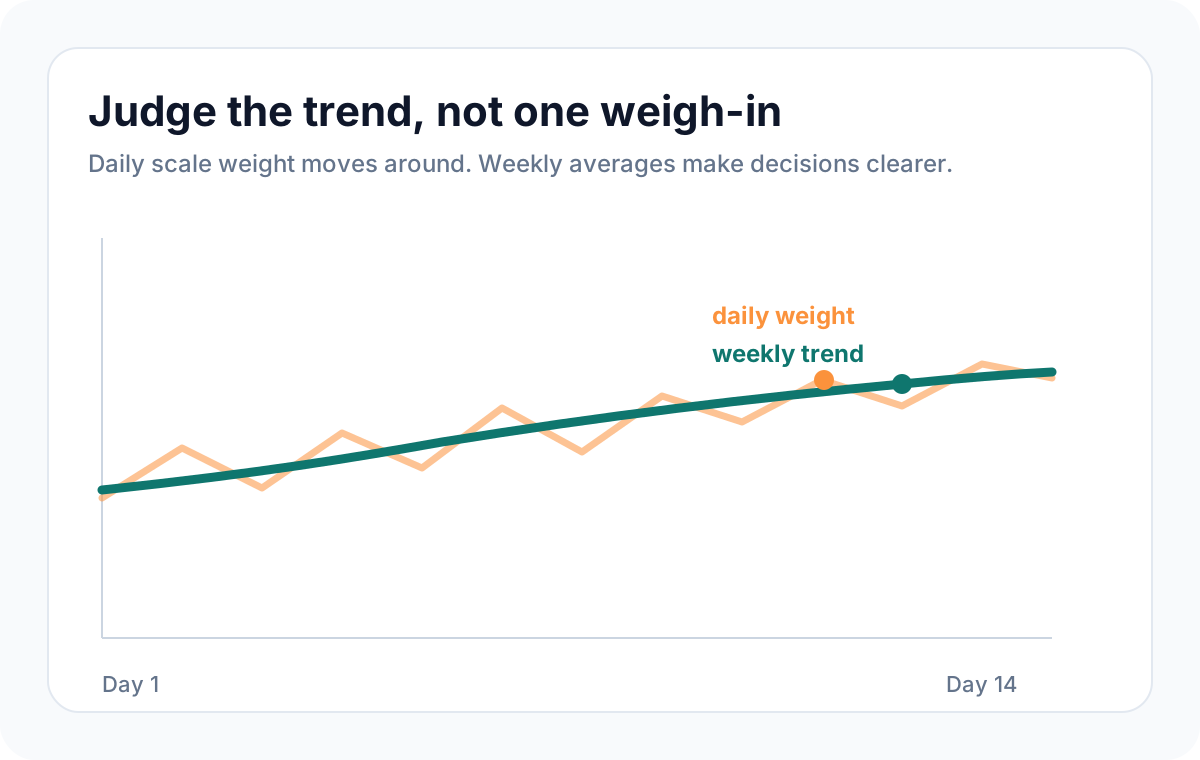
Recovery Checklist
- Review sleep together with energy, hunger, and training quality.
- Avoid changing calories from one tired weigh-in.
- Keep hard training away from repeated poor-sleep days when possible.
- Use weekly patterns instead of one bad night.
Step-by-Step Plan
- Name the blocker that affected the last week most.
- Check whether it was one day or a repeated pattern.
- Choose one small adjustment for the next seven days.
- Keep workouts and nutrition stable unless the pattern clearly requires a change.
- Review energy, soreness, hunger, steps, and weight trend together.
Example
If weight is flat but sleep was poor and hunger was high all week, the next move may be recovery support before a calorie cut.
Common Mistakes
- Treating poor recovery as a discipline problem and adding more training volume.
- Changing everything after one unusually hard week.
- Ignoring food, sleep, and schedule context when judging workouts.
- Making recovery so passive that daily movement disappears.
When To Be Careful
This guide is educational and does not replace medical, nutrition, or coaching advice. Stop and get qualified help for chest pain, fainting, severe dehydration, sharp or worsening pain, disordered eating patterns, or symptoms that do not improve with rest. Medical conditions, pregnancy, medications, and eating-disorder history need individualized guidance.
How Up2You Helps
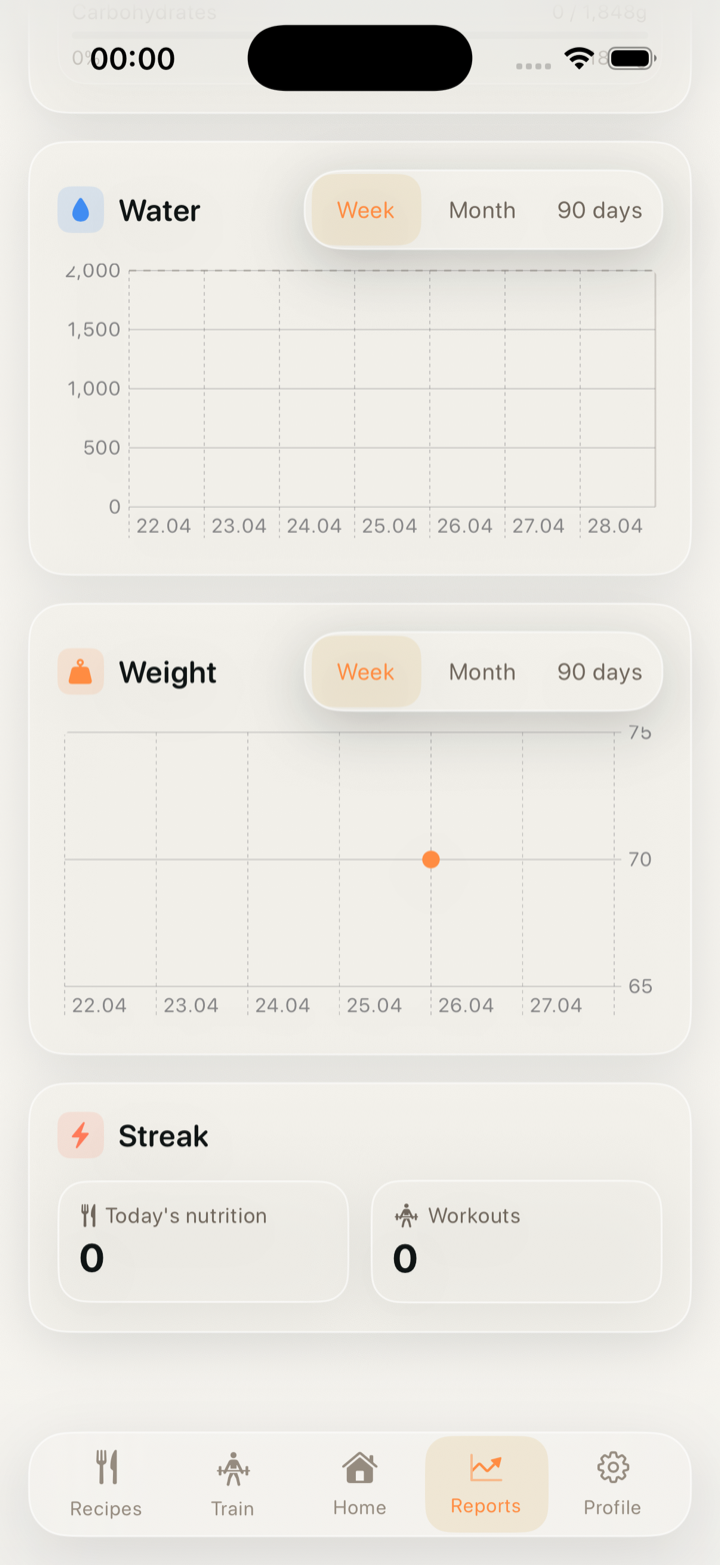
Up2You keeps workouts, meals, water, weight trends, notes, and weekly patterns together, so recovery and lifestyle adjustments can come from real context instead of guesswork.
Inside Up2You
FAQ
Should I fix recovery before changing calories?
Often yes, if poor sleep, high stress, soreness, or low energy affected most of the week. A calorie change is more useful when the rest of the pattern is readable.
How many lifestyle habits should I change at once?
One or two is usually enough. Too many changes make it harder to know what helped.
Can an easy week still count as progress?
Yes. If it protects consistency and helps the next week work better, it is part of the program rather than a pause from it.