Smith Machine Squat Setup: Foot Position and Bar Path
Use a Smith machine squat setup that matches the fixed bar path while keeping knees, hips, and torso controlled.
Quick Answer
- Set the Smith machine squat before the first working set, not after the movement feels awkward.
- Match pad height, handle position, and range of motion to your joints.
- Use a light test set, then add load only when every rep follows the same path.
- Use Calorie Calculator and Macro Calculator to support training recovery.
Who This Guide Is For
- Beginners learning gym machines without a coach next to them.
- Lifters who feel the target muscle less than the machine label suggests.
- Users who want repeatable setup notes inside an Up2You workout plan.
How It Works
Machine setup changes joint angles, range of motion, and which muscles do most of the work. A one-notch seat change can be the difference between controlled training and a rep that feels awkward before the target muscle is challenged.
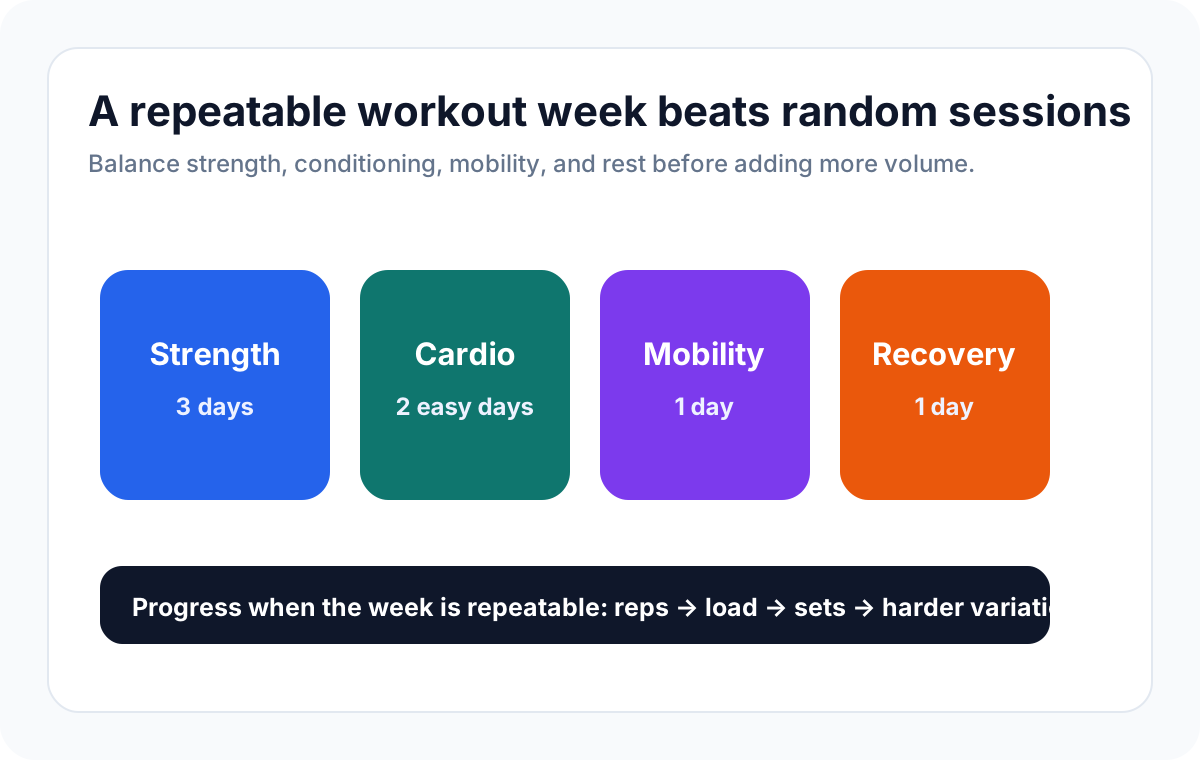
Setup Checklist
- Set the bar around upper-chest height before stepping under it.
- Place feet where the fixed bar lets you descend without folding forward.
- Brace before unlocking the hooks.
- Use a range you can repeat without knee or back discomfort.
Step-by-Step Plan
- Read the machine label and identify the moving pivot or handle path.
- Set the seat, pad, or pulley before loading heavy weight.
- Run one light set and check whether joints move cleanly.
- Write down the useful setting or cue.
- Progress load only when the same setup works for two sessions.
Example
If the bar path pushes you onto your toes, move feet slightly forward and test with an empty bar first.
Common Mistakes
- Treating the Smith path like a free bar squat and forcing a stance that does not match the machine.
- Adding load before the seat, pad, handle, or pulley setting is repeatable.
- Ignoring setup notes and starting each session from memory.
- Chasing a larger range of motion after control has already changed.
When To Be Careful
This guide is educational and does not replace coaching or medical advice. Stop if pain is sharp, radiating, or changes your movement. If a machine forces a joint position that feels wrong, choose a different exercise or ask qualified staff for help.
How Up2You Helps
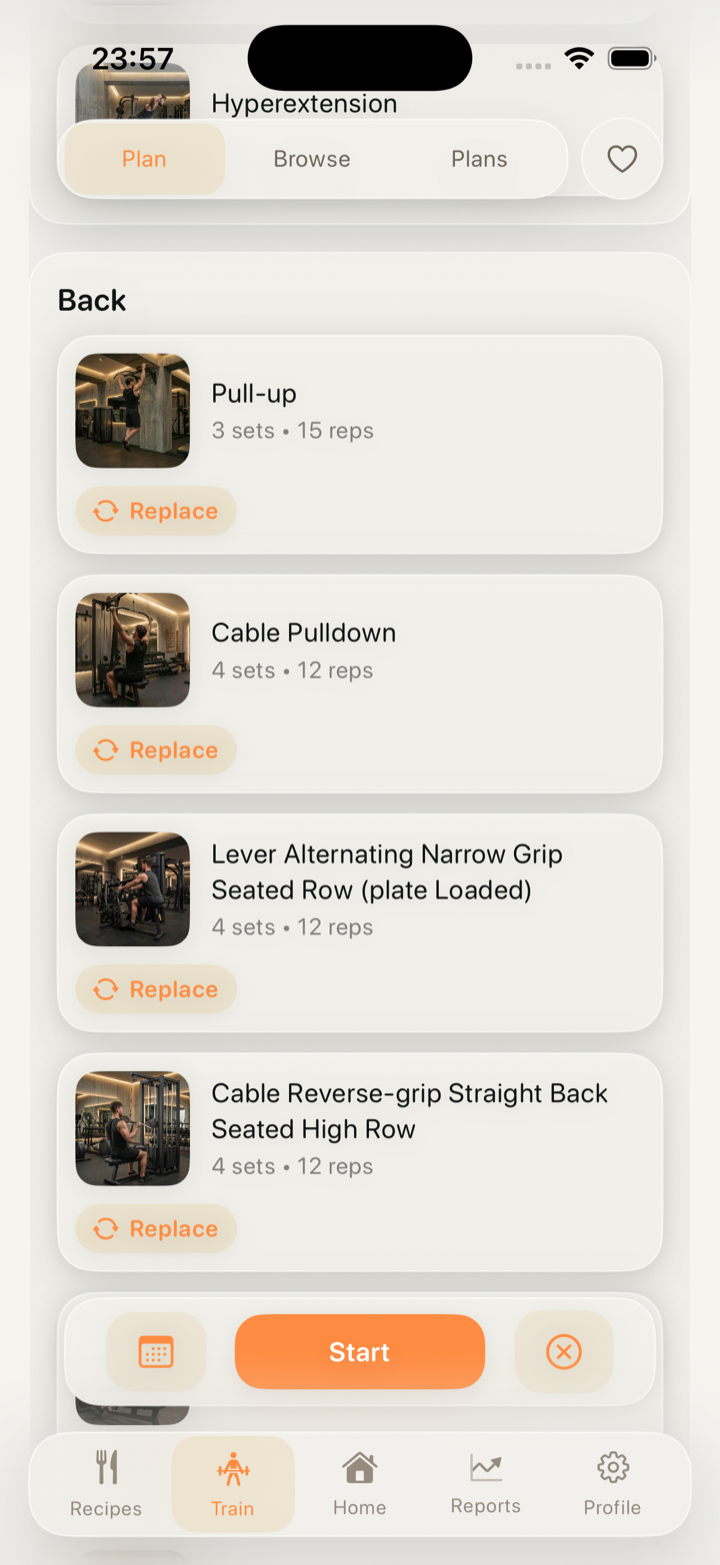
Up2You lets you save exercises, loads, reps, effort notes, and setup cues in the same workout plan, so the next session starts from the setting that already worked.
Inside Up2You
FAQ
Should every machine feel the same for every body?
No. Seat height, limb length, mobility, and machine brand all change the best setup.
How heavy should my first set be?
Use a light test set that lets you check range and control before working sets.
What if the machine still feels wrong?
Do not force it. Adjust the setup, try another machine, or use a free-weight or cable alternative.