Vegetarian Protein Bowl Recipe for Lunch or Dinner
Build a vegetarian protein bowl with legumes, grains, vegetables, and sauce that can fit many calorie targets.
Quick Answer
- Use vegetarian protein bowl as a flexible meal template: keep protein visible, add fiber, measure calorie-dense extras, and adjust portions to your goal.
- The recipe works best when you log the base version once and repeat it with small changes.
- Use Calorie Calculator and Macro Calculator to set portions before changing ingredients.
Who This Guide Is For
- People who want practical meals instead of abstract macro advice.
- Users trying to lose fat, maintain weight, or support training with repeatable recipes.
- Beginners who want meals that are easy to log in Up2You.
How It Works
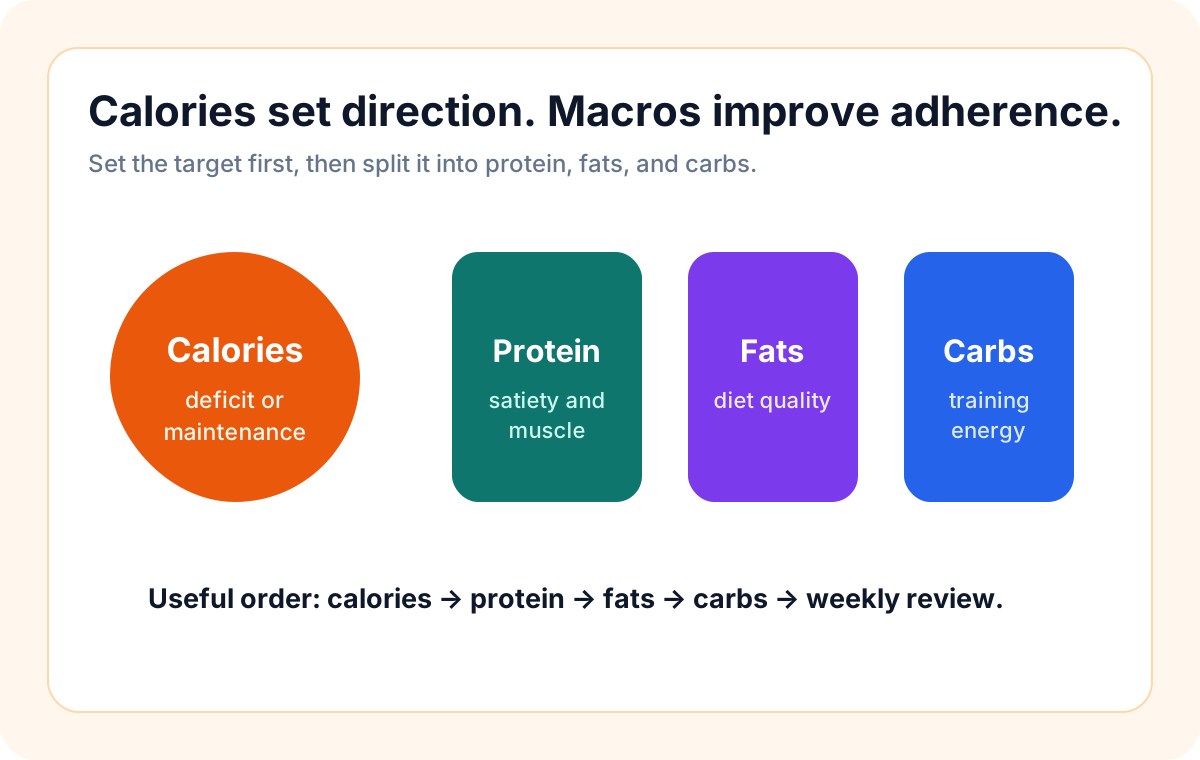
A useful recipe is not just a list of ingredients. It gives you a protein anchor, a fiber source, a carb or fat lever, and a way to change portions without rebuilding the whole day.
Ingredients
- lentils, chickpeas, tofu, tempeh, or beans
- rice, quinoa, potatoes, or another carb
- leafy greens and colorful vegetables
- yogurt sauce, tahini, salsa, or vinaigrette
- herbs, pickles, or spices
Step-by-Step Plan
- Choose one main vegetarian protein.
- Add a carb base that matches your calorie target.
- Add two or more vegetables for volume.
- Use a measured sauce for flavor.
- Save the bowl template and rotate seasonings.
Example
A lentil quinoa bowl with greens, roasted vegetables, and yogurt sauce can work for lunch or dinner with only portion changes.
Common Mistakes
- Calling a vegetable bowl high-protein without enough legumes, tofu, tempeh, or dairy.
- Adding several fats at once.
- Changing every ingredient instead of repeating a working template.
When To Be Careful
This guide is educational and does not replace medical nutrition advice. Adjust ingredients for allergies, pregnancy, medical conditions, medications, religious needs, and personal tolerances. If tracking food creates anxiety or restriction-binge cycles, pause aggressive targets and seek qualified support.
How Up2You Helps
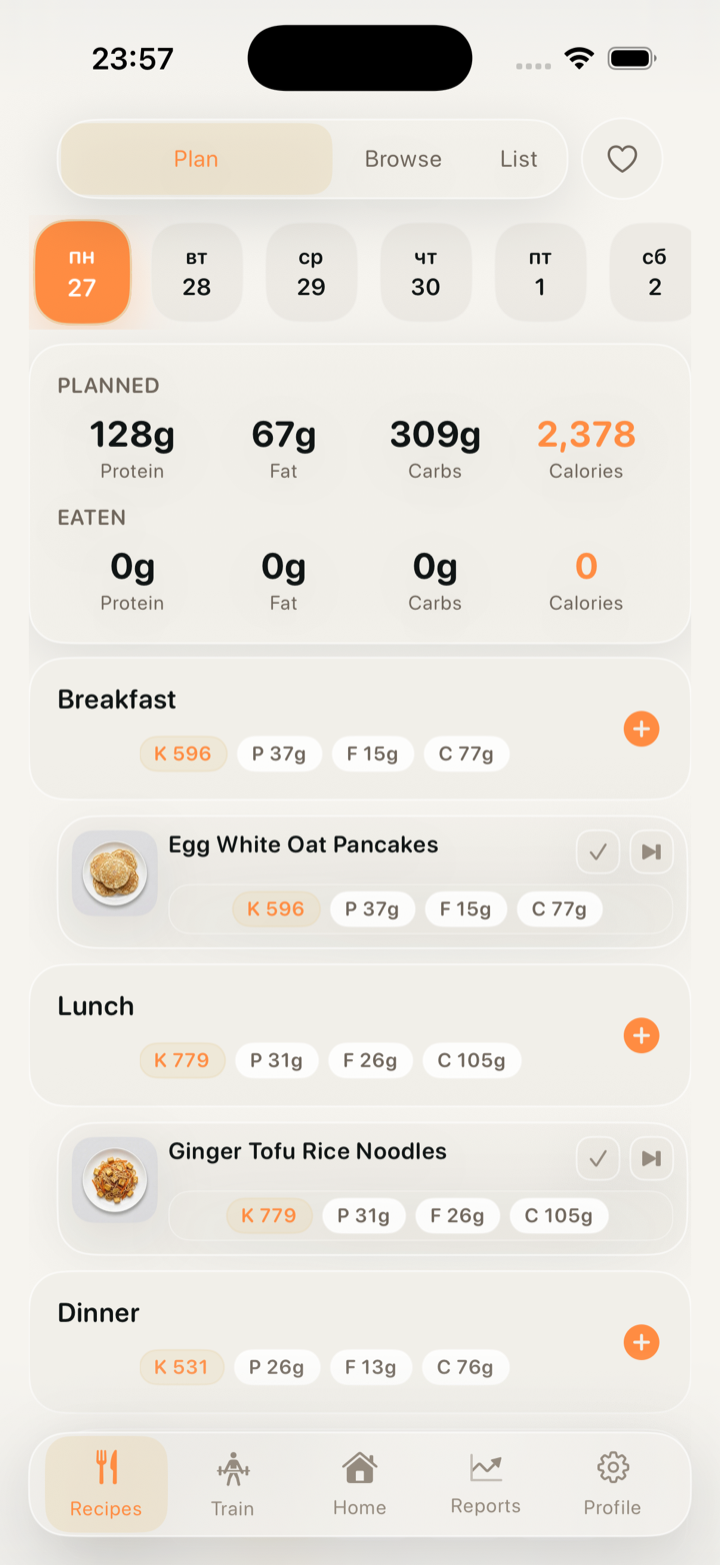
Up2You helps you save repeatable meals, compare calories and macros, and turn simple recipes into a weekly plan without rebuilding every day from zero.
Inside Up2You
FAQ
Can I change ingredients?
Yes. Keep the same structure: protein, fiber, a calorie lever, and a flavor element.
Should I weigh every ingredient?
Weigh calorie-dense ingredients at first, then use saved meals and consistent portions.
Can this fit fat loss?
Yes, if the portion fits your calorie target and the meal keeps you satisfied.