Breakfast vs Skipping Breakfast
Decide whether breakfast helps your goals by reviewing hunger, energy, calories, protein, and adherence.
Respuesta rápida
- Fix choosing breakfast rules instead of choosing what helps consistency by making timing serve the plan, not replace the plan.
- Meal timing can help hunger, energy, digestion, and adherence, but it does not override weekly calories and protein.
- A useful schedule is repeatable on real days, flexible around workouts, and simple enough to log.
- Use Calorie Calculator and Macro Calculator when targets need a practical starting point.
Para quién es esta guía
- Users who wonder when to eat for fat loss, training, or busy schedules.
- People managing late dinners, skipped breakfasts, shift work, snacks, or workout meals.
- Beginners who need practical timing rules without turning food timing into a rigid system.
Cómo funciona
Meal timing works best as a support tool. Calories, protein, food quality, training, sleep, and consistency still drive most outcomes. Timing helps when it makes the next meal easier, improves workout energy, reduces late overeating, or keeps the day predictable enough to follow.
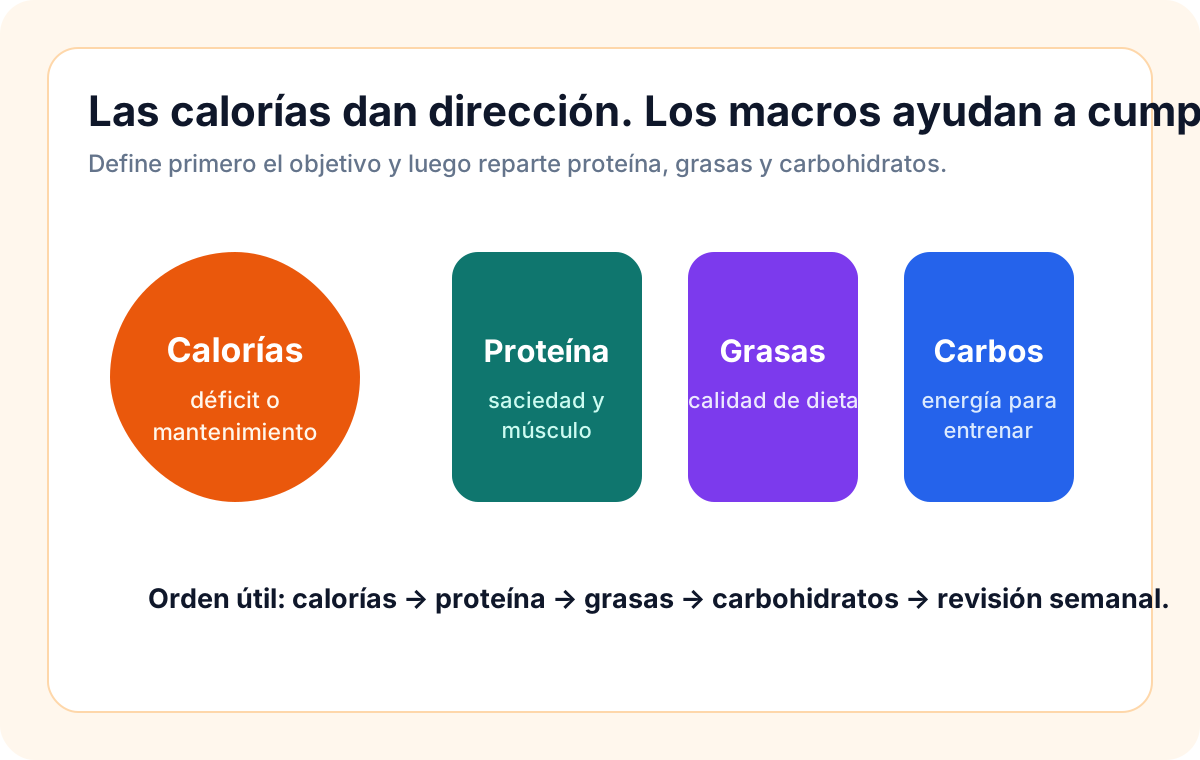
Checklist de horarios
- Notice whether breakfast reduces overeating later.
- Check whether skipping breakfast hurts energy or training.
- Keep protein high enough across the full day.
- Use the option you can repeat without stress.
Plan paso a paso
- Choose the schedule problem that repeats most often.
- Set one or two anchor meals you can repeat.
- Add a workout meal or snack only when it improves energy or recovery.
- Keep backup options for days when timing changes.
- Review weekly hunger, energy, sleep, and calories before changing everything.
Ejemplo
One person may do better with a high-protein breakfast, while another may prefer a later first meal and still hit protein and calories.
Errores comunes
- Treating breakfast as mandatory or harmful for everyone instead of reviewing your own pattern.
- Treating timing as a substitute for total calories, protein, sleep, and consistency.
- Making the schedule so strict that normal work, family, or training changes break the plan.
- Skipping logs when timing changes instead of recording a useful estimate.
Cuándo tener cuidado
This guide is educational and does not replace medical, nutrition, or mental-health care. Diabetes, digestive conditions, pregnancy, medications, appetite loss, shift-work sleep disruption, and eating-disorder history need qualified guidance. Simplify meal timing if it increases anxiety, guilt, binge-restrict cycles, or rigid food rules.
Cómo ayuda Up2You
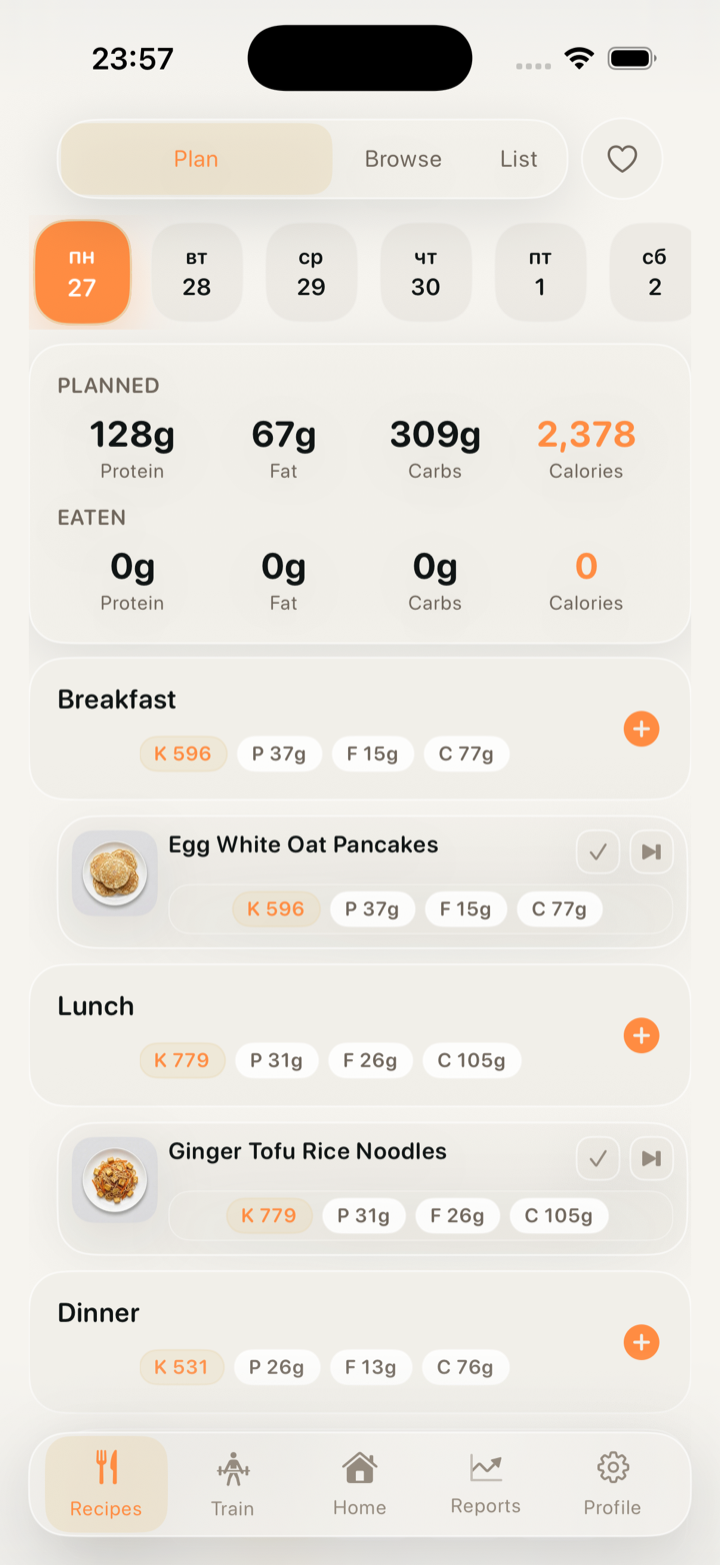
Up2You keeps meal plans, calorie targets, macros, workouts, water, logs, and progress trends together, so timing choices can be reviewed in context.
En Up2You
Preguntas frecuentes
Does meal timing matter for weight loss?
It can matter for adherence and hunger, but calorie balance, protein, and consistency matter more than a perfect eating clock.
Do I need to eat right after training?
Usually no. A normal meal or snack with protein within a practical window is enough for most beginners.
What if my schedule changes every day?
Use anchor meals, backup foods, and rough logging. A flexible structure is better than waiting for a perfect schedule.