Tracking Mistakes That Hide Progress
Find tracking mistakes that hide progress in food logs, weigh-ins, workouts, measurements, and weekly reviews.
Réponse rapide
- Fix missing progress because tracking data is noisy by reviewing enough data before changing the plan.
- A good adjustment is small, specific, and based on trends rather than one unusual day.
- Keep the rest of the plan stable long enough to know whether the change helped.
- Use Calorie Calculator and Macro Calculator when nutrition targets need a clear reset.
Pour qui est ce guide
- Users who have followed a plan long enough to need the next adjustment.
- People dealing with slow fat loss, slower strength gains, confusing weigh-ins, or goal changes.
- Beginners who need a review process before making training or nutrition more aggressive.
Comment ça fonctionne
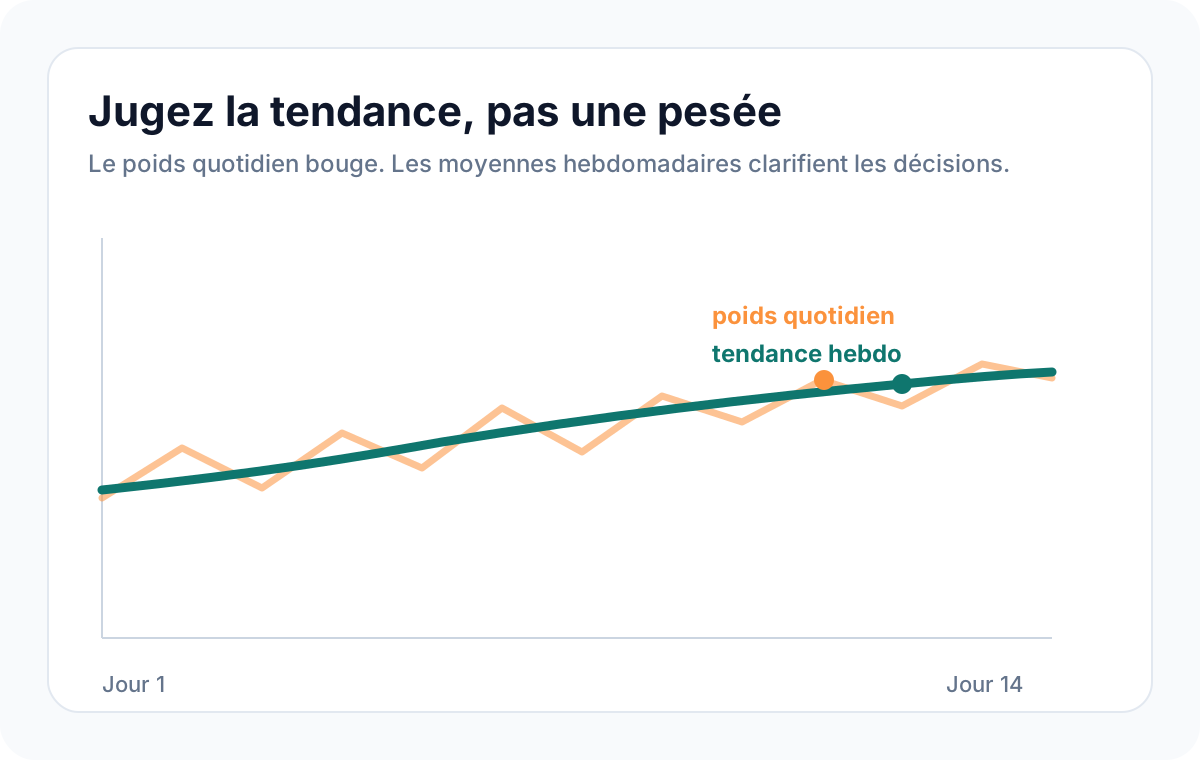
Plateau and adjustment support works by separating noise from signal. Weight, measurements, workouts, hunger, energy, sleep, steps, and adherence all matter. The safest adjustment changes one main variable, keeps the review window clear, and avoids reacting to a single frustrating data point.
Checklist d ajustement
- Use consistent weigh-in timing and weekly averages.
- Check missed bites, drinks, sauces, and weekend meals.
- Track workout performance beyond load alone.
- Compare measurements, photos, and energy with the scale.
Plan étape par étape
- Choose the metric that decides whether the goal is moving.
- Review the last two to four weeks instead of one day.
- Check adherence and recovery before changing targets.
- Pick one small adjustment in calories, volume, steps, or goal focus.
- Hold the change long enough to read the next trend.
Exemple
If weekday logs are accurate but weekends are estimated, the weekly calorie picture may be less clear than it looks.
Erreurs fréquentes
- Treating incomplete tracking as proof the body is not responding.
- Changing several variables at once and losing the signal.
- Treating one unusual week as the new normal.
- Ignoring recovery, schedule, or tracking quality before making the plan stricter.
Quand faire attention
This guide is educational and does not replace medical, nutrition, or coaching advice. Avoid aggressive calorie cuts, sudden training spikes, or goal changes that worsen pain, dizziness, binge-restrict cycles, mood, sleep, or obsessive tracking. Medical conditions, pregnancy, medications, and eating-disorder history need qualified guidance.
Comment Up2You aide
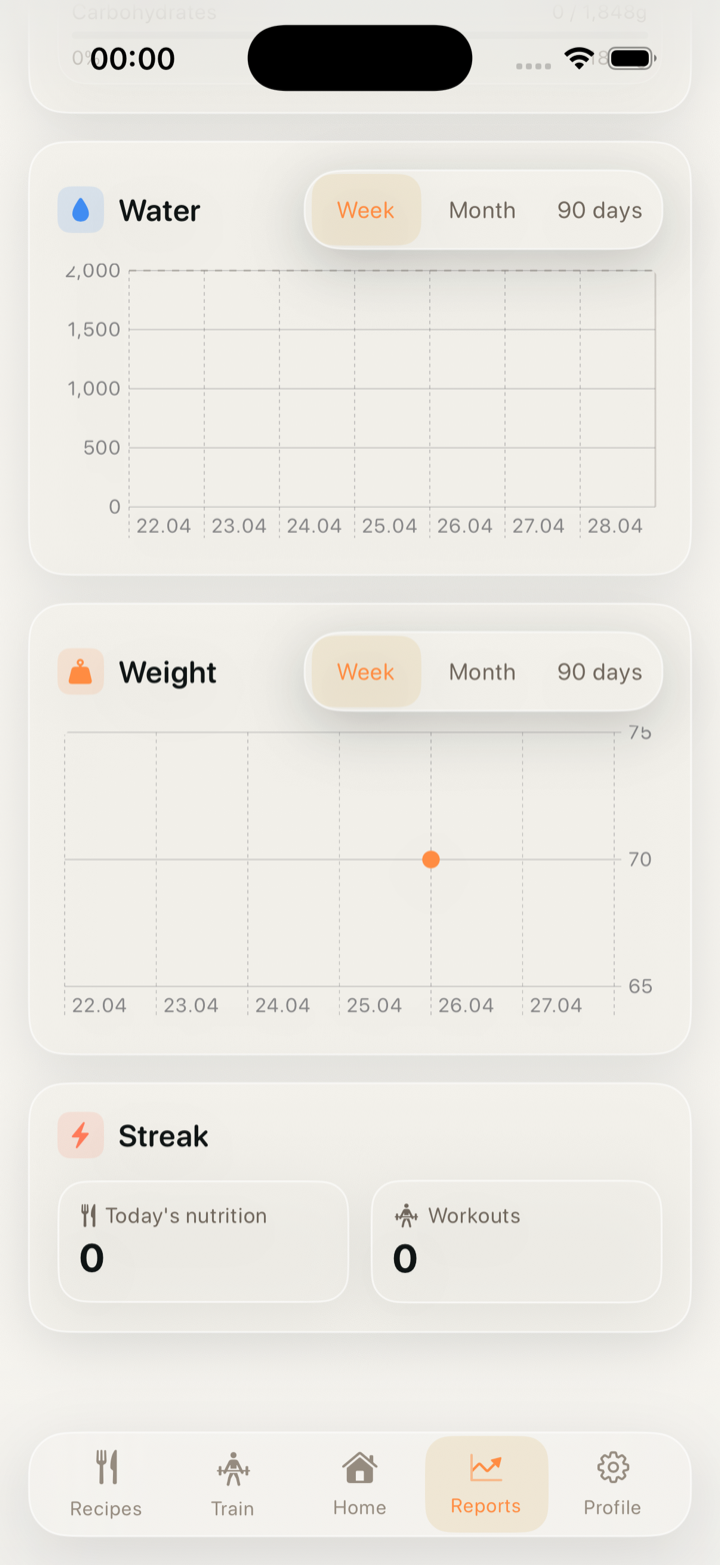
Up2You keeps workouts, meals, water, weight trends, notes, and review patterns together, so adjustments can come from real data instead of memory.
Dans Up2You
Questions fréquentes
How often should I adjust the plan?
Most beginners should avoid weekly overhauls. Review trends over several weeks unless health, pain, or schedule changes require faster action.
Should I adjust calories or training first?
Choose the variable that best matches the bottleneck. If adherence and tracking are clear but weight trend is flat, calories may matter. If performance is flat but recovery is good, training may matter.
What if progress is slow but still moving?
Slow progress may still be progress. Keep the plan stable if the trend matches the goal and the routine is sustainable.