Budget Meal Plan for Weight Loss
Build a budget meal plan for weight loss with repeatable breakfasts, simple lunches, flexible dinners, and backup meals.
Krótka odpowiedź
- Fix meal plans becoming expensive, rigid, or hard to repeat by building meals around affordable staples instead of expensive perfection.
- Budget eating supports weight loss when it keeps protein, produce, carbs, and backup meals available at a cost you can repeat.
- The goal is not the cheapest possible diet. The goal is a realistic grocery system that reduces waste and keeps meals aligned with targets.
- Use Calorie Calculator and Macro Calculator when targets need a practical reset.
Dla kogo jest ten poradnik
- Users who want healthier meals but feel blocked by grocery cost.
- People who need affordable protein, staple meals, and backup foods that still fit calorie targets.
- Beginners who want a simple shopping routine before advanced meal prep or recipe variety.
Jak to działa
Affordable eating works by reducing waste and making the default meal cheaper than improvising. Staples, frozen produce, canned foods, store brands, leftovers, and repeatable proteins can support nutrition targets without requiring premium products. Food safety still matters when storing leftovers, freezing meals, or using canned and frozen foods frequently.
Lista budżetowa
- Repeat one breakfast during busy days.
- Use leftovers for lunches.
- Rotate two affordable dinners.
- Keep one no-cook backup meal.
Plan krok po kroku
- List the meals you already repeat or would realistically eat.
- Choose one affordable protein, one staple carb, one produce option, and one sauce for each default meal.
- Shop your pantry and freezer before adding new items.
- Prepare or portion the highest-friction item first.
- Review cost, hunger, enjoyment, and waste after one week.
Przykład
Breakfast can be oats or eggs, lunch can be leftovers, dinner can rotate beans and rice, tuna wraps, chicken bowls, or potatoes with cottage cheese.
Najczęstsze błędy
- Planning too many unique meals and increasing cost, waste, and decision fatigue.
- Cutting cost so aggressively that meals are not filling or repeatable.
- Buying bulk foods without a storage, freezer, or leftover plan.
- Ignoring food safety, allergies, eating disorder history, or prescribed nutrition limits.
Kiedy zachować ostrożność
This guide is educational and does not replace medical, nutrition, or food safety advice. Get individualized guidance for pregnancy, breastfeeding, diabetes, kidney disease, hypertension, immune suppression, food allergies, eating disorder history, digestive conditions, or prescribed sodium, carbohydrate, protein, fluid, or fiber limits.
Jak pomaga Up2You
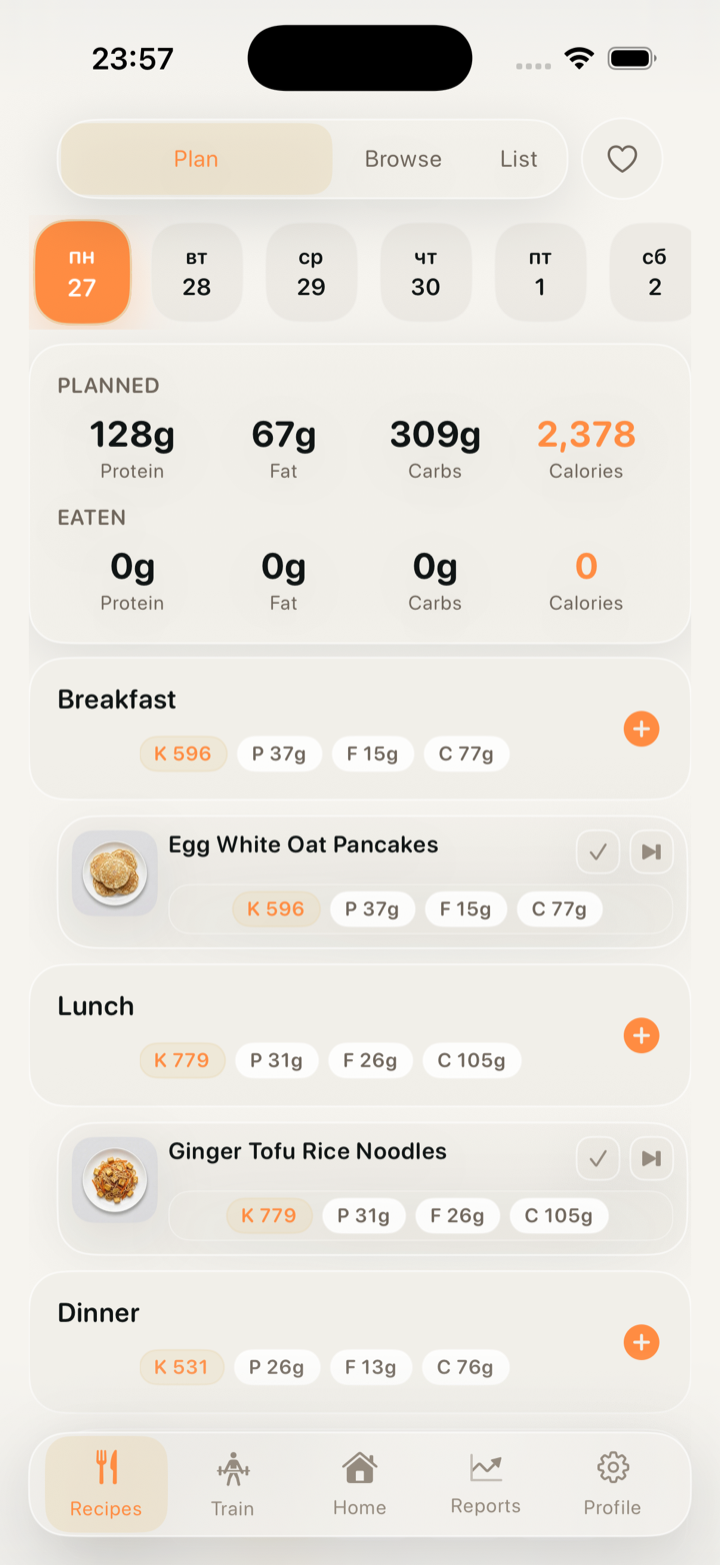
Up2You keeps meal plans, calorie targets, macros, food logs, screenshots, notes, and progress trends together, so budget meals can stay practical without losing nutrition structure.
W Up2You
Najczęstsze pytania
Can cheap food still be healthy?
Yes. Beans, eggs, oats, potatoes, rice, frozen vegetables, canned fish, yogurt, tofu, and seasonal produce can all support a healthy pattern.
Do I need organic or specialty foods?
No. Specialty foods can fit, but they are not required for weight loss or basic nutrition.
How do I avoid wasting groceries?
Plan fewer meals, repeat staples, freeze extras early, and review what actually gets eaten before buying more variety.