Caffeine and Fitness Progress
Use caffeine for fitness progress carefully by watching sleep, anxiety, workout timing, total intake, and energy crashes.
Krótka odpowiedź
- Fix caffeine helping workouts but hurting sleep and recovery by turning hydration, sleep, caffeine, stress, and walking into small repeatable cues.
- Daily wellness habits support fat loss and workouts by making hunger, energy, and recovery easier to manage.
- The goal is not a perfect routine. The goal is a few cues that keep the plan usable on normal busy days.
- Use Calorie Calculator and Macro Calculator when food targets need a practical reset.
Dla kogo jest ten poradnik
- Users whose food or workout plan breaks down when sleep, hydration, stress, or energy gets inconsistent.
- People who want practical daily habits without supplements, punishment, or extreme rules.
- Beginners who need simple cues that can be reviewed with weekly progress.
Jak to działa
Daily wellness habits work because they reduce friction. Water cues make hydration easier, sleep routines protect recovery, caffeine boundaries prevent late-day tradeoffs, stress plans reduce reactive eating, and short walks add movement without needing a full workout. These habits do not replace calories, protein, training, or medical care, but they make the main plan easier to repeat.
Codzienna lista wellness
- Know your total daily caffeine intake.
- Keep caffeine away from bedtime when it affects sleep.
- Use it for selected sessions, not every low-energy moment.
- Watch anxiety, heart symptoms, stomach upset, and medication interactions.
Plan krok po kroku
- Pick one daily cue instead of changing everything at once.
- Attach it to a meal, workout, commute, bedtime, or progress review.
- Track the habit lightly for one week.
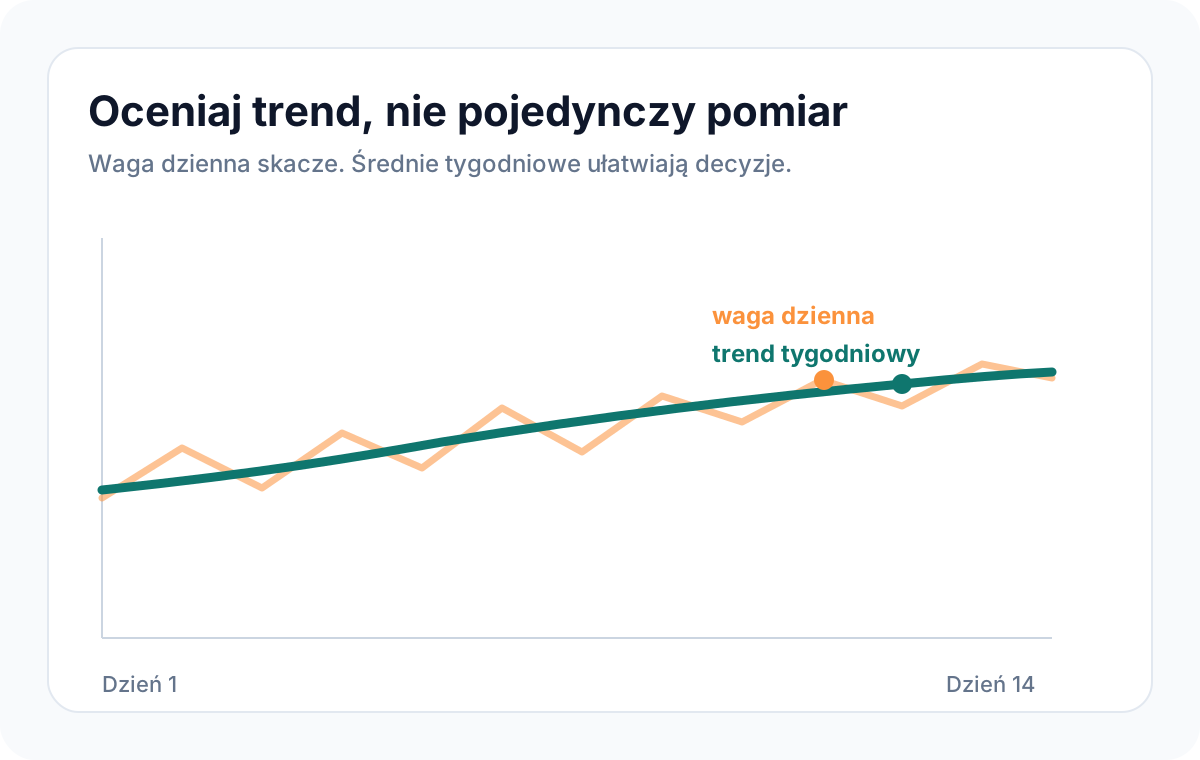
- Review hunger, energy, sleep, training, and weight trend together.
- Adjust the cue only if it is realistic enough to repeat.
Przykład
A morning coffee before training may be useful, while a late afternoon energy drink may hurt sleep enough to reduce progress.
Najczęstsze błędy
- Using more caffeine to cover poor sleep, under-eating, dehydration, or excessive training stress.
- Trying to fix every wellness habit in the same week.
- Using water, caffeine, walking, or sleep rules as punishment.
- Ignoring medical conditions, medications, pregnancy, heat, or severe symptoms.
Kiedy zachować ostrożność
This guide is educational and does not replace medical care. Ask a clinician about fluid restriction, kidney disease, heart failure, blood pressure, pregnancy, breastfeeding, diabetes, eating disorder history, sleep disorders, medication interactions, caffeine sensitivity, heat illness, dizziness, fainting, or symptoms that are severe or new.
Jak pomaga Up2You
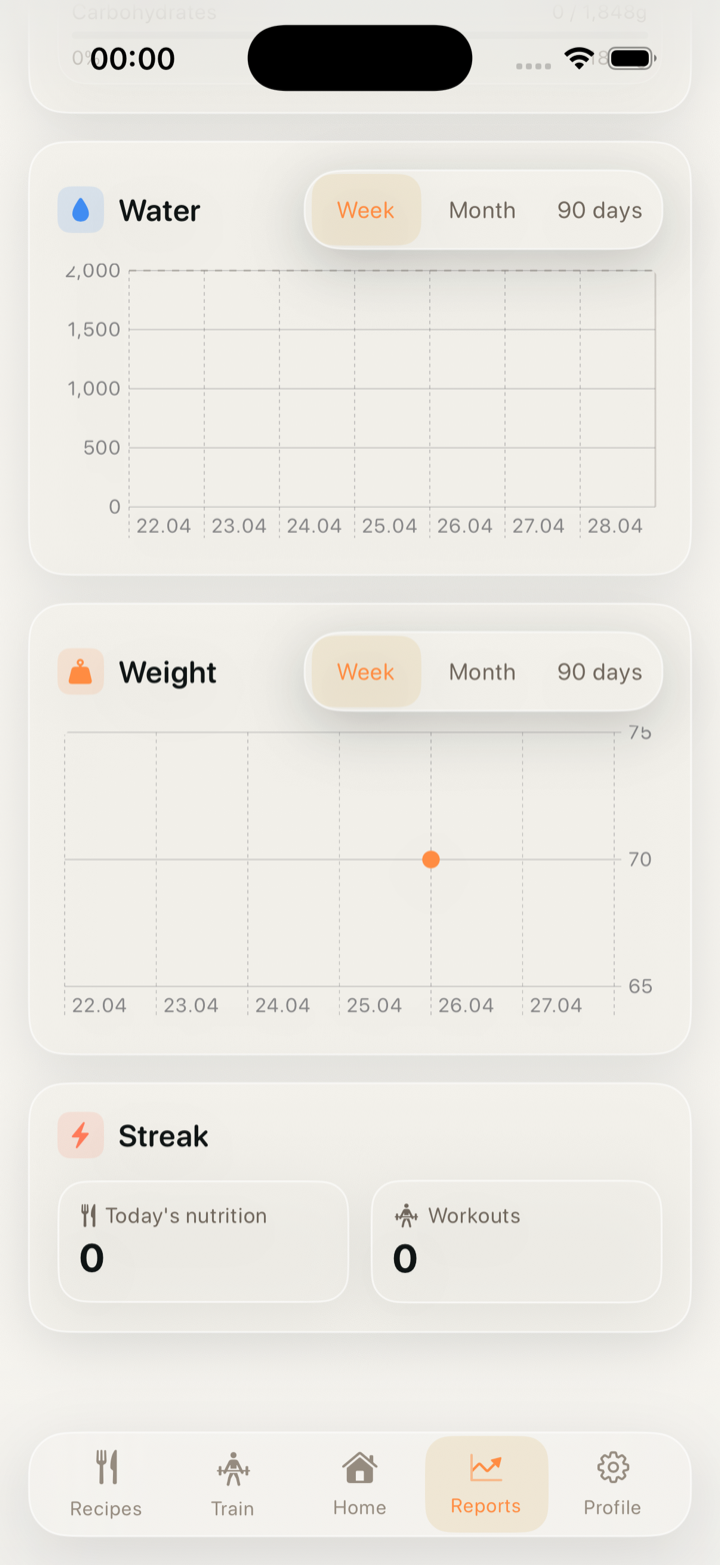
Up2You keeps hydration notes, meal plans, calorie targets, workouts, progress trends, and weekly reviews together, so daily wellness habits can be adjusted from what actually happened.
W Up2You
Najczęstsze pytania
Do daily wellness habits cause weight loss by themselves?
Usually no. They support the calorie, protein, activity, and recovery habits that make weight loss easier to sustain.
Should I track every detail?
Not necessarily. Track only the cue that changes your decisions, such as water with meals, caffeine cutoff, bedtime routine, or post-meal walks.
When should I get medical advice?
Get medical advice for severe symptoms, medical conditions, pregnancy, medication interactions, disordered eating concerns, or persistent sleep problems.