Dynamic Warm-Up Routine for Lifting Days
Build a dynamic warm-up routine with simple movement prep that matches the muscles and joints you will train.
Krótka odpowiedź
- Use dynamic warm-up to prepare the exact joints and patterns you will train, not as a separate exhausting workout.
- Keep the routine short, repeatable, and connected to the first exercise.
- Progress the main workout only when warm-up and working sets both feel controlled.
- Use Calorie Calculator and Macro Calculator to support recovery.
Dla kogo jest ten poradnik
- Beginners who feel stiff or unsure before strength sessions.
- Lifters who want a repeatable warm-up instead of random drills.
- Users who want mobility notes connected to an Up2You workout plan.
Jak to działa
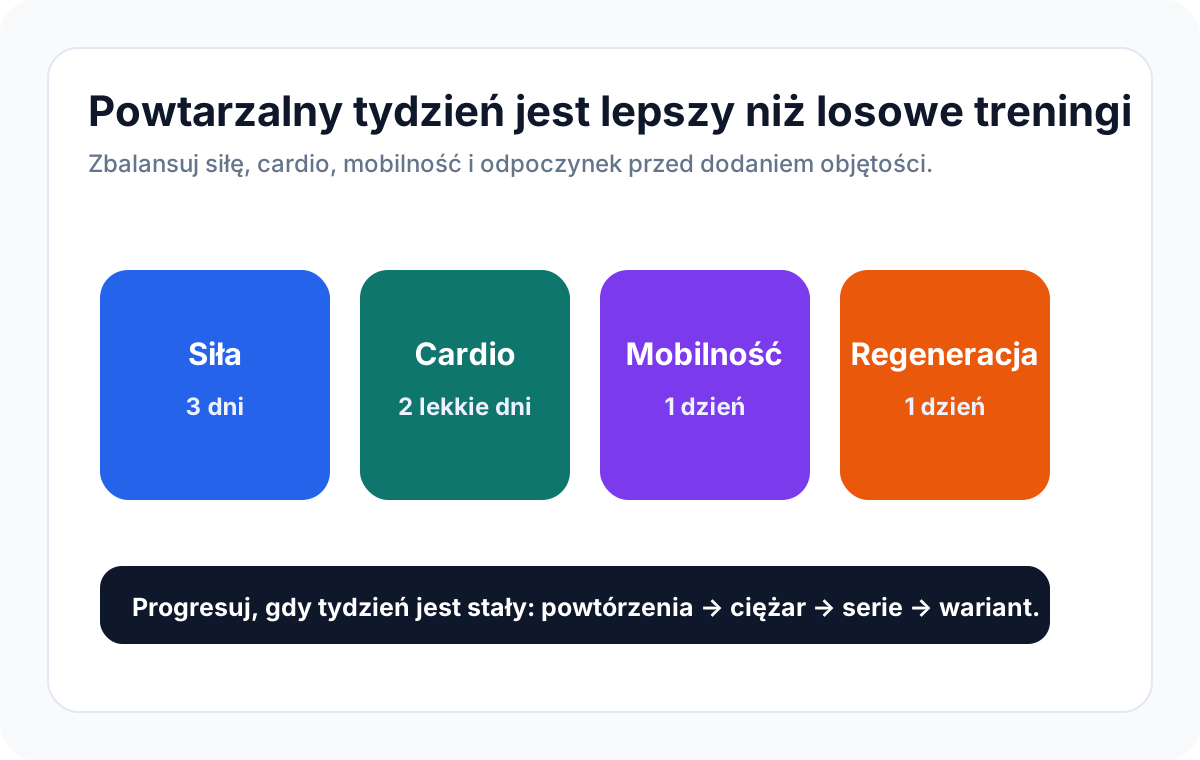
Warm-ups and mobility work are useful when they raise readiness for the session ahead. The goal is better temperature, coordination, joint control, and confidence before the working sets, not a long routine that drains energy.
Praktyczna lista
- Choose movements that look like the session ahead.
- Use controlled reps instead of long passive holds.
- Move through hips, shoulders, ankles, and upper back.
- Keep the routine short enough to repeat consistently.
Plan krok po kroku
- Choose the main lift or movement pattern for the day.
- Use 3-5 minutes of easy general movement.
- Add two or three drills that match the joints you need.
- Practice the first exercise with light ramp-up sets.
- Save one note for the next session.
Przykład
For lower body day, use leg swings, hip hinges, lunges, ankle rocks, and two light sets of the first exercise.
Najczęstsze błędy
- Copying a long mobility circuit that feels productive but leaves you tired before the actual workout starts.
- Making the preparation longer than the workout can consistently support.
- Ignoring notes about what actually helped the main lift feel better.
- Forcing range of motion instead of building control gradually.
Kiedy zachować ostrożność
This guide is educational and does not replace coaching or medical advice. Stop if pain is sharp, radiating, or changes your movement. If stiffness follows injury, surgery, dizziness, pregnancy, or a medical condition, get qualified guidance before forcing range.
Jak pomaga Up2You
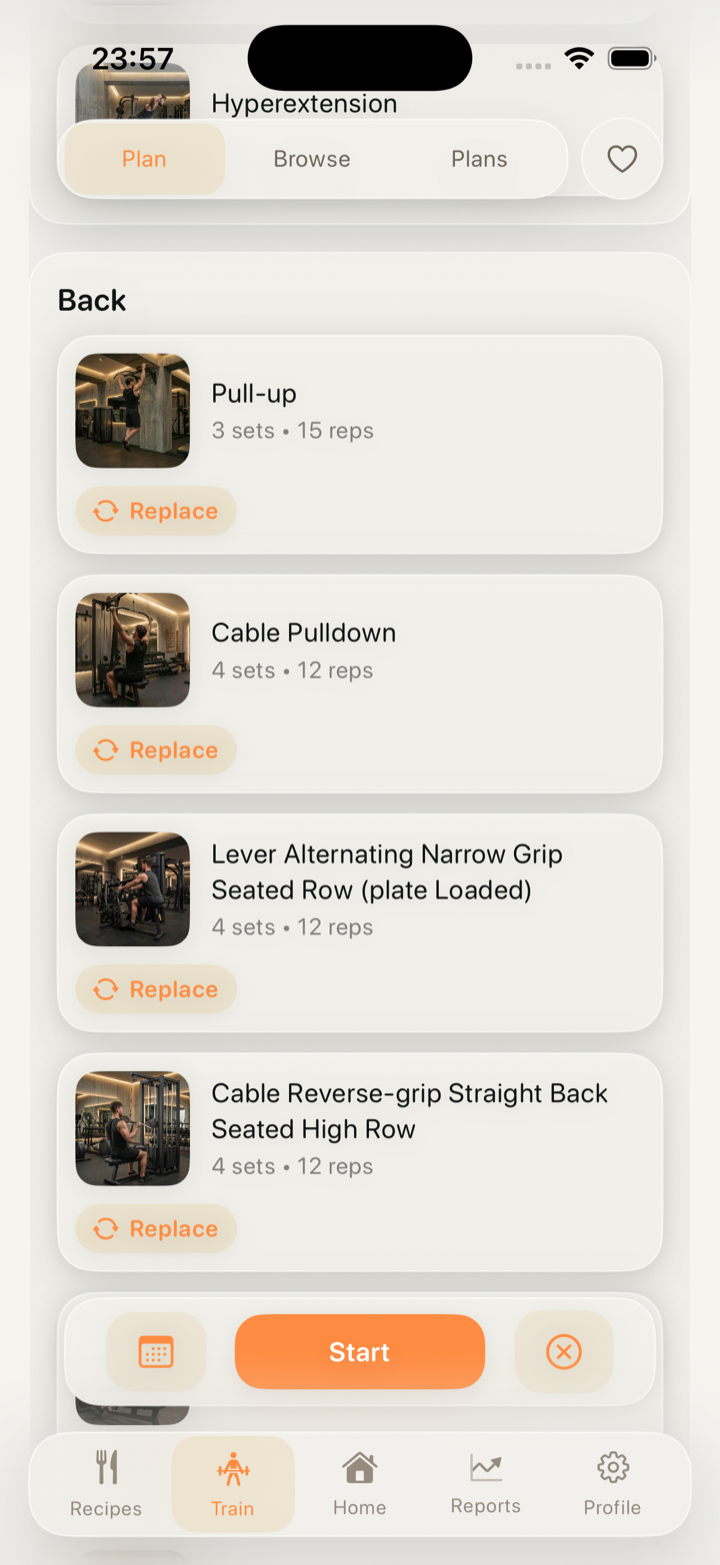
Up2You keeps exercises, warm-up notes, sets, reps, recovery signals, and nutrition targets in one place, so preparation becomes part of the plan instead of a separate guessing game.
W Up2You
Najczęstsze pytania
How long should a warm-up take?
Most sessions need 5-10 minutes plus specific warm-up sets for the first hard lift.
Should I stretch before lifting?
Use active mobility and light practice first. Long passive stretching is usually better after training or on recovery days.
Do I need mobility every day?
Not always. Use it where it improves control, comfort, or positions you actually need.