How Many Sets per Muscle Do You Need?
Estimate weekly sets per muscle with a practical range that balances progress, soreness, and recovery.
Krótka odpowiedź
- Troubleshoot weekly training volume by checking training data, recovery, technique, and progression before rebuilding the whole plan.
- Fix one variable at a time so the next week gives a clear signal.
- Use smaller adjustments before adding more hard work.
- Use Calorie Calculator and Macro Calculator to support recovery.
Dla kogo jest ten poradnik
- Beginners who are training consistently but not seeing expected progress.
- Lifters who feel stuck, sore, tired, or unsure how to adjust.
- Users who want workout notes and recovery signals connected inside Up2You.
Jak to działa
Most workout problems come from a mismatch between stress and recovery, unclear progression, or inconsistent tracking. A good troubleshooting process narrows the cause before changing the plan, so you keep what works and adjust what is actually limiting progress.
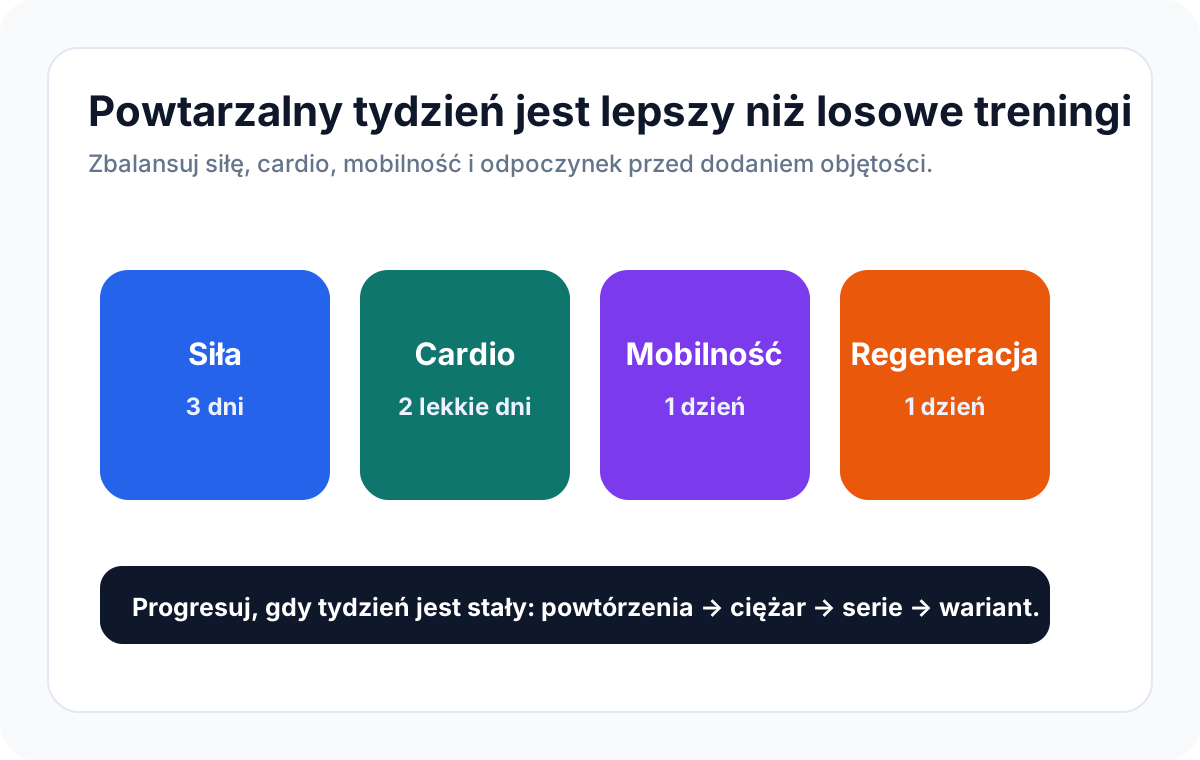
Lista diagnozy
- Start with fewer hard sets if you are new or returning.
- Count direct work first, then consider overlap from compounds.
- Add sets only when performance and recovery are stable.
- Reduce sets when soreness blocks the next session.
Plan krok po kroku
- Write down the exact problem and when it started.
- Check the last two to four weeks of sets, reps, load, effort, sleep, and soreness.
- Pick the most likely limiter.
- Change one variable for one or two weeks.
- Review performance before making the next adjustment.
Przykład
A beginner might start with 6-10 hard weekly sets for a major muscle group before adding more volume.
Najczęstsze błędy
- Copying an advanced high-volume plan before basic recovery, technique, and tracking are reliable.
- Ignoring recovery signals because the plan looks good on paper.
- Changing too many variables to know what helped.
- Judging the whole plan from one unusually good or bad session.
Kiedy zachować ostrożność
This guide is educational and does not replace coaching or medical advice. Stop if pain is sharp, radiating, worsening, or changes your movement. Persistent pain, dizziness, chest symptoms, or symptoms after injury need qualified guidance.
Jak pomaga Up2You
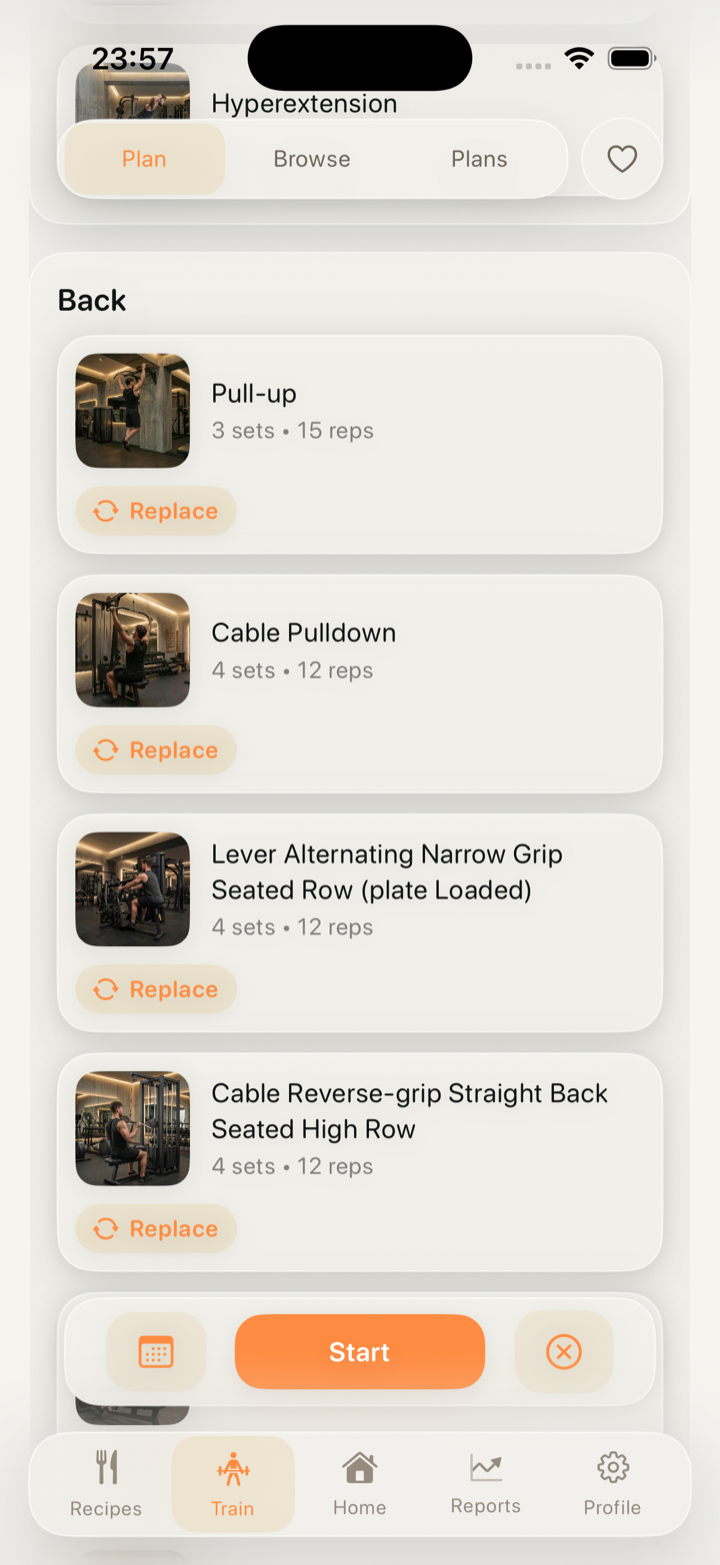
Up2You keeps workout history, notes, recovery signals, and nutrition targets together, so troubleshooting is based on patterns instead of memory.
W Up2You
Najczęstsze pytania
Should I change my plan whenever progress slows?
Not immediately. First check tracking, effort, recovery, and whether the plan has run long enough to judge.
How long should I test one fix?
One to two weeks is enough for small changes; bigger program changes may need four weeks.
Can nutrition affect workout problems?
Yes. Low calories, low protein, poor hydration, and poor sleep can all make training feel worse.