How To Pick Your Fitness Goal Without Guessing
Pick a fitness goal by matching your timeline, training level, body composition, energy, and tracking capacity.
Krótka odpowiedź
- Fix choosing a fitness goal without clear tradeoffs by choosing the goal, weekly defaults, and review metric before adding complexity.
- A good program connects workouts, nutrition, recovery, and progress tracking around one primary goal.
- Run the first version for several weeks before rebuilding it.
- Use Calorie Calculator and Macro Calculator when food targets need a practical starting point.
Dla kogo jest ten poradnik
- Users choosing a fitness goal after learning basic logging and weekly review workflows.
- Beginners who need a program that matches real time, energy, and recovery.
- People deciding between fat loss, muscle gain, recomposition, maintenance, or a return phase.
Jak to działa
A goal-based program works when each part supports the same outcome. Training creates the signal, nutrition supports the goal, recovery keeps the plan repeatable, and weekly review decides the next adjustment. The program should be clear enough to follow before it becomes advanced.
Lista programu
- Choose one primary goal for the next 8-12 weeks.
- Match the goal to your current schedule and recovery.
- Pick the metric that proves the goal is working.
- Delay advanced goals until basic consistency is stable.
Plan krok po kroku
- Pick one primary goal for the next phase.
- Choose the minimum repeatable workout schedule.
- Set the nutrition target that fits the goal.
- Decide which progress metric matters most.
- Review the plan weekly and change one variable at a time.
Przykład
If workouts are new and tracking is inconsistent, a beginner consistency goal may beat an aggressive fat loss target.
Najczęstsze błędy
- Trying to prioritize fat loss, muscle gain, performance, and habit change equally in the same short phase.
- Trying to optimize every detail before the weekly defaults are repeatable.
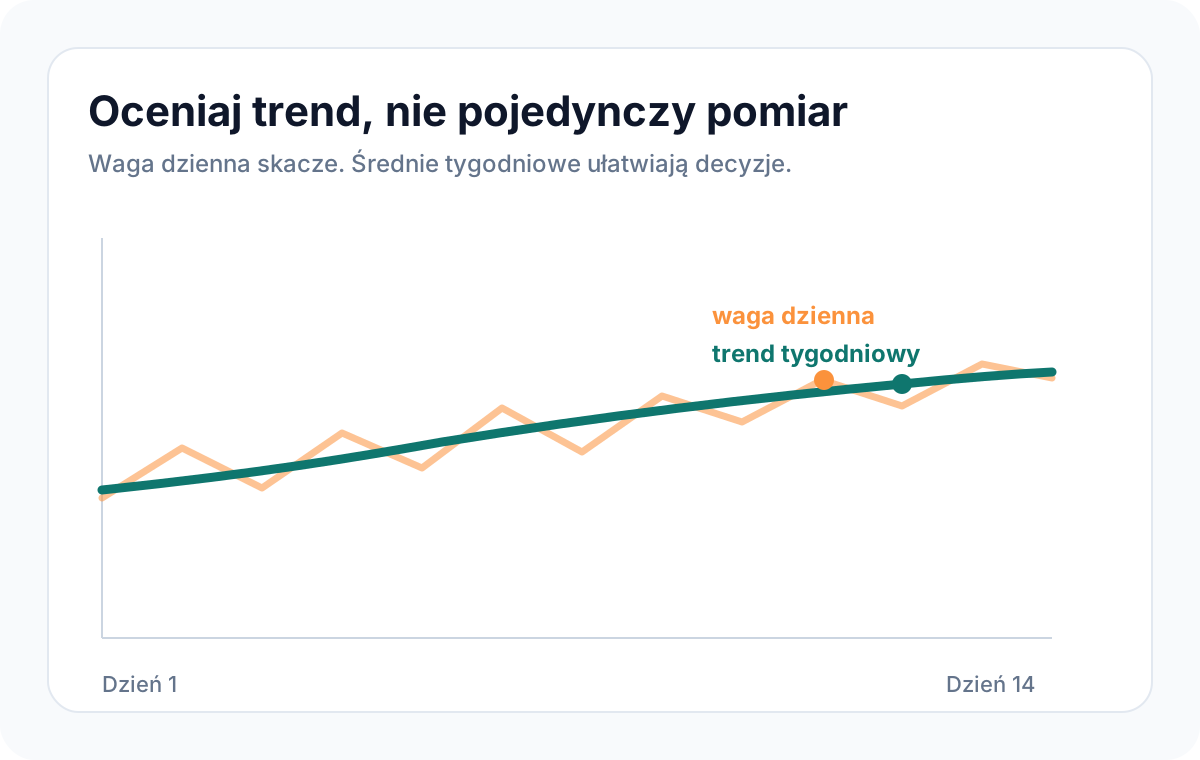
- Changing the program from one unusual weigh-in or workout.
- Ignoring recovery because the goal feels urgent.
Kiedy zachować ostrożność
This guide is educational and does not replace medical, nutrition, or coaching advice. Use conservative targets if training or dieting causes pain, dizziness, obsessive tracking, binge-restrict cycles, or worsening mood. Medical conditions, pregnancy, medications, and eating-disorder history need qualified guidance.
Jak pomaga Up2You
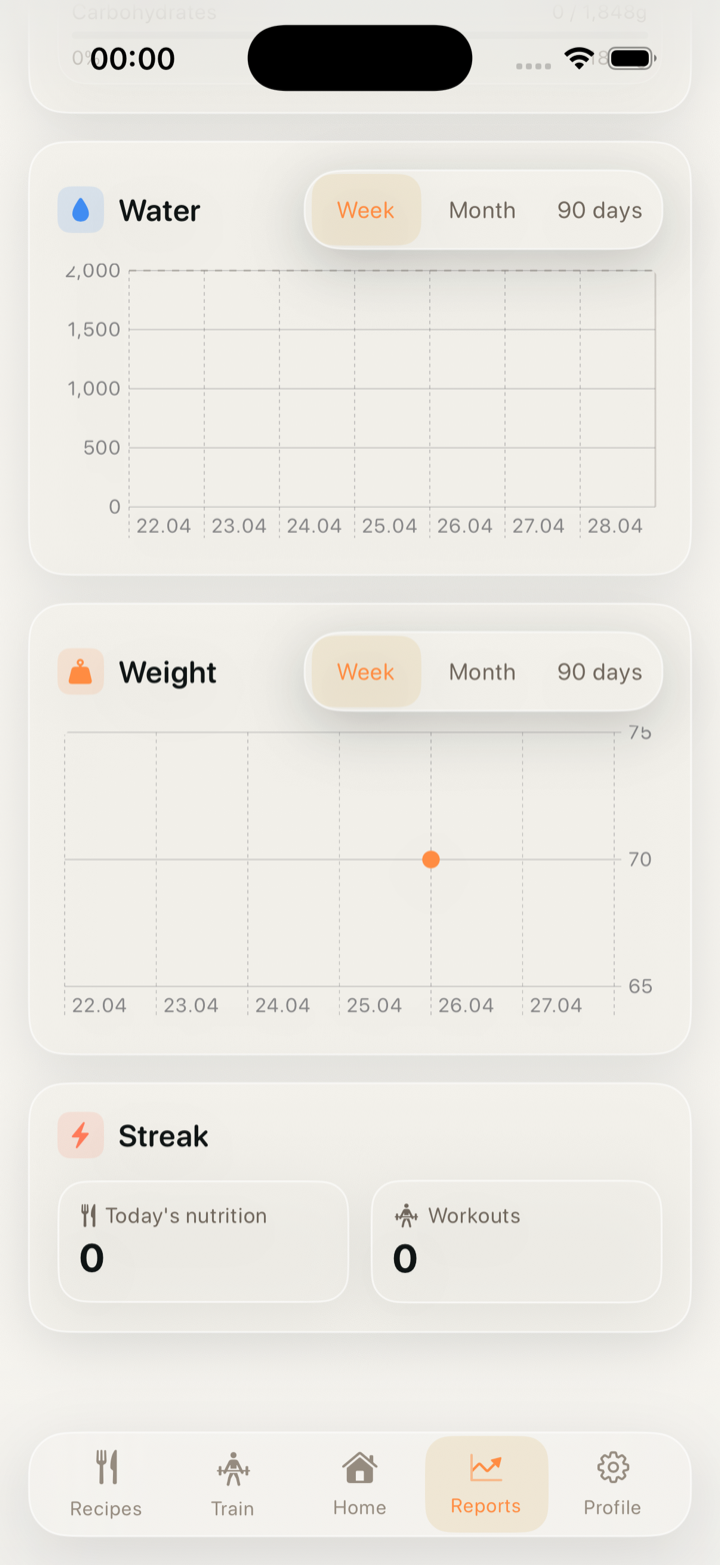
Up2You connects goals, workouts, meals, progress, and weekly reviews, so a program can be adjusted from real patterns instead of guesswork.
W Up2You
Najczęstsze pytania
How long should I keep one goal?
Eight to twelve weeks is a useful starting range for many beginners, unless health, recovery, or schedule changes require a smaller phase.
Can I pursue two goals at once?
Sometimes, but one goal should lead. Beginners can often improve several things, but the plan still needs one primary decision metric.
When should I change programs?
Change when the goal changes, recovery is not sustainable, or several weeks of data show the current setup is not working.