How To Stay Full in a Calorie Deficit
Stay full in a calorie deficit by combining protein, fiber, meal volume, fluids, and realistic meal timing.
Resposta rápida
- Fix calorie deficits feeling unsustainable because meals are not filling by making meals more filling before cutting calories lower.
- Satiety comes from several levers at once: protein, fiber, meal volume, fluids, sleep, stress, and realistic targets.
- The best filling meal is one you can repeat without digestive discomfort or extra tracking stress.
- Use Calorie Calculator and Macro Calculator when targets need a practical reset.
Para quem é este guia
- Users who feel hungry while trying to follow a calorie target.
- People improving meal volume, vegetables, snacks, fiber, and fullness.
- Beginners who need practical satiety habits without extreme diet rules.
Como funciona
Fiber and satiety support works by improving the meal before blaming willpower. Protein helps fullness and structure, fiber and volume make meals more satisfying, and enough fluids, sleep, and realistic calories make the plan easier to repeat. The goal is not maximum fiber or maximum volume. The goal is a meal pattern that keeps hunger manageable.
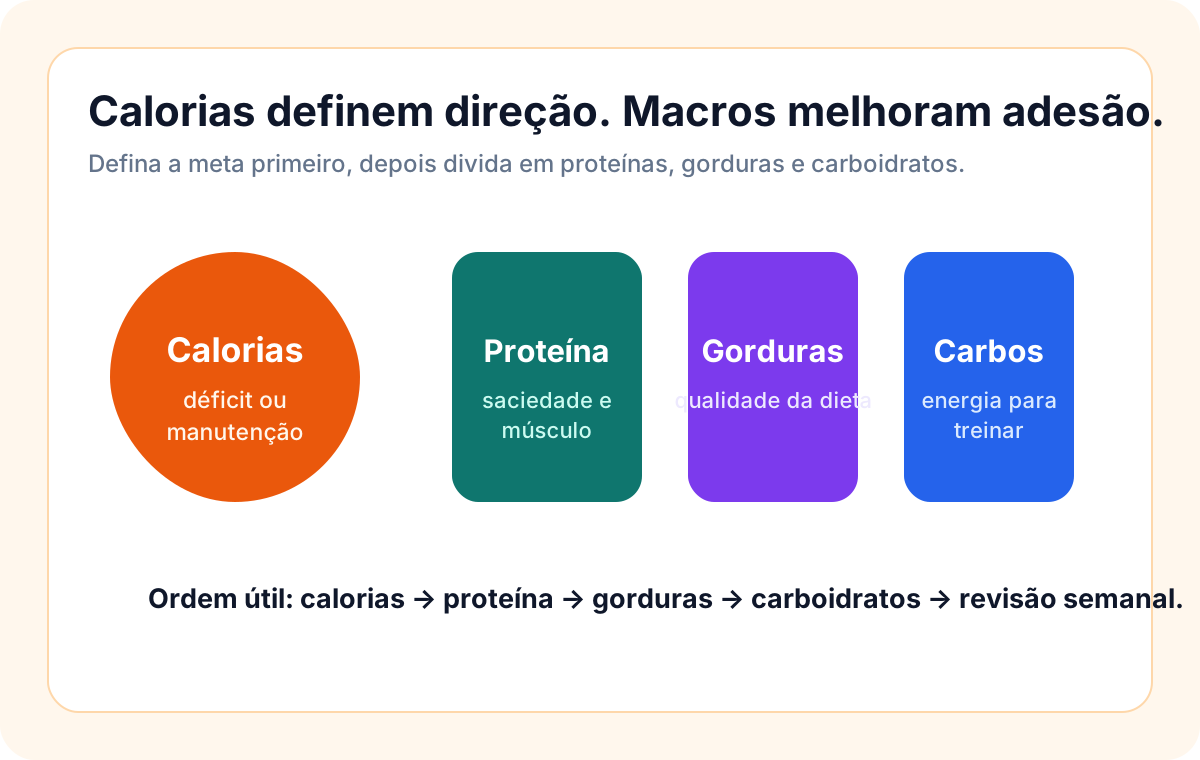
Checklist de saciedade
- Build meals around protein and high-volume foods.
- Add fiber gradually instead of all at once.
- Use vegetables, fruit, beans, potatoes, oats, or whole grains where they fit.
- Review sleep, stress, and meal timing if hunger stays high.
Plano passo a passo
- Choose the meal or snack where hunger is hardest to manage.
- Add or improve the protein anchor first.
- Add one fiber or volume source you tolerate well.
- Keep sauces, fats, and portions visible in the log.
- Review hunger and digestion across the week.
Exemplo
A bowl with chicken or tofu, potatoes, vegetables, yogurt sauce, and fruit may feel fuller than a smaller high-calorie meal.
Erros comuns
- Cutting calories lower when the real issue is low meal volume, low protein, or low fiber.
- Adding fiber too quickly and then abandoning the whole routine.
- Using vegetables or volume foods to replace protein instead of supporting the meal.
- Ignoring sleep, stress, hydration, and an overly aggressive calorie target.
Quando ter cuidado
This guide is educational and does not replace medical or nutrition care. Digestive disease, persistent bloating, unexplained appetite changes, pregnancy, medications, eating-disorder history, or major dietary restrictions need qualified guidance. Increase fiber gradually and simplify tracking if food rules increase anxiety or guilt.
Como o Up2You ajuda
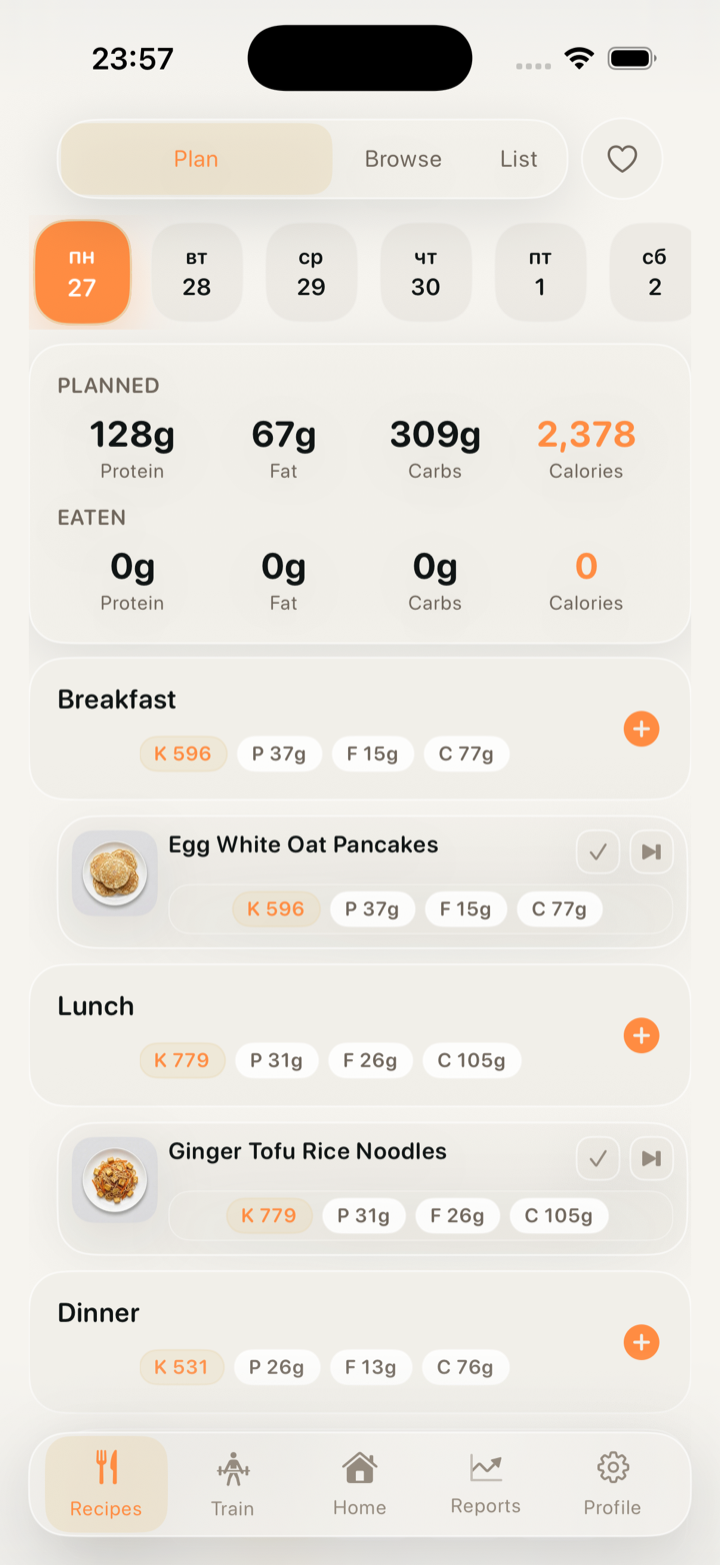
Up2You keeps meal plans, calorie targets, macros, water, logs, notes, and progress trends together, so hunger and fullness can be reviewed with the rest of the week.
No Up2You
Perguntas frequentes
Does fiber help with weight loss?
Fiber can help fullness and food quality, but it works best alongside calories, protein, and consistency.
Should I add fiber quickly?
No. Increase gradually and drink enough fluids, especially if your current intake is low.
What if I am hungry all the time?
Review meal size, protein, fiber, sleep, stress, and whether the calorie target is too aggressive.