Liquid Calories Guide: What To Track
Track liquid calories from coffee drinks, alcohol, juice, smoothies, sports drinks, and small extras that add up.
Resposta rápida
- Fix liquid calories missing from food logs by making the log consistent enough to support the next decision.
- Food logging does not need to be perfect, but it needs to capture the items that change the weekly calorie picture.
- Focus precision on calorie-dense foods, repeated habits, and meals that are easy to underestimate.
- Use Calorie Calculator and Macro Calculator when targets need a practical starting point.
Para quem é este guia
- Users tracking food but unsure whether the data is accurate enough.
- People eating restaurant meals, homemade recipes, sauces, drinks, or occasional untracked meals.
- Beginners who want useful nutrition data without turning tracking into an all-or-nothing habit.
Como funciona
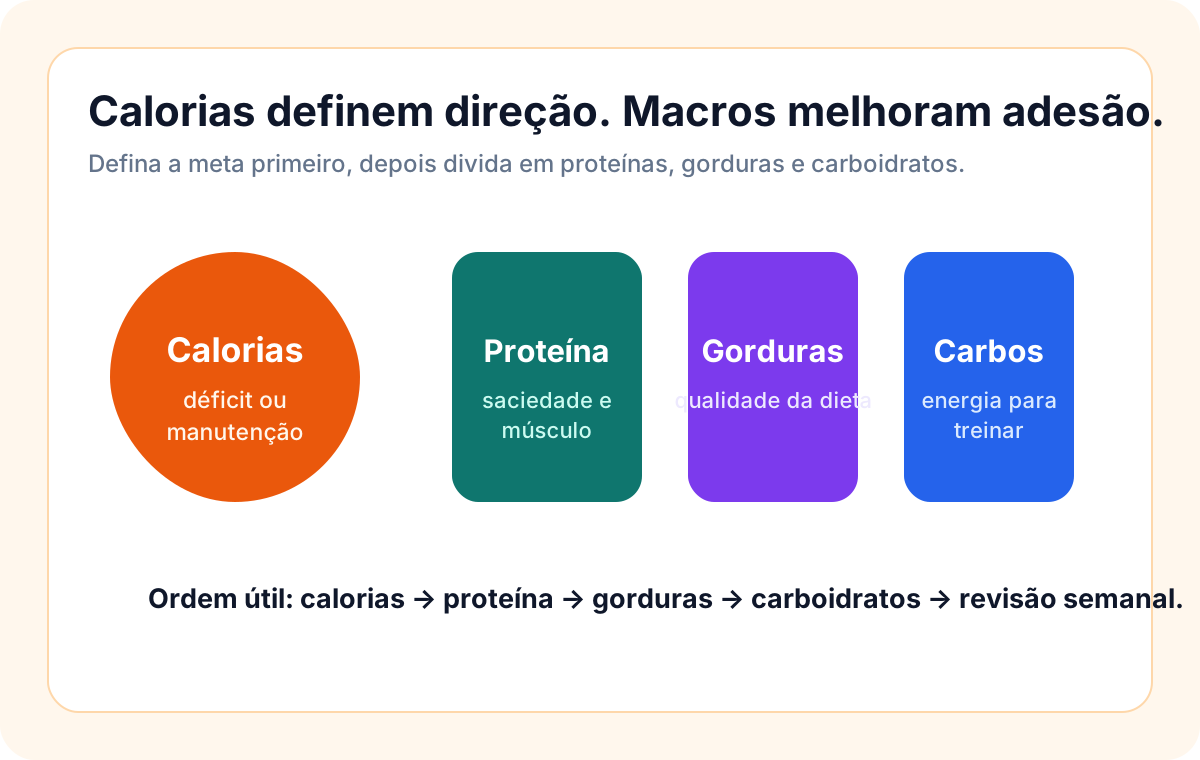
Food logging accuracy works best as a practical system, not a perfection test. The goal is to capture the main calorie sources, keep repeat meals easy, and leave notes when an estimate is rough. Then weekly weight, hunger, energy, and adherence can be reviewed with better context.
Checklist de registro
- Log drinks with calories the same way you log food.
- Check coffee add-ins, alcohol, juices, smoothies, and sports drinks.
- Separate zero-calorie drinks from low-calorie drinks.
- Review drink patterns before cutting meals lower.
Plano passo a passo
- Choose the meal or item that creates the most uncertainty.
- Use a repeatable estimate or measurement method.
- Log calorie-dense extras before optimizing small details.
- Add a note when the entry is approximate.
- Review the weekly trend before changing calories.
Exemplo
A daily latte, juice, or weekend alcohol pattern can change the weekly calorie average even when meals look consistent.
Erros comuns
- Treating drinks as too small to matter, then reducing food when the real gap is the beverage pattern.
- Skipping uncertain meals instead of logging a useful estimate.
- Spending too much effort on low-impact details while missing calorie-dense extras.
- Changing calorie targets before checking whether the logs are complete enough.
Quando ter cuidado
This guide is educational and does not replace medical, nutrition, or mental-health care. Simplify or pause calorie tracking if it increases anxiety, guilt, binge-restrict cycles, obsessive checking, or worsening mood. Medical conditions, pregnancy, medications, and eating-disorder history need qualified guidance.
Como o Up2You ajuda
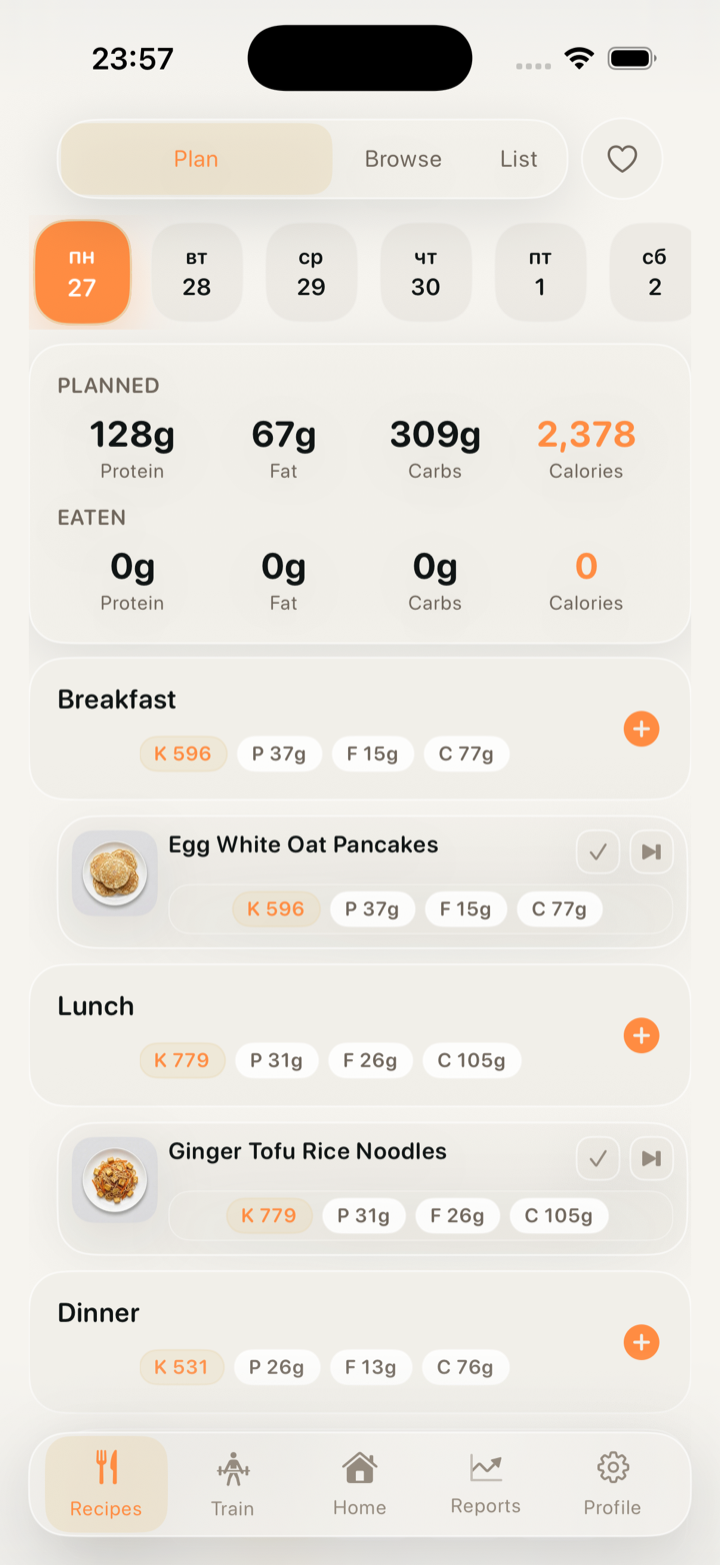
Up2You keeps meal logs, calorie targets, macros, water, weight trends, and notes together, so imperfect logs can still support useful weekly decisions.
No Up2You
Perguntas frequentes
Do I need to weigh every food?
No. Weighing helps most with calorie-dense foods, but repeatable estimates can be enough for many meals.
What if I do not know the exact calories?
Use a realistic estimate and add a note. A consistent estimate is usually better than skipping the meal entirely.
Can calorie tracking be too much?
Yes. If tracking worsens stress, mood, or eating behavior, simplify the method and consider professional support.