Calorie Deficit Mistakes That Slow Fat Loss
A calorie deficit works only when it is consistent, measurable, and sustainable. Most fat-loss problems come from inaccurate tracking, an aggressive target, low protein, weekend overeating, or changing the plan before enough trend data exists.
Quick Answer
- Keep the deficit moderate enough to repeat.
- Track weekends, snacks, drinks, and sauces.
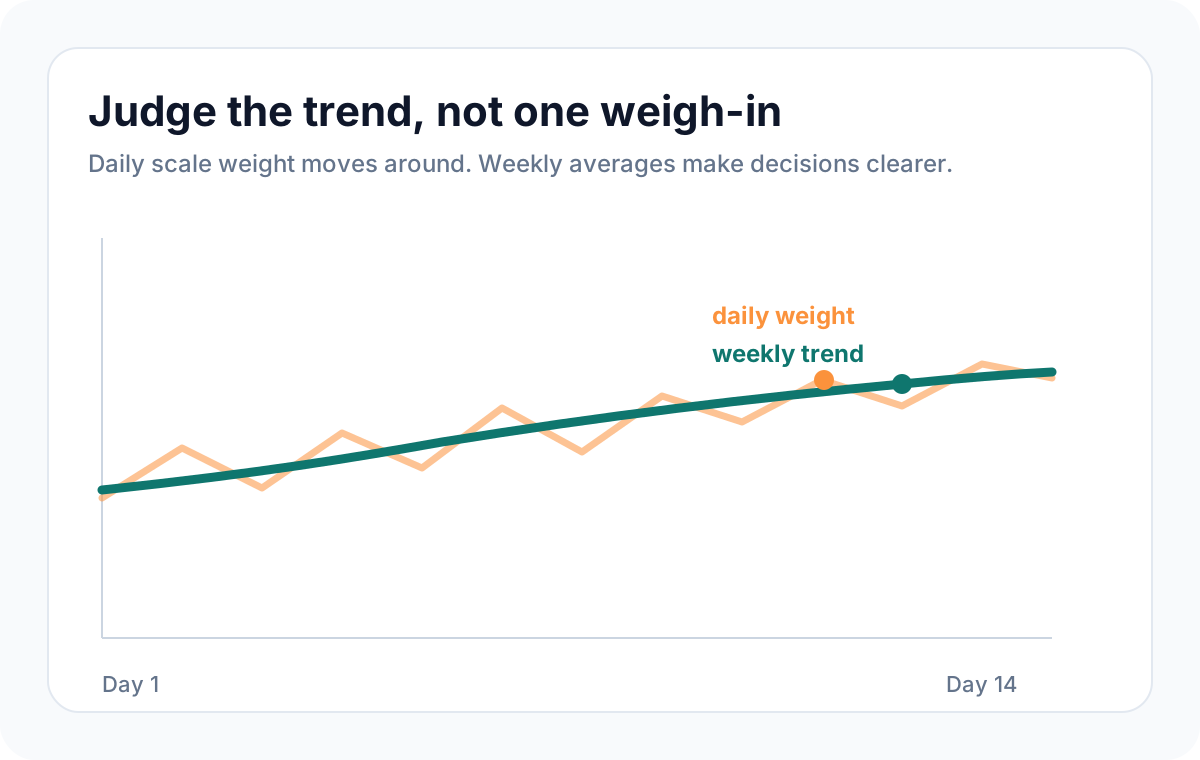
- Compare weekly averages instead of single weigh-ins.
- Keep protein and training consistent.
- Adjust by small steps, not by panic cuts.
Who This Guide Is For
- People who think they are in a deficit but are not seeing progress.
- Beginners who keep restarting diets.
- Users who want fat loss without extreme restriction.
How It Works
A deficit is a weekly pattern, not a perfect day. You can be accurate Monday through Thursday and erase the deficit by Sunday. You can also be in a real deficit and still see scale spikes from water, soreness, sodium, stress, or digestion. The solution is better measurement, not constant overcorrection.
Step-by-Step Plan
- Set a calorie target from estimated TDEE.
- Log all meals, drinks, snacks, and high-calorie extras.
- Weigh in under similar conditions and use weekly averages.
- Keep workouts and step count as stable as possible.
- Review after 10-14 days.
- Change calories or activity only if the trend supports it.
Example
If you target 1,900 kcal on weekdays but eat untracked restaurant meals and drinks on weekends, your weekly average may be much closer to maintenance. In that case, cutting weekdays to 1,600 kcal is not the first fix. The first fix is making the weekly intake visible.
Common Mistakes
- Cutting calories too low and then overeating later.
- Forgetting oils, dressings, bites, drinks, and desserts.
- Reducing calories when the real issue is inconsistent logging.
- Dropping protein and losing workout quality.
- Expecting linear scale movement every day.
When To Be Careful
If dieting leads to binge-restrict cycles, obsessive tracking, dizziness, missed periods, or anxiety around food, stop using aggressive targets and seek professional support.
How Up2You Helps
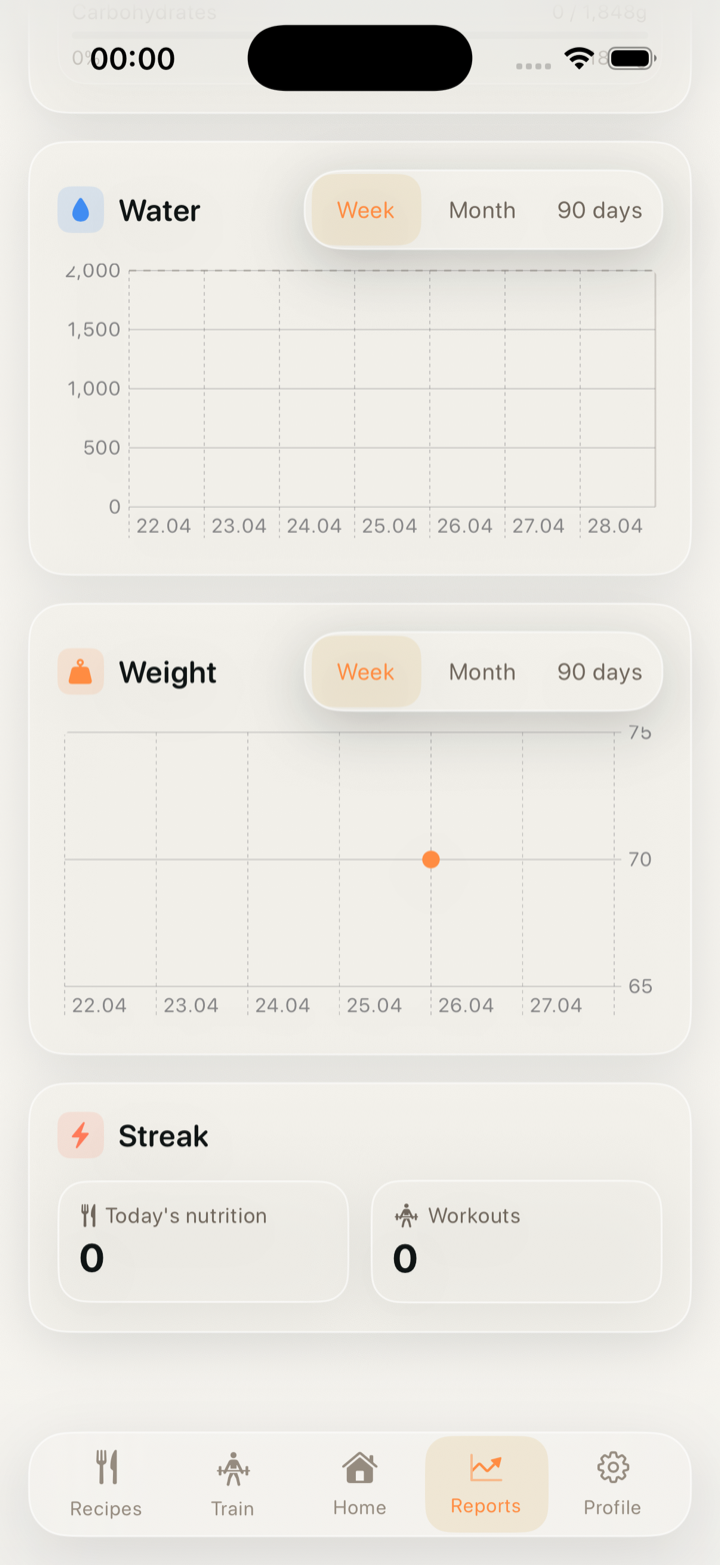
Up2You helps you keep calories, macros, workouts, and progress in one workflow. Use the Calorie Calculator, then track the habits that make the deficit real.
Inside Up2You
FAQ
Why am I not losing weight in a calorie deficit?
Either the deficit is smaller than expected, tracking is incomplete, activity changed, or short-term water weight is hiding progress.
Should I cut more calories immediately?
Not immediately. First confirm 10-14 days of consistent tracking.
Can a deficit be too large?
Yes. Too large a deficit can hurt adherence, training quality, mood, and recovery.