How Many Calories Should I Eat?
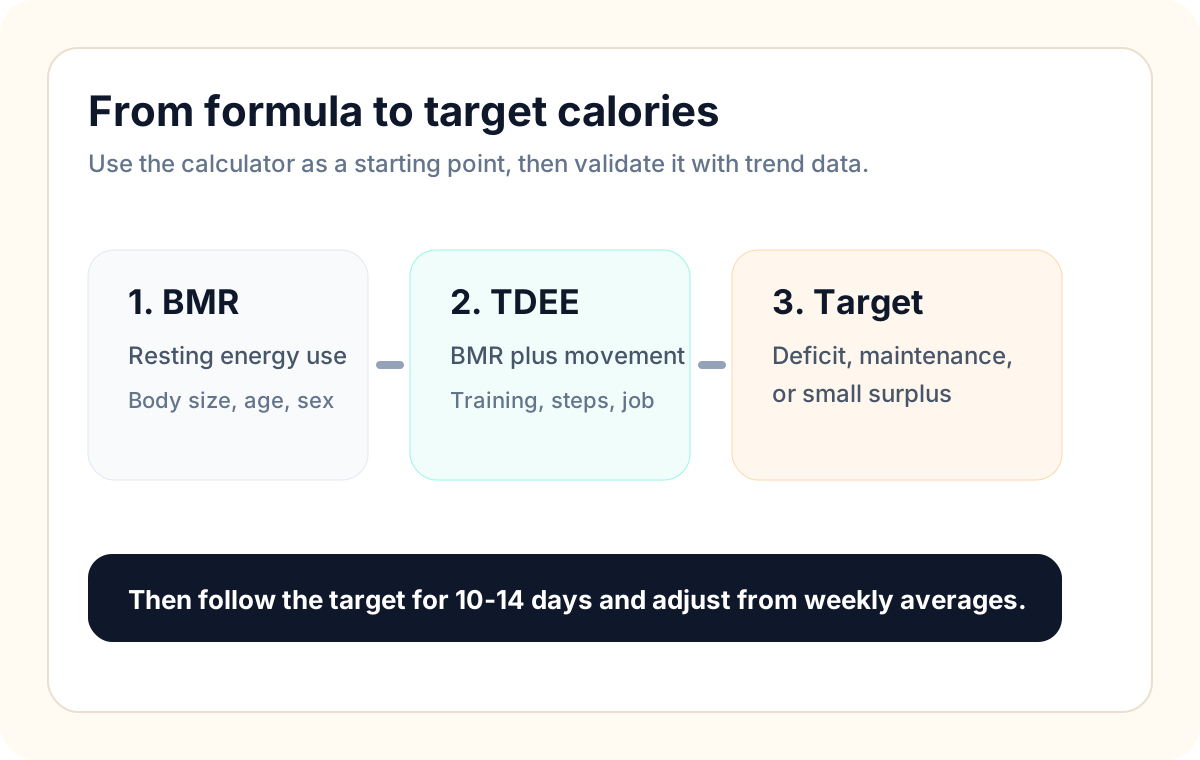
The right calorie target depends on your maintenance calories, goal, activity, and consistency. Estimate your TDEE, choose a target for fat loss, maintenance, or muscle gain, then review 10-14 days of trend data before changing the number.
Quick Answer
- Fat loss: eat below estimated maintenance.
- Maintenance: eat close to estimated TDEE.
- Muscle gain: eat slightly above maintenance.
- If your trend does not match your goal after two weeks, adjust by 100-200 kcal.
Who This Guide Is For
- Beginners who want a clear starting number.
- People switching from random dieting to structured tracking.
- Users who want to connect calories, macros, and workouts in one plan.
How It Works
Your body weight changes based on long-term energy balance, not one meal or one day. A calculator estimates your daily energy needs from body size, age, sex, and activity. That estimate becomes your starting point. Your real-world tracking then confirms whether it is too high, too low, or close enough.
Step-by-Step Plan
- Estimate your TDEE with the BMR/TDEE Calculator.
- Pick one goal: fat loss, maintenance, or muscle gain.
- Set your calorie target from that goal.
- Track intake and body weight consistently for 10-14 days.
- Compare weekly averages instead of reacting to daily changes.
- Adjust only one variable at a time.
Example
If your TDEE estimate is 2,200 kcal, maintenance starts near 2,200. Fat loss might start around 1,850-2,000. Muscle gain might start around 2,300-2,450. These are starting ranges, not permanent rules.
Common Mistakes
- Using a calculator once and never checking real results.
- Choosing a target based on someone else's body and schedule.
- Forgetting that weekend intake can erase a weekday deficit.
- Dropping calories when the real issue is inconsistent tracking.
When To Be Careful
Do not use calorie targets to push below a medically safe intake. If you have a medical condition, history of disordered eating, pregnancy, or a prescribed diet, work with a qualified professional.
How Up2You Helps
Up2You helps turn a calorie target into daily behavior: meal plans, logging, workouts, and progress tracking. Start with the Calorie Calculator, then keep the target connected to your routine.
FAQ
Should I use calories or macros first?
Calories set the direction of weight change. Macros improve the quality of the plan, especially protein, carbs around training, and dietary fat.
How often should I update my calories?
Review every 10-14 days while dieting. Faster changes usually create noise instead of clarity.
Why did my weight go up in a deficit?
Water, sodium, digestion, menstrual cycle, soreness, and stress can move scale weight short term. Use weekly averages.