KBJU and Macro Calculator Guide: Protein, Fat, Carbs
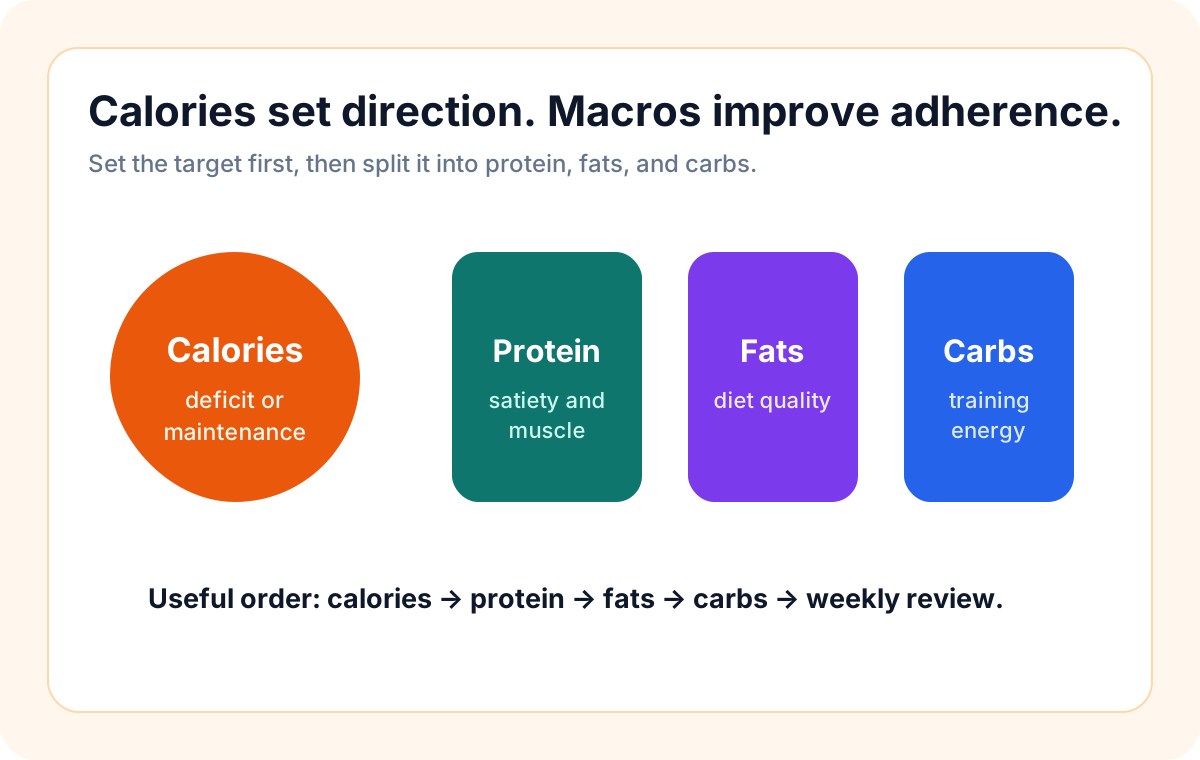
KBJU means calories, protein, fat, and carbs. After you estimate daily calories, macros help you decide how those calories should be split. For most workout goals, start with enough protein, keep fats within a sustainable range, and place carbs around training and daily preference.
Quick Answer
- Calories set the direction of weight change.
- Protein supports muscle retention, recovery, and satiety.
- Fat supports diet quality and sustainability.
- Carbs support training performance and flexible meals.
Who This Guide Is For
- Users who know their calories but do not know how to split macros.
- People trying to lose fat while keeping training performance.
- Beginners comparing calories, KBJU, and macro tracking.
How It Works
Macros are the main nutrients that provide energy: protein, fat, and carbs. Protein and carbs provide about 4 kcal per gram. Fat provides about 9 kcal per gram. A macro calculator turns your calorie target into grams so the plan is easier to follow in real meals.
Step-by-Step Plan
- Calculate daily calories first.
- Set protein based on body size, goal, and training.
- Set fats at a level you can sustain.
- Put remaining calories into carbs.
- Review hunger, training, digestion, and adherence.
Example
If your target is 2,000 kcal, you might set protein first, then fats, then carbs with the remaining calories. The exact split can vary. The useful question is whether the plan supports your goal and feels repeatable.
Common Mistakes
- Setting macros before knowing calorie target.
- Dropping fats too low.
- Treating carbs as automatically bad for fat loss.
- Chasing perfect macro numbers while ignoring total intake.
When To Be Careful
Macro tracking can be useful, but it can also become stressful for some people. If tracking worsens your relationship with food or you have a history of disordered eating, use a less rigid approach with professional support.
How Up2You Helps
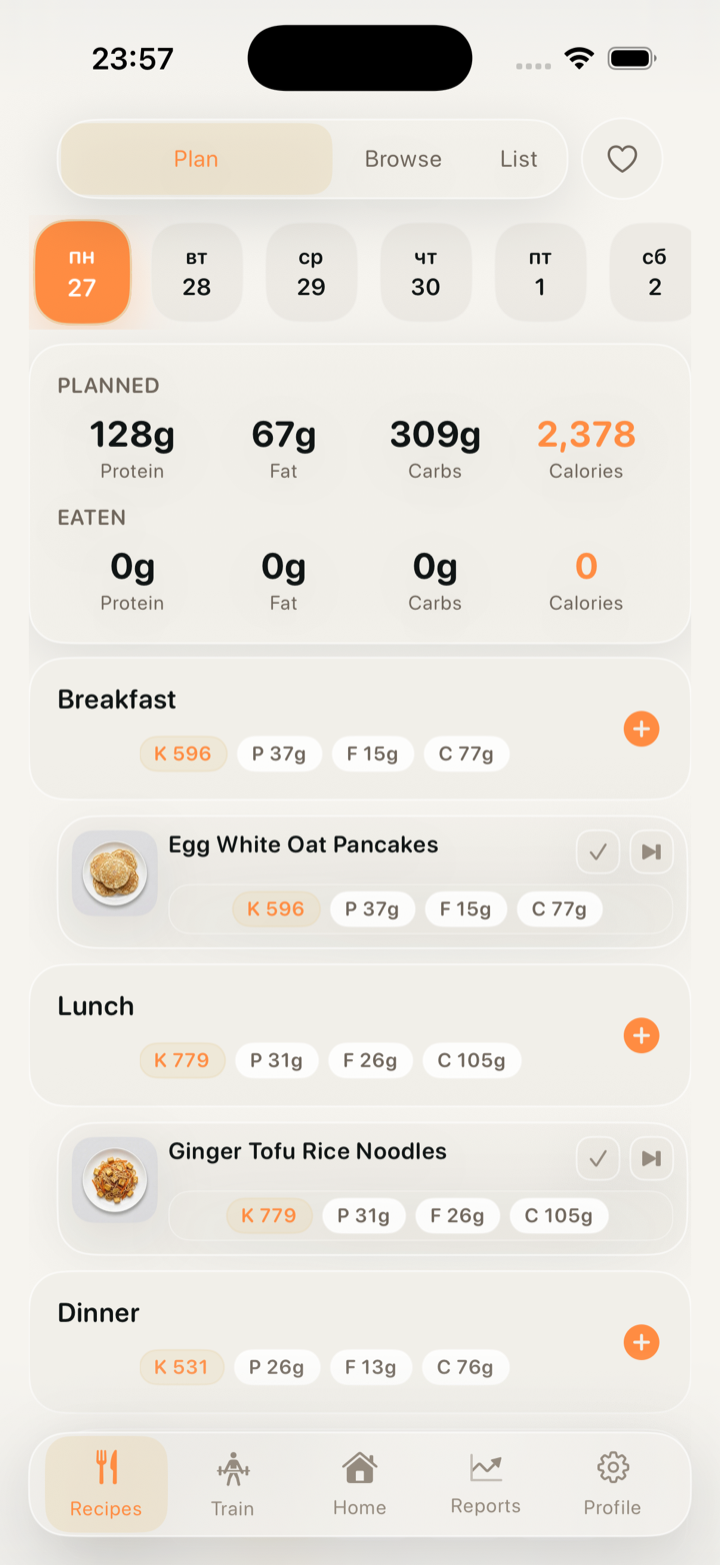
Use the Macro Calculator after setting calories. Up2You can help turn those targets into meal planning and daily tracking instead of spreadsheet work.
Inside Up2You
FAQ
Is KBJU the same as macros?
KBJU includes calories plus protein, fat, and carbs. Macros usually means protein, fat, and carbs.
Do I need keto for fat loss?
No. Fat loss depends on a sustainable calorie deficit. Keto is one dietary style, not a requirement.
Which macro matters most?
For workout goals, protein is usually the first macro to set because it supports satiety, recovery, and muscle retention.